
Tattoo Power Supply Mastery: Voltage Control for Flawless Linework
Why Voltage Control Defines Your Tattoo Quality
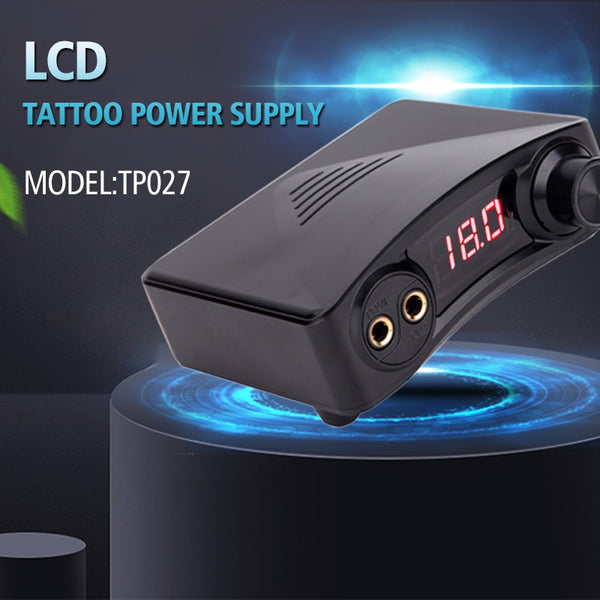
Every tattoo artist knows that consistent linework separates a good tattoo from a great one. The secret often lies in the power supply and voltage control. A stable voltage ensures your machine runs smoothly, needle depth is consistent, and skin trauma is minimized. This guide dives into the technical aspects of power supplies, from choosing the right unit to troubleshooting common issues.
Anatomy of a Tattoo Power Supply
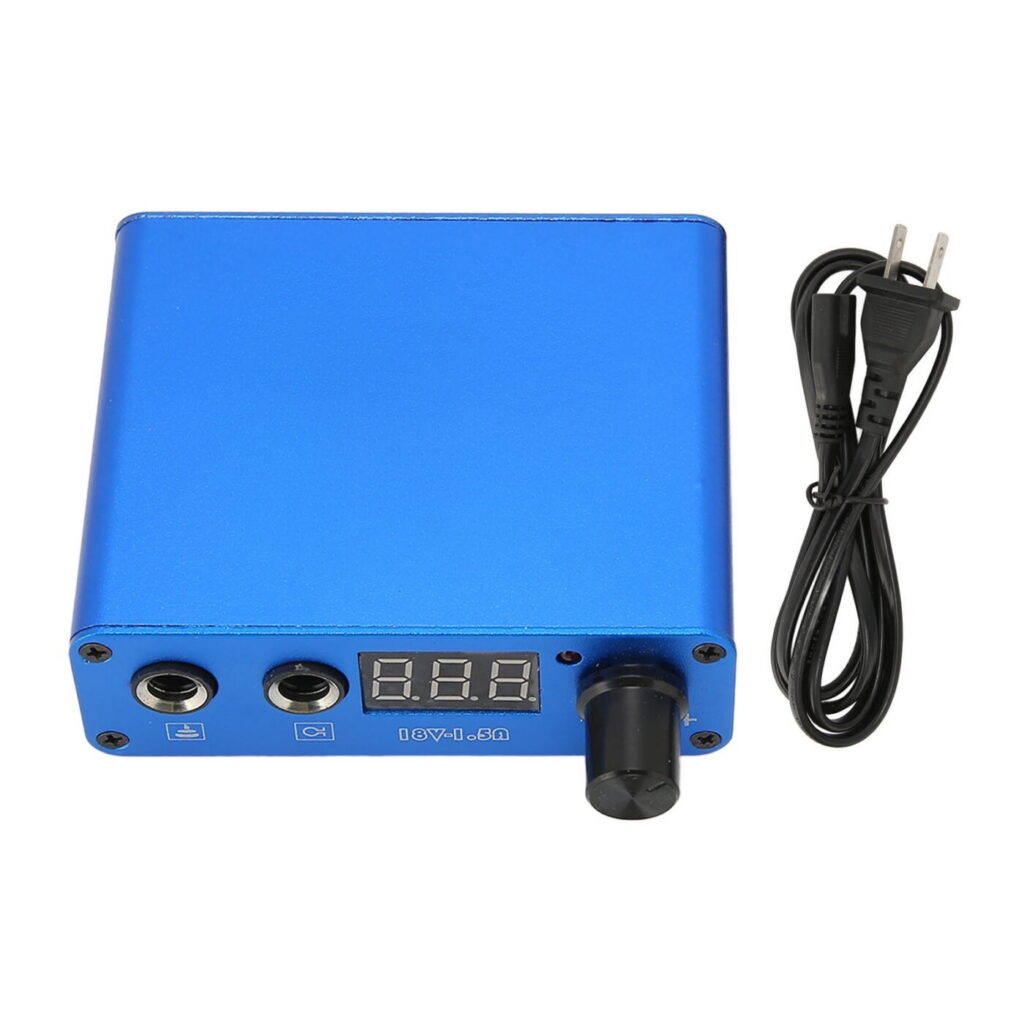
A tattoo power supply converts AC wall current to DC power your machine needs. Key components include:
- Transformer: Steps down voltage from 110-240V to 3-18V.
- Rectifier: Converts AC to DC.
- Voltage Regulator: Maintains steady output despite load changes.
- Display: Digital or analog readout of voltage.
Modern supplies often include rotary machine compatibility and memory presets for different needle groupings.
Voltage Settings by Machine Type
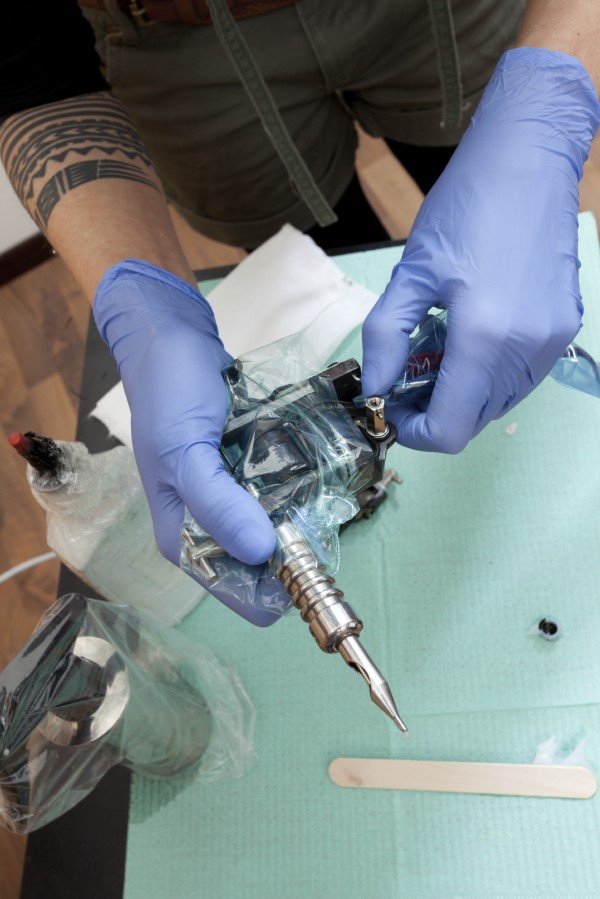
Coil Machines
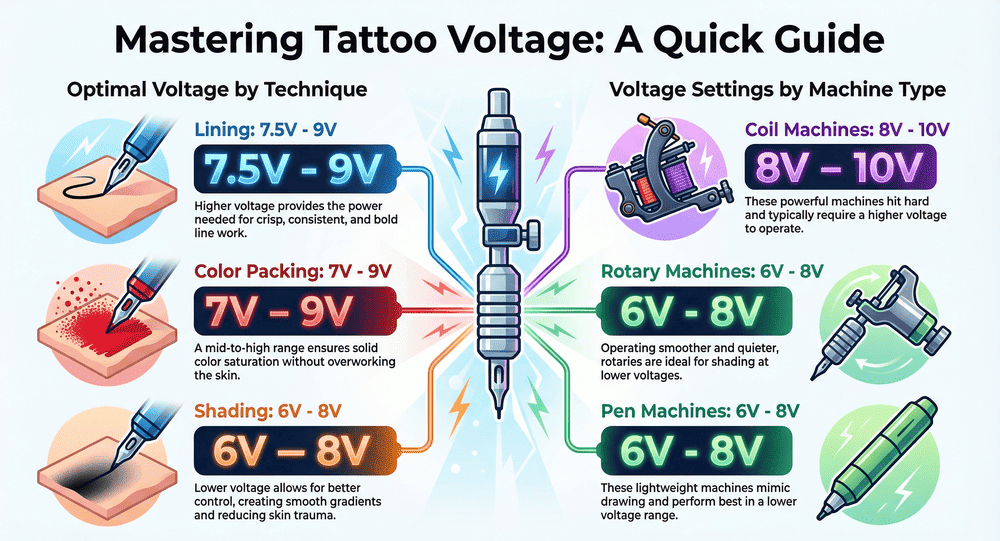
Typically run at 4-8 volts. Lower voltage for shading, higher for lining. Example: A 6V setting for tight lines with a 3RL needle.
Rotary Machines
Operate between 5-12 volts. Lining at 8-10V, shading at 6-8V. Pen-style rotaries often need 6.5-8.5V.
Checklist for initial setup:
- Confirm machine manufacturer’s recommended voltage range.
- Test on practice skin before client.
- Adjust in 0.5V increments to find sweet spot.
How Voltage Affects Linework Consistency
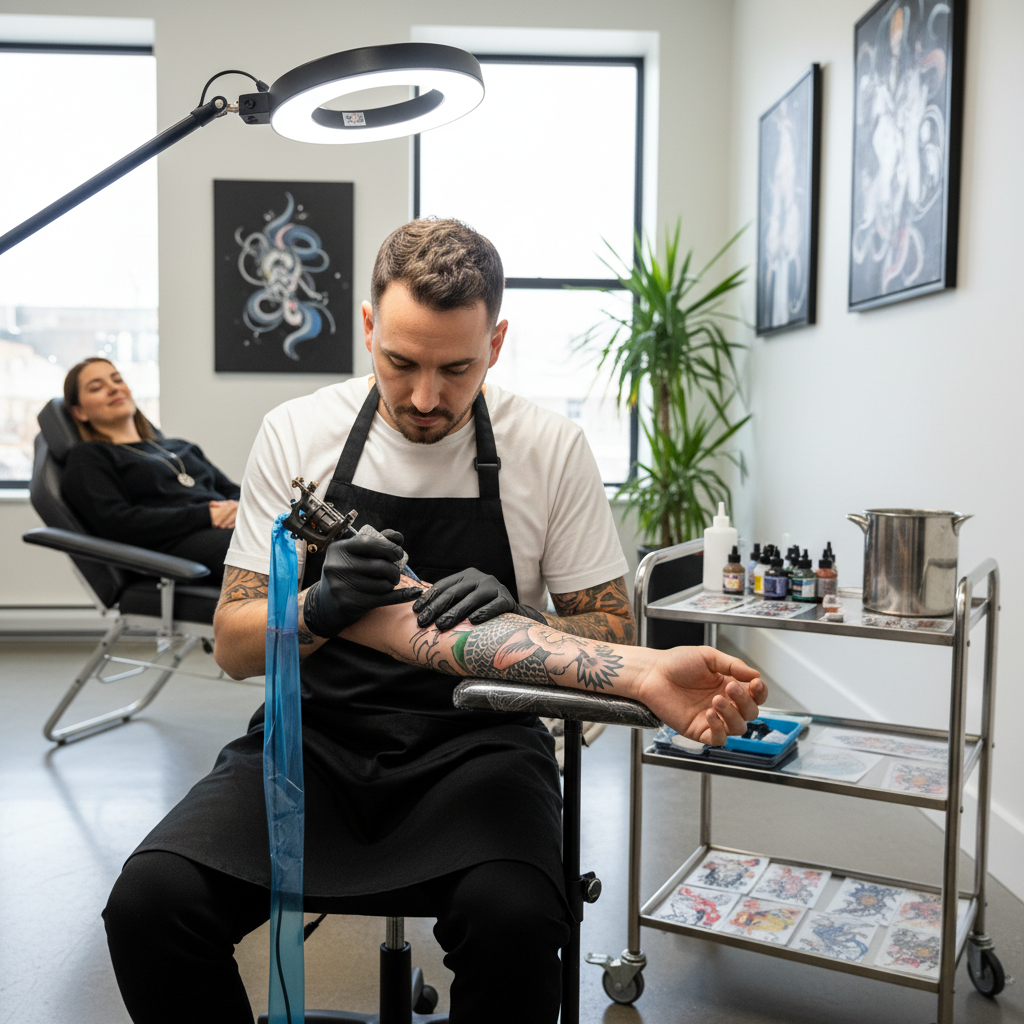
Inconsistent voltage leads to blowouts (too high) or skipping (too low). A stable voltage ensures:
- Uniform needle penetration depth.
- Even ink saturation.
- Reduced healing time for client.
Real-world example: A Fine line tattoo requires precise voltage around 7V to avoid scarring. Too high and lines thicken; too low and they fade.
Choosing the Right Power Supply
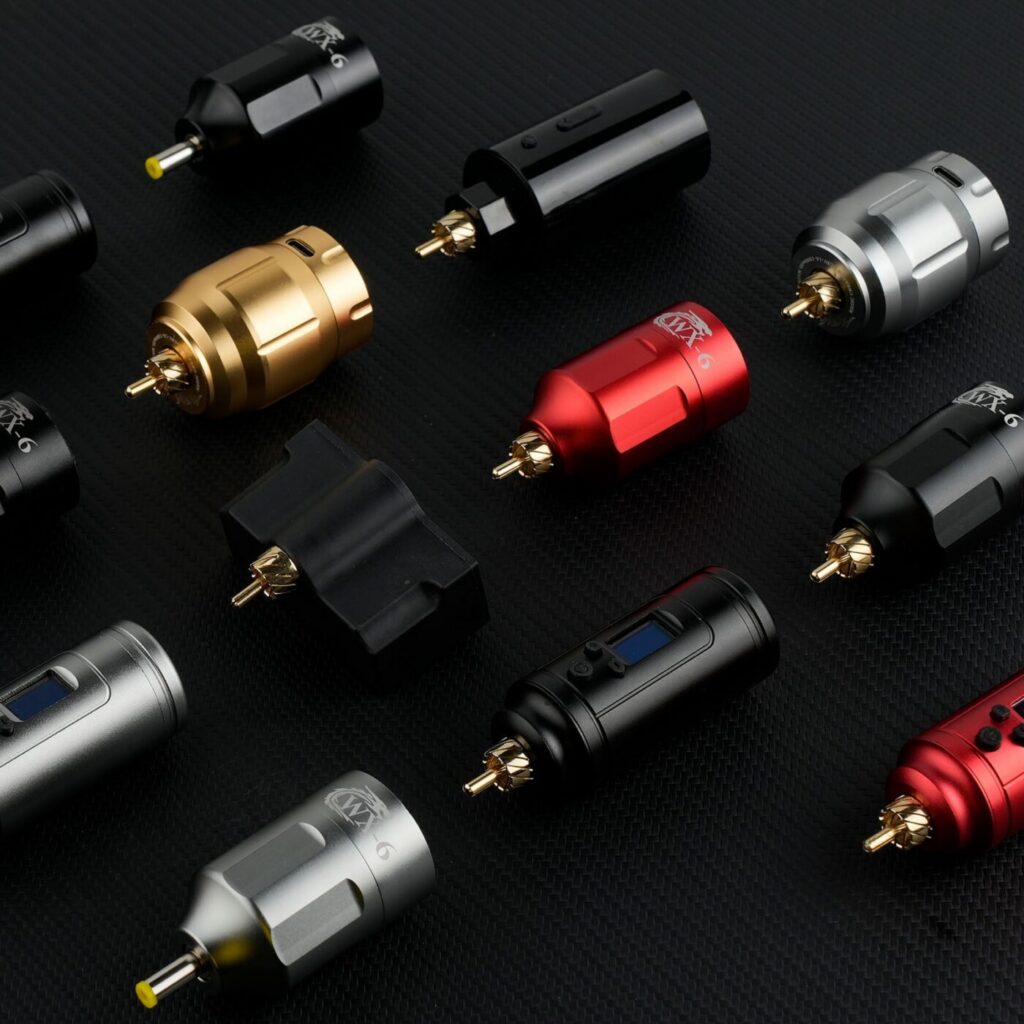
Consider these factors:
- Output Range: 0-18V covers most needs.
- Amperage: Minimum 2A for coil machines, 1A for rotaries.
- Portability: Wireless vs. corded.
- Durability: Metal casing vs. plastic.
Comparison table:
| Feature | Budget | Pro |
|---|---|---|
| Voltage stability | ±0.5V | ±0.1V |
| Display | Analog | Digital |
| Memory presets | No | Yes |
Troubleshooting Voltage Issues
Problem: Machine runs hot. Likely voltage too high. Drop by 0.5V.
Problem: Lines are patchy. Check cord connections; could be voltage drop.
Problem: Buzzing sound from power supply. Incompatible amperage; upgrade unit.
Expert Tips for Consistent Linework
- Use a voltage meter to verify output.
- Warm up machine for 5 minutes before tattooing.
- Replace power supply every 2-3 years (or as per manufacturer).
- For Blackwork and Dotwork, lower voltage (5-6V) gives better control.
FAQs
Can I use a phone charger as a power supply?
No. Phone chargers don’t provide stable voltage or sufficient amperage, risking machine damage and poor results.
What voltage for shading with a rotary?
Typically 6-8V. Start low and increase until ink flows smoothly without tearing skin.
How do I know if my power supply is failing?
Signs include fluctuating readings, overheating, or inconsistent machine performance. Test with a multimeter.
Is wireless power supply reliable?
Modern wireless units are reliable for most work, but have limited battery life (4-8 hours). Keep a backup corded unit.
Internal Resources
For more on selecting gear, check our top-rated power supplies. Find studios near you that use premium equipment. Read artist reviews on our magazine.
Content hub
Pro corner hub
Read more about needles, inks, machines, cartridges and safer professional practice.
Related reading
Continue reading
Tattoo Stencil Troubleshooting: Smudging, Transfer Gel, and Skin Prep – A Studio Workflow Guide
Master stencil application with this practical guide covering smudging causes, transfer gel selection, and a step-by-step skin prep…
Tattoo Machine Stroke Length: Lining, Shading, and Color Packing Decisions – A Pro Guide
Master the relationship between stroke length and tattoo results. Expert guide on lining, shading, and color packing machine…
The Pro’s Guide to Tattoo Ink Mixing: Greywash, Color Dilution & Safety Workflow
Master ink mixing for pros: greywash ratios, color dilution techniques, and a step-by-step safety workflow to prevent contamination…