Tattoo Machine Voltage & Stroke Guide: Lining, Shading & Color Packing for Pros
Introduction: Why Voltage & Stroke Matter
As a professional tattooer, your machine setup is the foundation of every line, shade, and color pack. Voltage and stroke length are not just numbers—they control needle penetration, ink deposit, and skin trauma. Get them wrong, and you risk blowouts, poor saturation, or excessive pain. This guide breaks down the science and art of tuning your machine for lining, shading, and color packing, with safe workflow steps.
Understanding Stroke Length
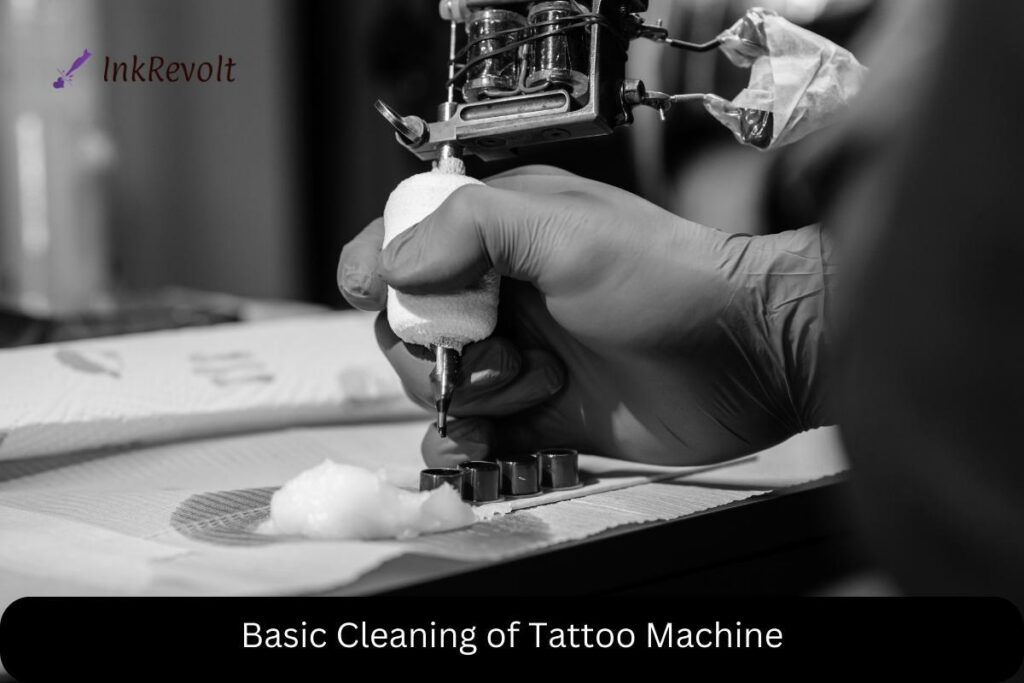
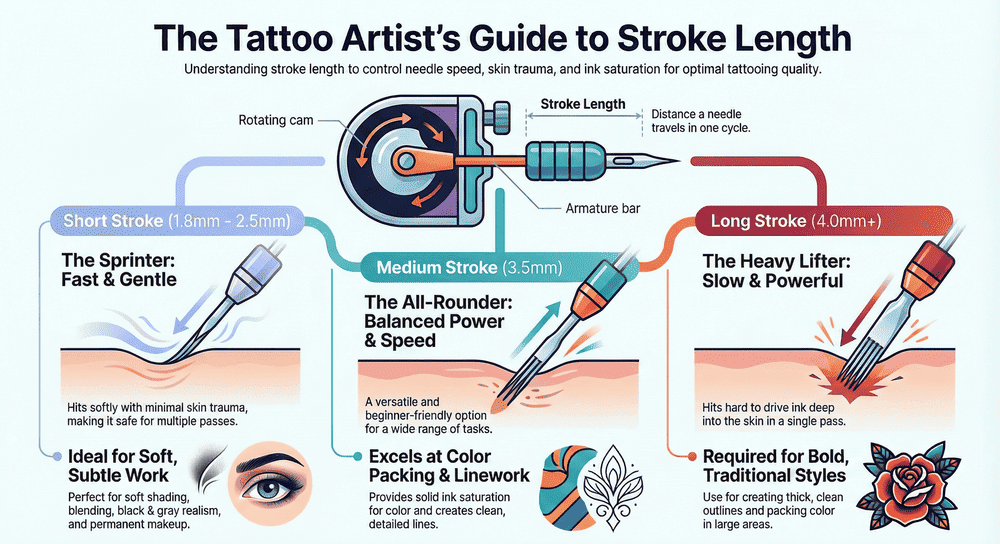
Stroke length is the distance the needle travels from full retraction to full extension. Measured in millimeters, it determines how much the needle pushes into the skin and how quickly it moves.
Short Stroke (2.5–3.2 mm)
Best for fine lining, dotwork, and delicate shading. Less trauma, slower needle speed, more control. Example: 3.0 mm stroke at 7–8 volts for crisp fine lines.
Medium Stroke (3.5–4.0 mm)
Versatile for general lining, shading, and color packing. Good balance of speed and power. Example: 3.5 mm stroke at 8–9 volts for bold lines or smooth shading.
Long Stroke (4.2–5.0 mm)
Ideal for heavy color packing, large solid areas, and thick lines. More trauma but faster ink deposit. Example: 4.5 mm stroke at 7–8 volts for solid blackwork.
Voltage & Hand Speed: The Dynamic Duo
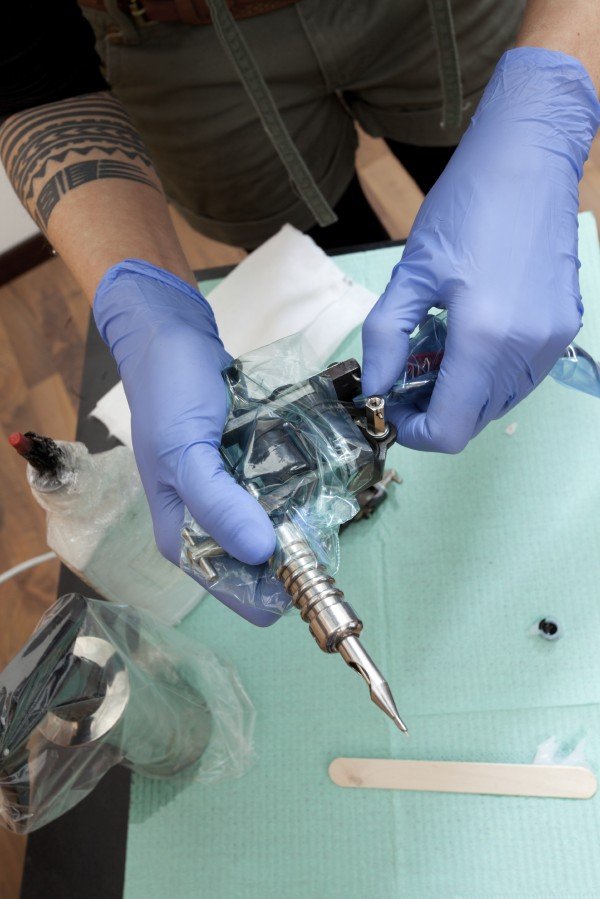
Voltage controls the machine’s speed (cycles per second). Hand speed is how fast you move the needle across the skin. The ratio determines line consistency and saturation.
Lining Voltage
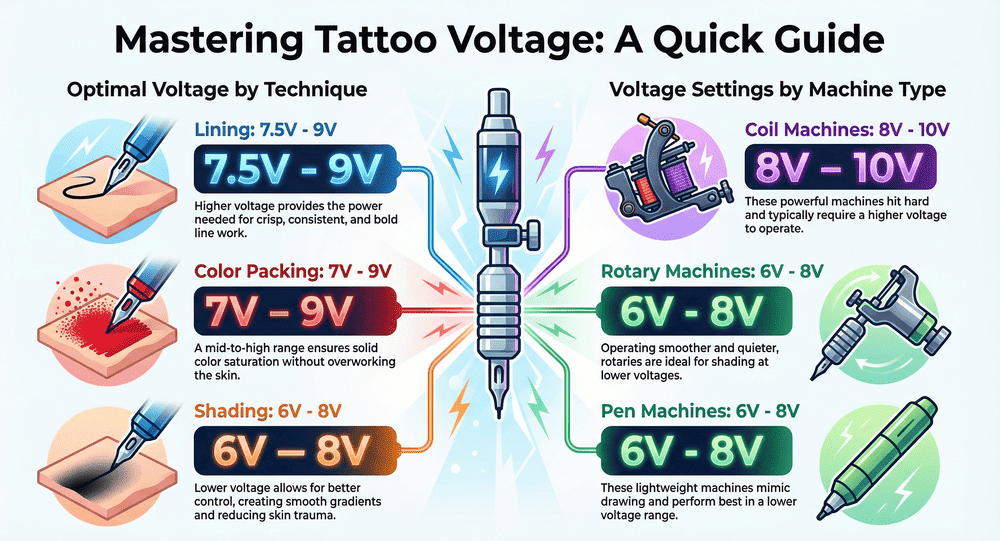
Typical range: 7–9 volts. For tight lines, lower voltage (7–8V) with moderate hand speed. For bold lines, higher voltage (8.5–9V) with slower hand speed. Test on practice skin: adjust until the line is solid without spreading.
Shading Voltage
Range: 6–8 volts. For smooth gradients, use lower voltage (6–7V) and a slightly faster hand speed. For whip shading, higher voltage (7.5–8V) with a pendulum motion. Avoid overworking the skin.
Color Packing Voltage
Range: 7–9 volts. Use lower voltage for delicate colors (7–8V) and higher for heavy saturation (8.5–9V). Keep hand speed moderate and consistent. Stretch the skin firmly.
Needle Grouping & Configuration
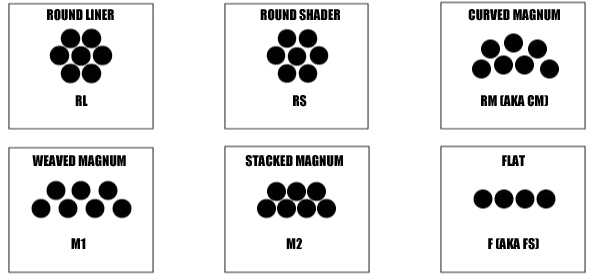
Needle grouping affects how ink is deposited. Common setups:
- Lining: Round Liners (RL) – 3RL for fine lines, 5RL for medium, 7RL for bold. Use with short to medium stroke.
- Shading: Round Shaders (RS) or Magnums (M1, M2) – 5RS for soft shading, 7M for larger areas. Medium stroke.
- Color Packing: Magnums (M1, M2) or Flat Shaders (F) – 9M1 or 11M1 for solid coverage. Long stroke.
Safe Tuning Workflow
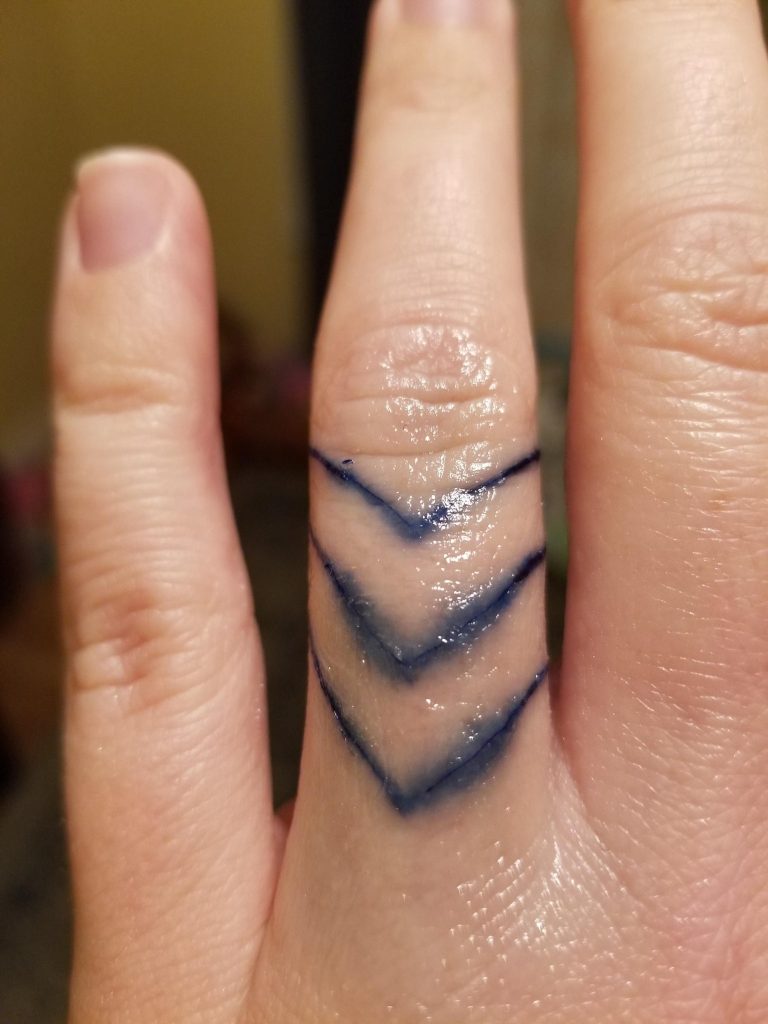
- Test on practice skin: Always test voltage and hand speed before tattooing. Adjust in 0.5V increments.
- Check needle depth: Aim for 1–2 mm penetration. Too deep causes blowouts; too shallow fades quickly.
- Monitor skin reaction: Redness, excessive bleeding, or raised skin means too much trauma. Back off voltage or hand speed.
- Use proper stretch: Firm, even stretch prevents skipping and ensures consistent depth.
- Clean as you go: Wipe excess ink gently to see your progress.
Comparison: Lining vs Shading vs Color Packing
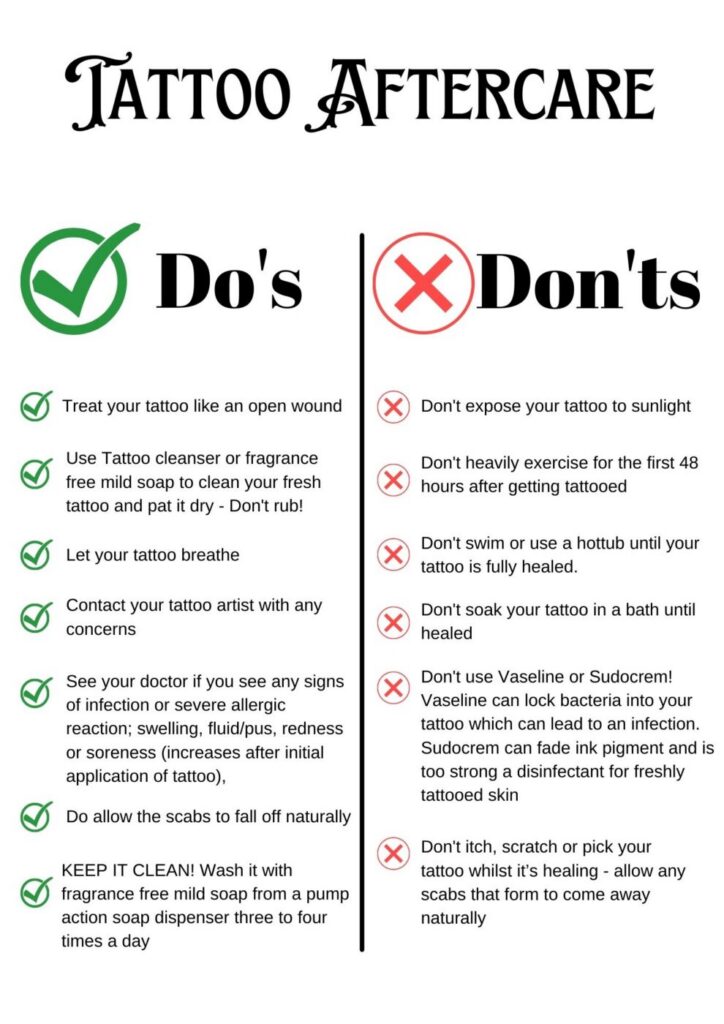
| Technique | Voltage | Stroke | Hand Speed | Needle |
|---|---|---|---|---|
| Lining | 7–9V | 2.5–4.0 mm | Moderate to slow | RL |
| Shading | 6–8V | 3.0–4.0 mm | Fast to moderate | RS, M |
| Color Packing | 7–9V | 3.5–5.0 mm | Moderate | M, F |
Common Mistakes & Caveats
- Blowouts: Caused by too high voltage, too long stroke, or too deep needle. Reduce voltage or use shorter stroke.
- Poor saturation: Often due to low voltage, fast hand speed, or improper needle depth. Increase voltage slightly or slow down.
- Skin trauma: Overworking an area. Use consistent hand speed and avoid multiple passes without rest.
- Machine overheating: Run machine at moderate speeds. Give breaks if needed.
FAQ
What voltage should I use for fine line tattoos?
Typically 7–8 volts with a short stroke (2.5–3.2 mm) and a 3RL or 5RL needle. Adjust based on skin type and machine.
Can I use the same voltage for lining and shading?
Not ideal. Lining usually needs higher voltage (7–9V) for crisp lines, while shading benefits from lower voltage (6–8V) for smooth gradients.
How do I know if my stroke is too long?
If you see excessive skin trauma, blowouts, or the needle seems to bounce, your stroke may be too long. Switch to a shorter stroke or lower voltage.
What’s the best machine for color packing?
A long stroke (4.2–5.0 mm) rotary or coil machine with a magnum needle. Set voltage around 7–9V depending on your hand speed.
Conclusion
Mastering voltage and stroke is a continuous learning process. Test on practice skin, adjust incrementally, and always prioritize skin health. For more pro tips, check our machine rankings and magazine.
Keep exploring Vietnam Tattoo
- Browse Ranking for notable studios by city, style, and intent.
- Search studios by city, verification level, and contact channel.
- View verified profiles to check approved and verified entries.
- Request a consultation if you need help choosing style, placement, or a suitable studio.
Best voltage for line work: practical range, not a fixed number
The best voltage for line work depends on machine type, stroke length, needle grouping, hand speed, skin resistance and power supply stability. A common working range for lining is often around 6.5-8.5V on many pen-style machines, but artists should tune by sound, saturation and trauma control rather than copying a number blindly.
Stroke choice for lining and shading
- Short stroke: softer hit, useful for gentle shading and delicate skin.
- Medium stroke: versatile for everyday lining, soft shading and small color areas.
- Long stroke: stronger hit and better needle authority for bold line work and larger groupings.
For more equipment context, connect this guide with the rotary vs coil vs pen tattoo machine guide and the tattoo needle taper guide.
Content hub
Pro corner hub
Read more about needles, inks, machines, cartridges and safer professional practice.
Related reading
Continue reading
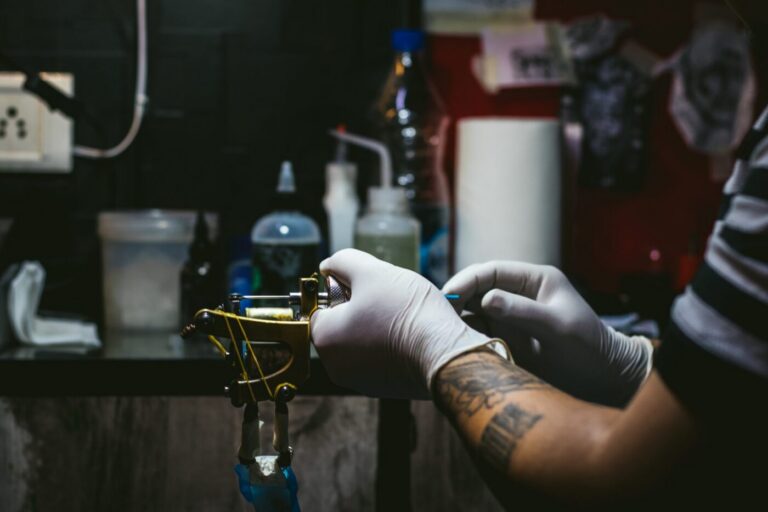
Mastering Tattoo Needle Depth: Skin Layers, Blowout Prevention, and Clean Line Control – A Pro Guide for Apprentices
Master tattoo needle depth with this pro guide: understand skin layers, prevent blowout, and achieve clean lines. Essential…
Tattoo Needle Cartridges: Grouping & Taper Guide for Artists & Apprentices
Master needle grouping and taper for flawless tattoos. Expert guide for artists and apprentices: liners, shaders, mags, diameter,…
Tattoo Ink Safety: Pigment Labels, Batch Tracking, and Sterile Handling – A Professional Studio Guide
Learn how to ensure tattoo ink safety in your studio: pigment labels, batch tracking, sterile storage, contamination prevention,…
