
The Ultimate Guide to Patchwork Tattoo Planning: Theme Control, Spacing, and Future Expansion
Introduction: What Is Patchwork Tattooing?
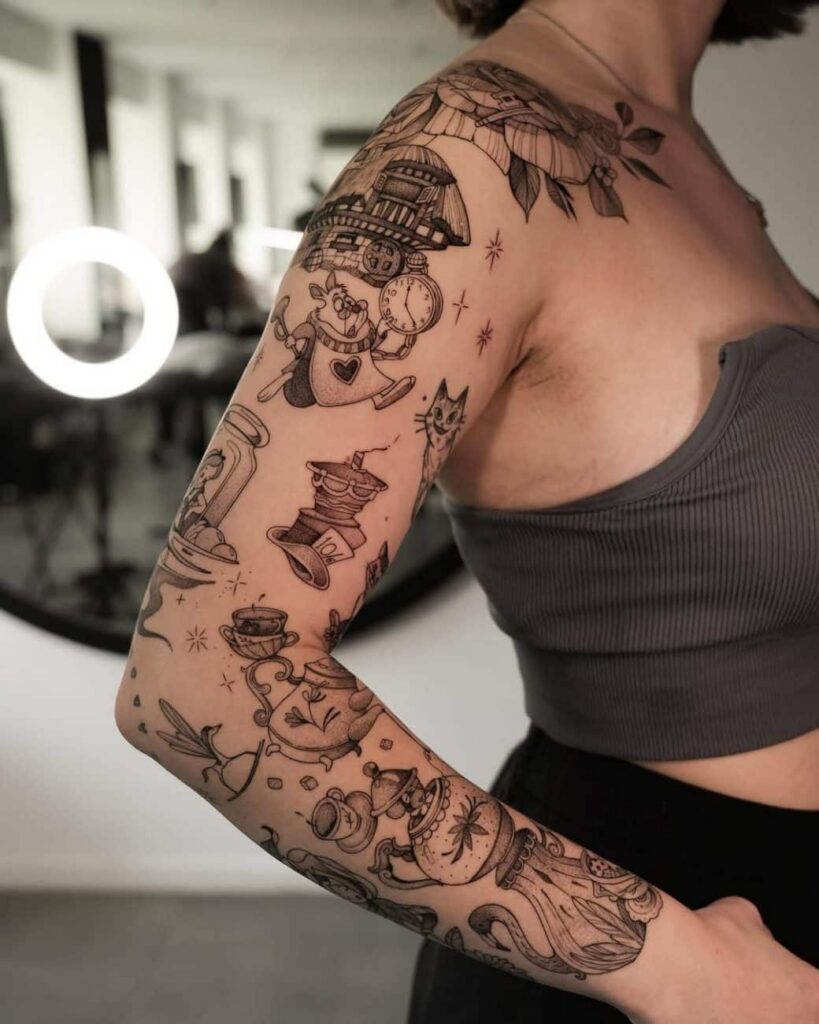
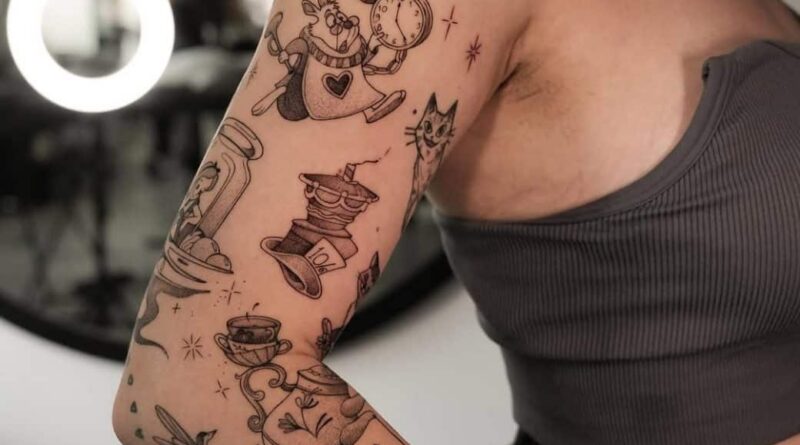
Patchwork tattooing is the art of creating a curated collection of individual tattoos that coexist on the same canvas—often the arm, leg, or torso—without being part of a single continuous design. Unlike a pre-planned sleeve or back piece, patchwork evolves organically over time. Each tattoo stands on its own, yet together they form a cohesive aesthetic. This guide will walk you through the key planning principles: theme control, spacing, and future expansion.
Understanding the Patchwork Aesthetic
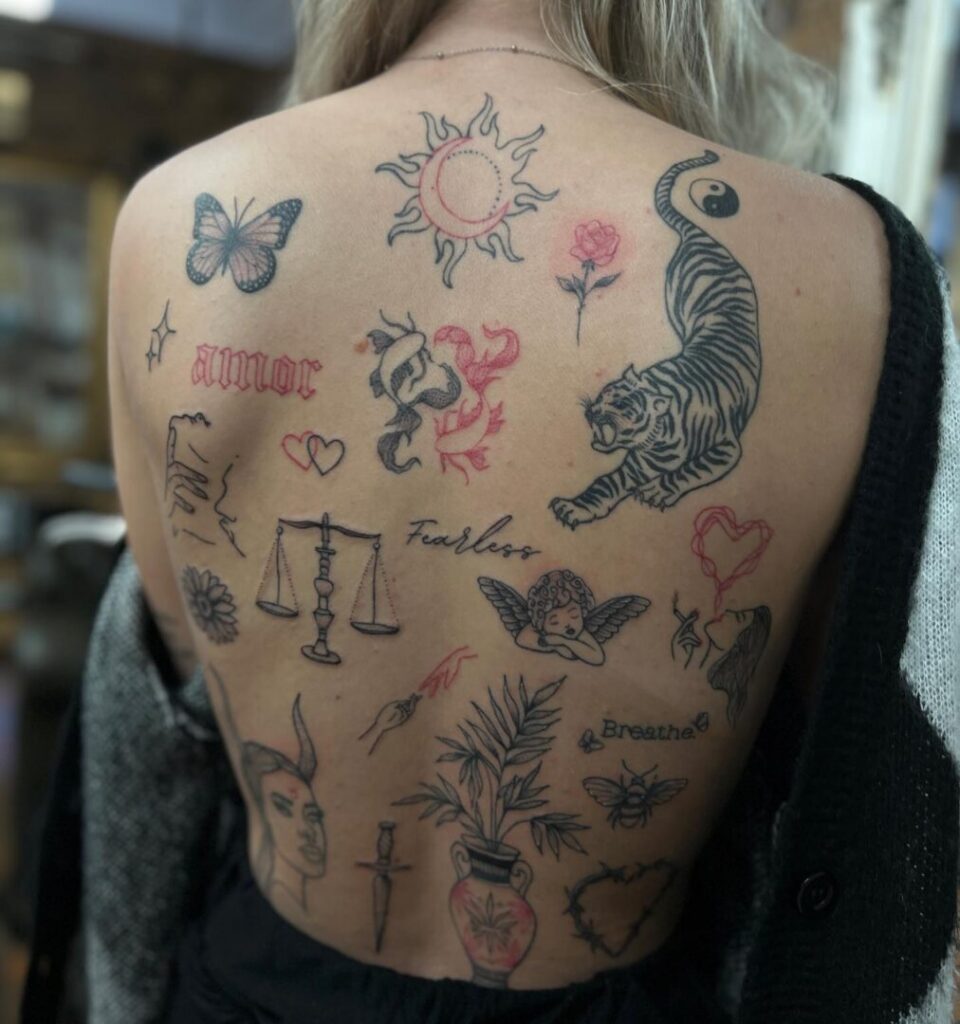
Patchwork is not random; it’s deliberate chaos. The beauty lies in the contrast between styles, subjects, and sizes. However, without a guiding plan, the result can feel cluttered or disjointed. The goal is to achieve a balanced composition where each piece complements its neighbors.
Key Characteristics
- Individual tattoos with clear boundaries
- Variety in size, style, and subject matter
- Deliberate use of negative space
- Ability to add new pieces indefinitely
Theme Control: Creating Cohesion Within Chaos
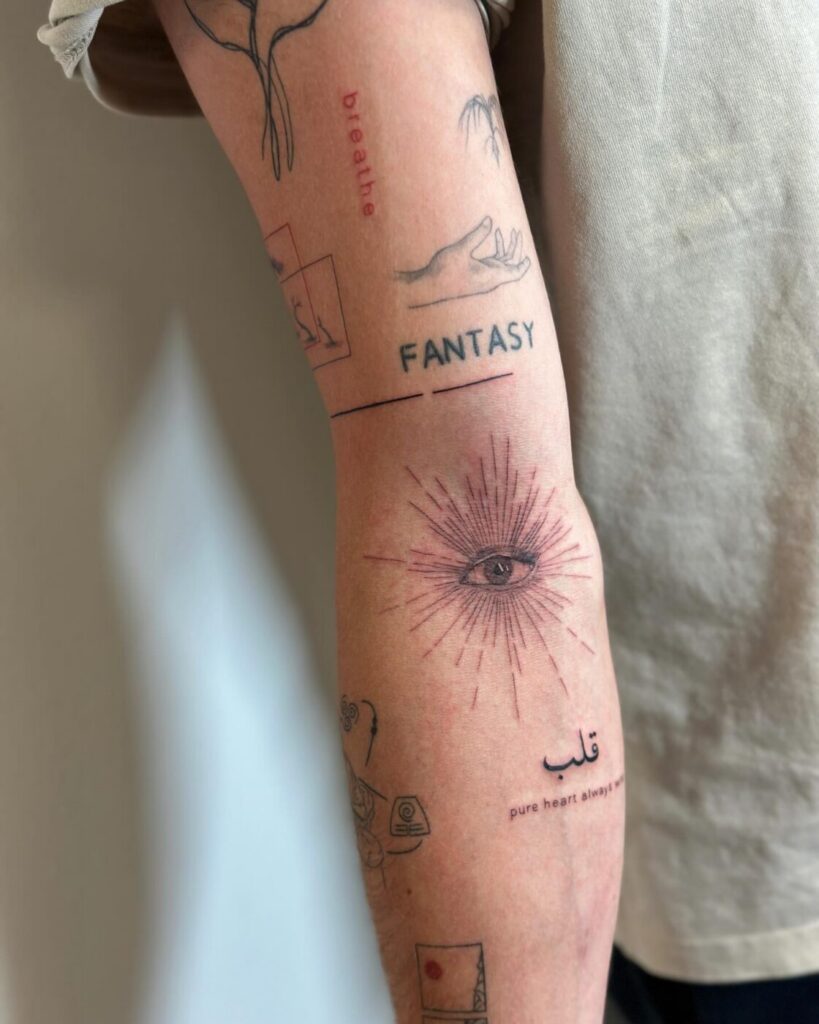
Theme doesn’t mean all tattoos must share a subject. It means establishing a unifying element—such as a color palette, line weight, or artistic era—that ties the collection together.
Color Palette
Choose a dominant color scheme. Many patchwork collectors stick to blackwork, which naturally unifies any style. Others use a limited palette like only red and black, or a muted pastel range. Browse our magazine for color theory insights.
Line Weight and Contrast
Mixing heavy bold lines with delicate fine line can create visual tension. But if all pieces are ultra-fine, they may fade into each other. Aim for a mix: one bold piece anchors the area, while finer ones fill the gaps.
Subject Cohesion
Not necessary, but helpful. For example, a nature theme (flora, fauna, landscapes) can incorporate many styles. Or a mythical theme (dragons, deities, symbols). If you prefer total freedom, use a consistent artistic approach like neo-traditional or minimalist.
Spacing Strategies: Giving Each Tattoo Room to Breathe
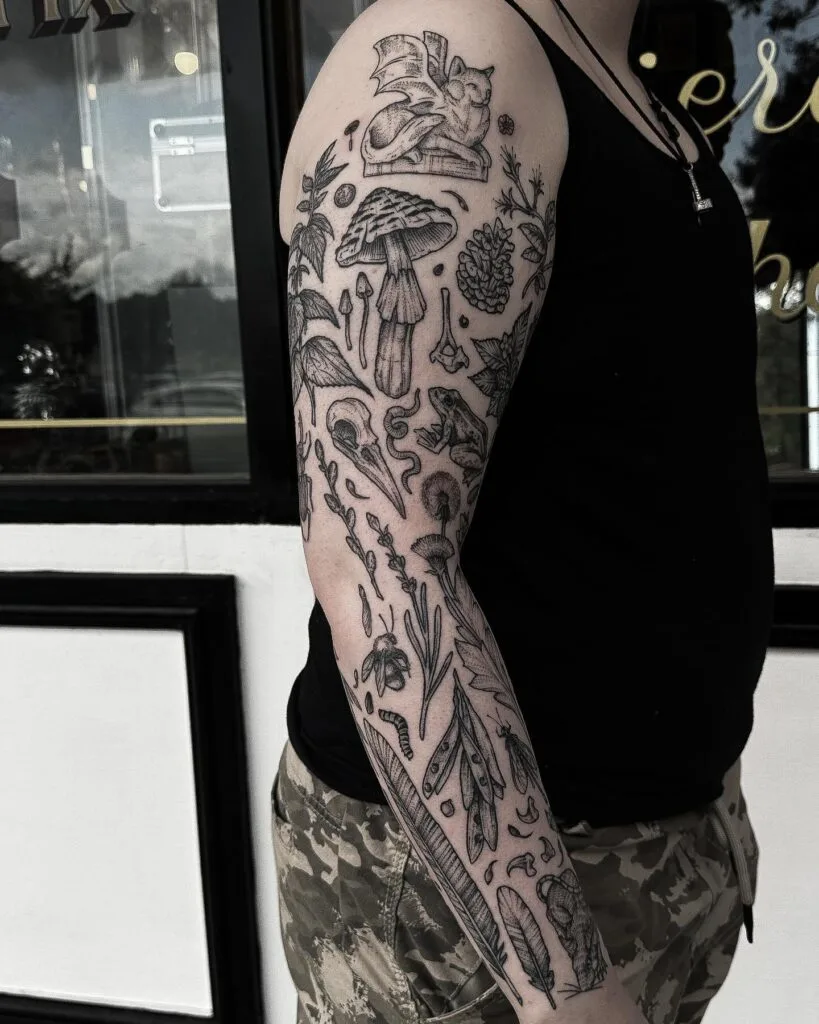
Spacing is the number one mistake in patchwork planning. Tattoos placed too close together lose their individuality and may blur over time. Here’s how to plan for optimal spacing.
The Three-Finger Rule
As a general guideline, leave at least the width of three fingers between major pieces. This allows for future background shading or small fillers without overcrowding.
Negative Space as Design
Don’t view empty skin as wasted. Negative space can become part of the composition. Some collectors intentionally leave a clean path of skin winding through the collection—it becomes a signature element.
Planning for Backgrounds
If you know you want a background later, leave extra room. Many patchwork sleeves are completed with a cohesive background like dotwork shading or geometric patterns. Consult with an artist to map out background options early.
Planning for Future Expansion: The Empty Canvas
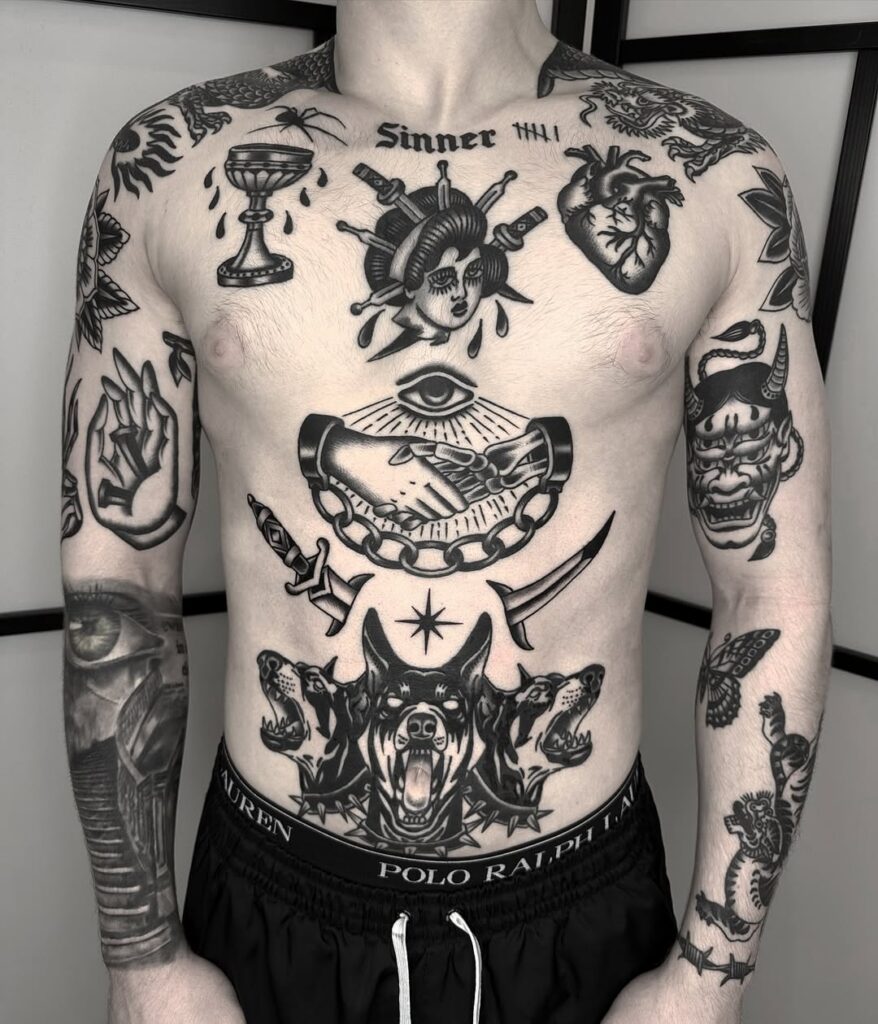
Patchwork is never finished. The smartest planning anticipates what comes next.
Reserve Prime Real Estate
The center of the forearm, the outer bicep, and the shin are high-visibility spots. Consider reserving them for your most important tattoos. Place smaller, less critical pieces on the inner arm or back of the leg.
Shape and Orientation
Tattoos are not just images; they are shapes. A round tattoo fills a different void than a vertical one. When planning, think about the negative spaces left behind. Use a mix of orientations—some horizontal, some vertical, some circular—to maintain visual flow.
Scalability
Choose designs that can be easily scaled up or down. A small delicate flower can become a larger botanical piece later. Avoid rigid designs that leave no room for growth.
Choosing Styles and Their Interactions
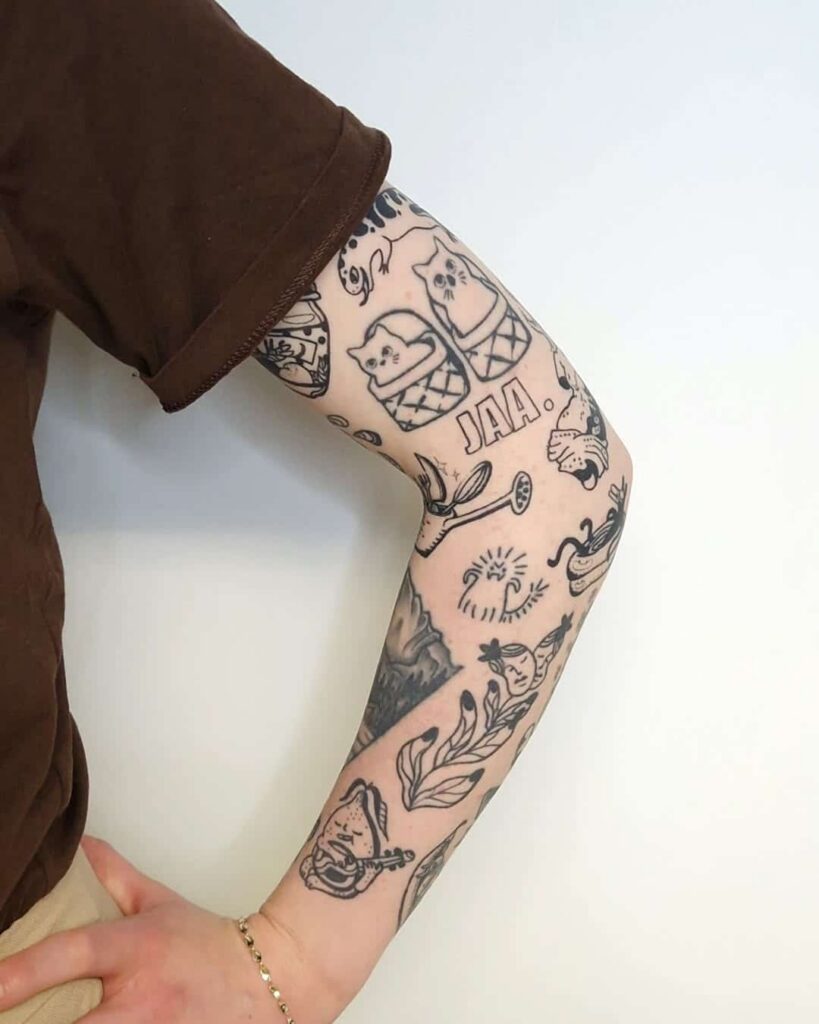
Not all styles mix well. Some contrasts are striking; others are jarring. Here’s a quick guide.
High Contrast, High Impact
Pairing Japanese Traditional with Fine Line realism creates a dramatic tension that many collectors love. The bold black outlines of Traditional anchor the delicate realism.
Low Contrast, Smooth Flow
Neo-traditional and Traditional share similar line weights and saturation, so they blend seamlessly. Blackwork and Dotwork also pair naturally.
Styles to Use Carefully
Watercolor tattoos have soft edges that can bleed into adjacent pieces if no linework barrier is present. Similarly, abstract tattoos with irregular shapes may create awkward gaps.
Avoiding Common Mistakes
- Too many tiny tattoos: Small pieces scattered randomly look like freckles. Allow some medium or large pieces to anchor the composition.
- Ignoring body movement: Tattoos shift as you move. Consider how a design will look when your arm is twisted or extended. Find a studio that specializes in placement planning.
- Rushing the process: Patchwork is a marathon. Leave several months between sessions to assess the evolving layout.
- Skipping background planning: Even if you don’t want a background now, plan where it could go. Otherwise, you may paint yourself into a corner.
FAQ

Can I mix color and blackwork in patchwork?
Absolutely. Many collectors use a limited color palette alongside blackwork. The key is to ensure that the color pieces have enough contrast to stand out against blackwork. For example, a vibrant neo-traditional piece surrounded by fine line blackwork creates a striking focal point.
How do I know if a new tattoo will fit with my existing ones?
Before committing, ask your artist to create a temporary stencil or use photo editing software to overlay the new design on a picture of your current collection. Many artists on verified studios offer this service.
Should I plan the entire sleeve from the start?
Not necessarily. Having a loose roadmap is helpful, but leave flexibility. Your tastes will evolve. Plan in phases: the first 3-5 tattoos establish the vibe, then fill gaps gradually.
What if I regret a placement?
Laser removal or cover-ups are options, but they are costly and painful. Better to avoid regret by using temporary tattoos or henna to test placements for a week. Browse our marketplace for reusable stencil tools.
Final Thoughts
Patchwork tattooing is a journey, not a destination. With careful planning—theme control, strategic spacing, and foresight for expansion—you can build a collection that feels both spontaneous and intentional. Trust your artist’s eye, but arm yourself with knowledge. Happy collecting.
Read more
- Magazine for more tattoo knowledge, style guides and aftercare notes.
- Request a consultation if you need help with style, placement or preparation.
- Marketplace for equipment, supplies and learning resources.
Content hub
Tattoo styles pillar
This article belongs to the styles cluster. Open the pillar page to compare Irezumi, Old School, Realistic, Blackwork, Fine line, Geometric and Watercolor.
Related reading
Continue reading

Watercolor Tattoo Design Consultation Checklist: Edge Strategy, Pigment Contrast, and Long-Term Maintenance
A specialist guide to watercolor tattoo consultations, covering edge strategy, pigment contrast, and long-term maintenance. Includes checklists and…

Dotwork Tattoo Portfolio Review: How to Assess Dot Density, Gradient Control, and Session Planning
Learn how to critically evaluate dotwork tattoo portfolios by examining dot density, gradient control, and session planning. A…
Dotwork Tattoo: Density, Gradient Control & Session Planning
A specialist guide to dotwork tattoos: placement on body contours, dot density control, gradient building, and realistic session…