
Tattoo Needle Taper Explained: Long Taper, Short Taper and Healed Line Quality
Introduction: Why Taper Matters
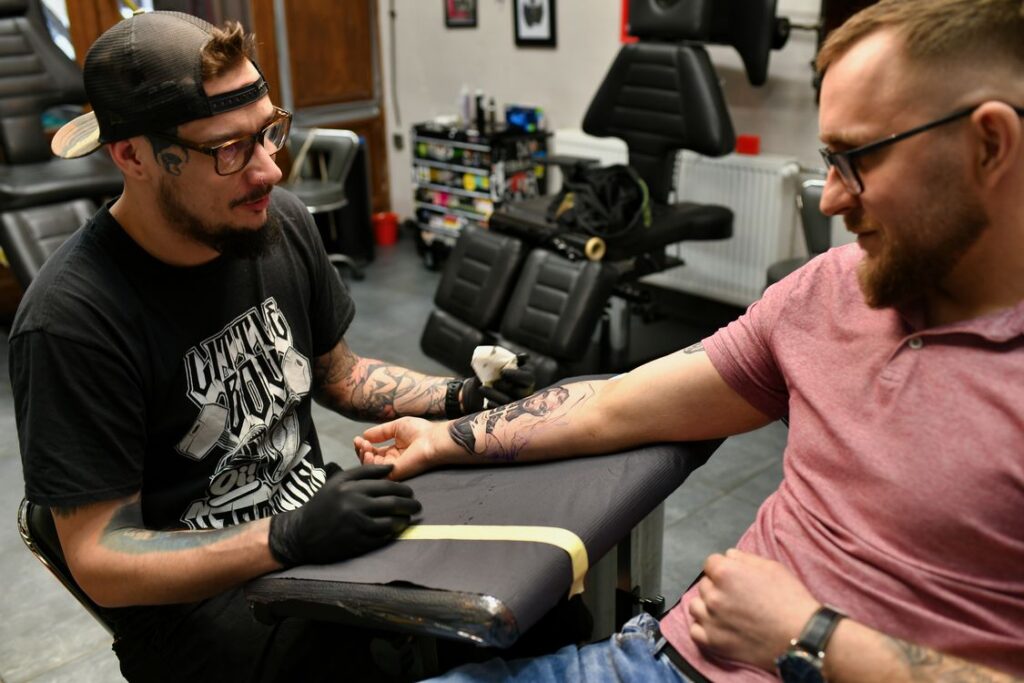
As a tattoo professional, you know that needle configuration directly impacts line quality. But one parameter often overlooked is taper—the gradual narrowing of the needle tip. This guide breaks down long taper vs. short taper, their effect on healed lines, and how to choose for different styles.
What Is Taper?
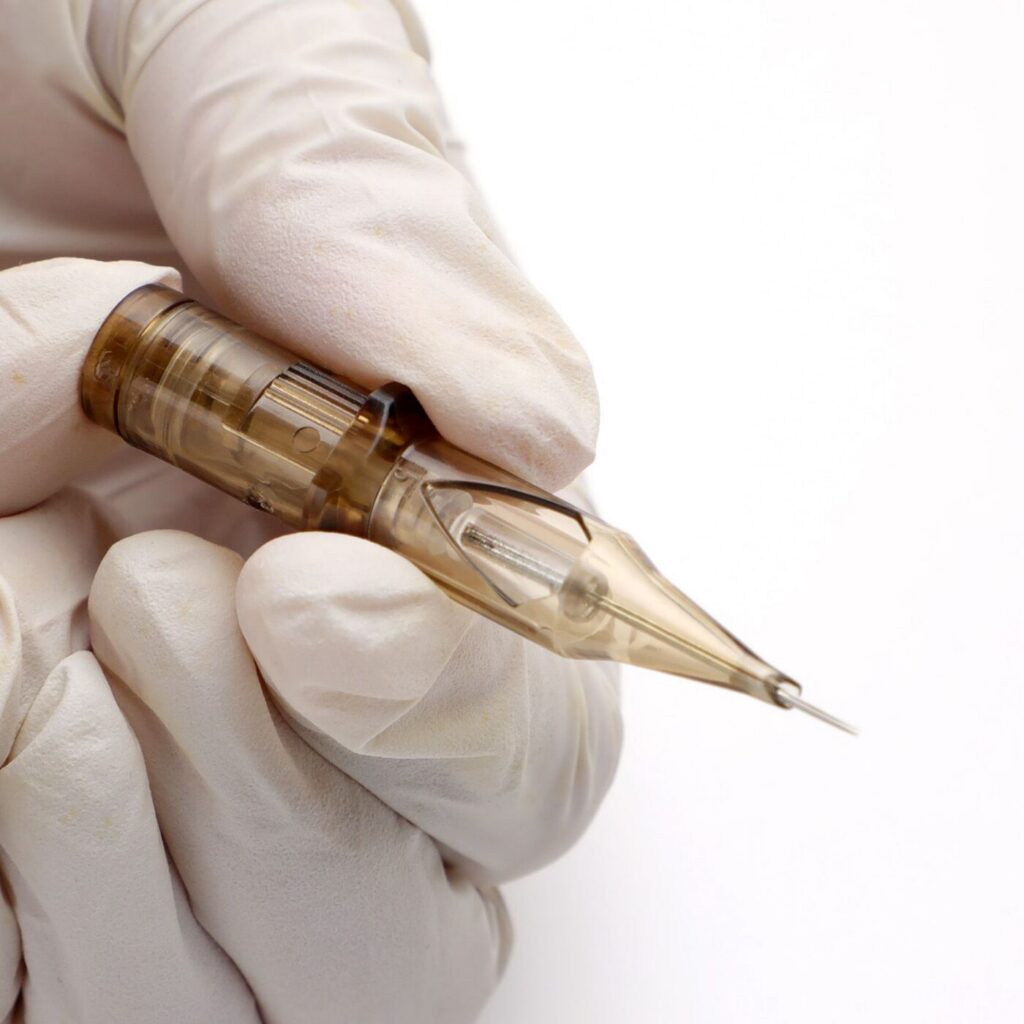
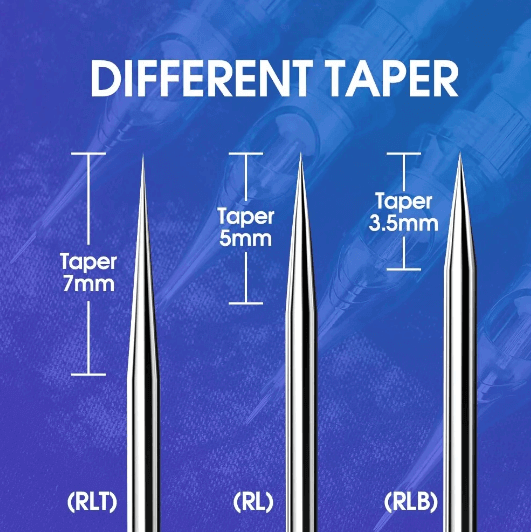
Taper refers to the length of the needle’s conical tip, measured in millimeters from the point where the needle begins to narrow to the very end. Standard tapers range from 3mm (short) to 8mm (long). Some specialty needles have even longer tapers up to 12mm.
Key variables:
- Taper length
- Needle diameter (e.g., 0.25mm, 0.30mm, 0.35mm)
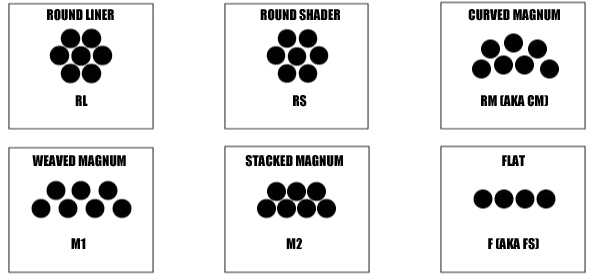
- Needle count and configuration (round, flat, magnum)
The taper affects how ink is deposited, how the needle penetrates skin, and how the line heals.
Long Taper Needles
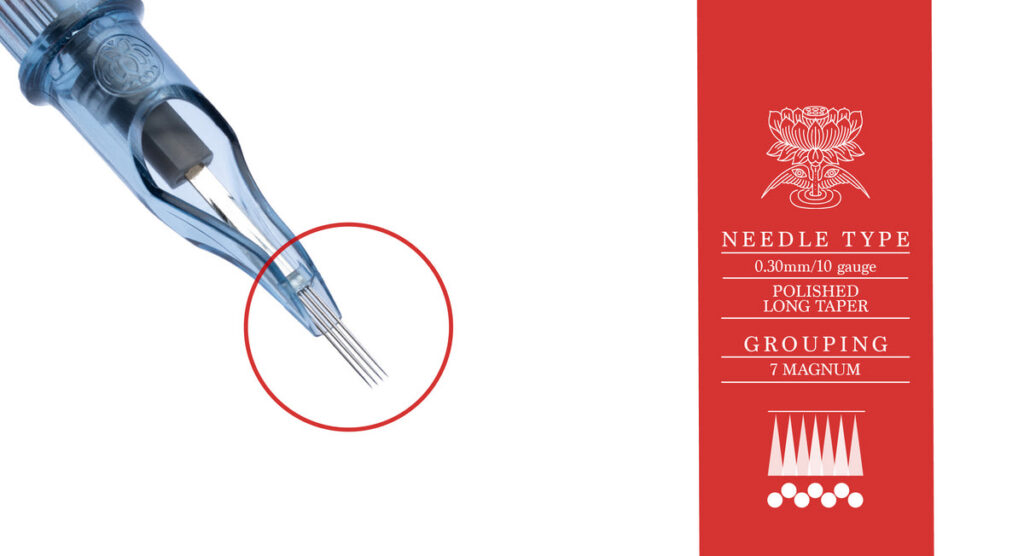
Long taper needles (typically 6mm–8mm) have a gradual, elongated point. This design allows for smoother entry and less trauma.
Characteristics
- Smooth insertion: The gradual slope reduces resistance.
- Less skin trauma: Less tearing, faster healing.
- Ideal for fine line, micro realism, and delicate shading.
- Produces crisp, consistent lines when used correctly.
When to Use
- Fine line and micro realism (e.g., 3RL long taper)
- Soft shading and stippling
- Working on sensitive skin (thin, elderly, scarred)
- Geometric tattoo with precise, thin lines
Caveats
- Requires slower hand speed and proper machine voltage.
- Can be less effective for bold, thick lines.
- May feel less “crisp” on packing solid color.
Short Taper Needles
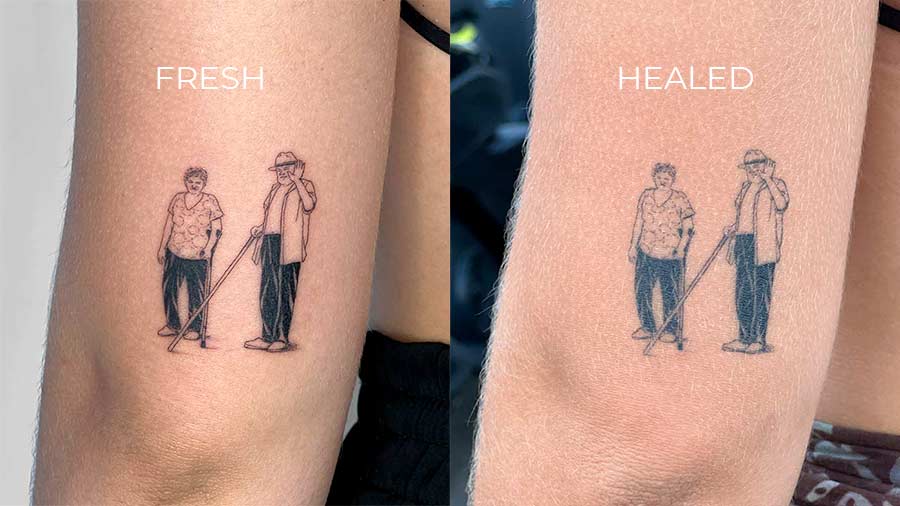
Short taper needles (3mm–4mm) have a steeper, more abrupt point. They are traditional for bold work.
Characteristics
- Aggressive entry: More resistance, but more control.
- Greater ink deposit per pass.
- Ideal for bold lines, lettering, and traditional styles.
- Produces thick, solid lines.
When to Use
- Japanese traditional, Neo-traditional, Tribal
- Bold lettering and blackwork
- Color packing and saturation
- Working on thick, resilient skin
Caveats
- Higher risk of blowouts if overworked.
- More trauma; longer healing.
- Not ideal for delicate fine line work.
How Taper Affects Healed Line Quality
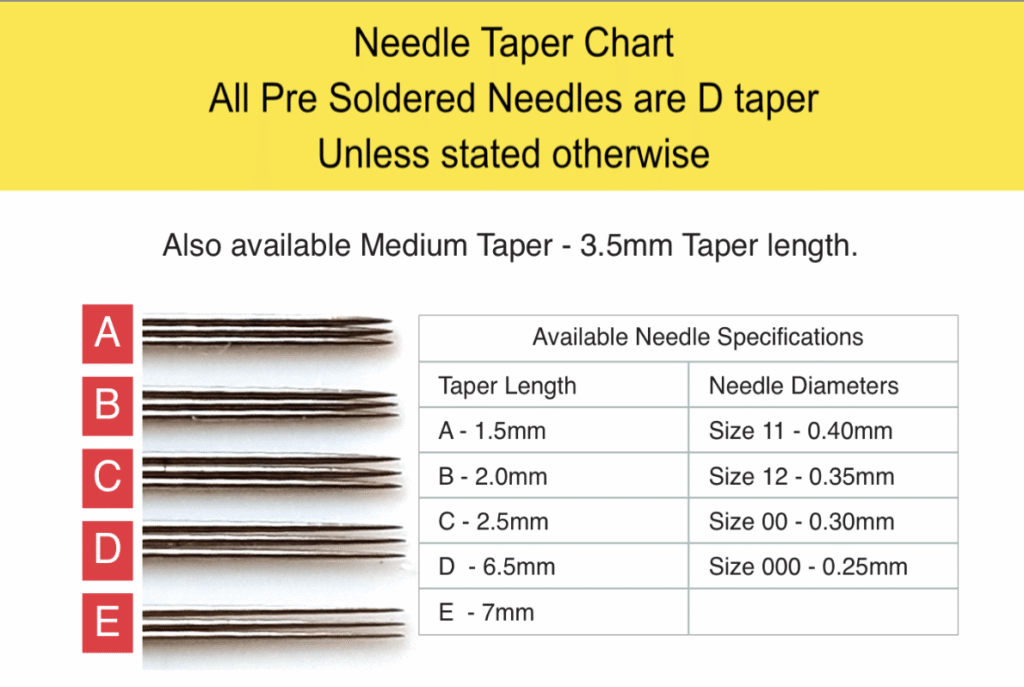
The taper influences how the line settles after healing. Long taper lines tend to remain crisp but may appear slightly thinner than intended. Short taper lines hold boldness but can spread if too deep.
Healing checklist:
- Long taper: Expect minimal spread; lines stay sharp.
- Short taper: Expect slight spread; lines remain solid.
- Check for blowouts: Short taper more prone if needle overextends.
Comparison: Long vs Short Taper
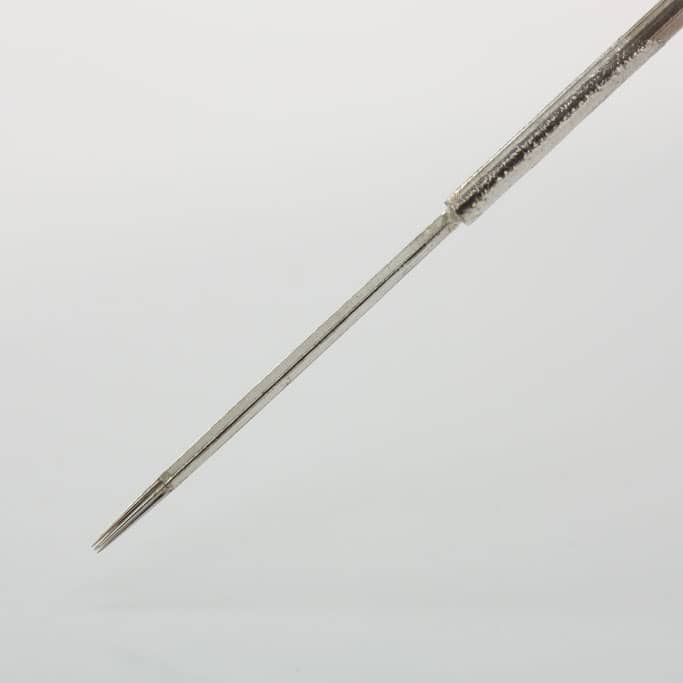
| Feature | Long Taper | Short Taper |
|---|---|---|
| Tip length | 6–8mm | 3–4mm |
| Entry smoothness | Very smooth | More resistant |
| Ink deposit | Moderate | Heavy |
| Best for | Fine line, micro realism | Bold lines, color packing |
| Healed line | Crisp, minimal spread | Solid, slight spread |
| Trauma | Low | Higher |
| Blowout risk | Lower | Higher |
Choosing the Right Taper for Tattoo Styles
Fine Line & Micro Realism
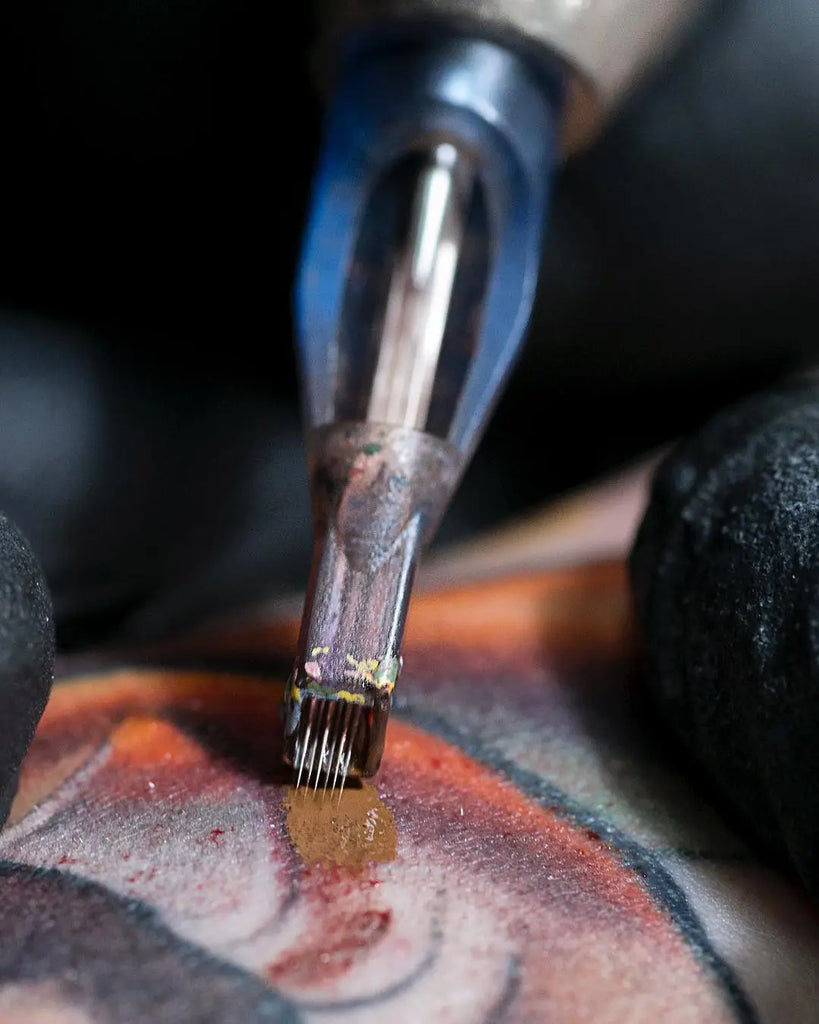
Use long taper (6–8mm) with small round liners (3RL, 5RL). Example: 5RL long taper for delicate portrait lines.
Geometric & Graphic Tattoo
Long taper for precision lines; short taper for solid fills. Hybrid setups possible.
Watercolor Tattoo
Long taper for soft edges; short taper for color saturation.
Blackwork & Dotwork
Long taper for stippling; short taper for bold black areas.
Japanese Traditional & Neo-traditional
Short taper for thick outlines and color packing.
Lettering
Short taper for bold script; long taper for fine cursive.
Ornamental & Minimal
Long taper for clean, thin lines.
Practical Tips for Tattoo Apprentices
- Test taper on fake skin: draw lines at different angles.
- Adjust machine voltage: long taper needs lower voltage (7–8V), short taper higher (8–9V).
- Hand speed: slower for long taper, faster for short taper.
- Needle depth: long taper requires shallower insertion.
- Use a magnifier to inspect needle taper before each session.
Common Mistakes
- Using short taper for fine line: leads to blowouts.
- Using long taper for bold outlines: lines appear weak.
- Not matching taper to skin type: thin skin needs long taper.
- Ignoring needle brand differences: same taper length can vary.
FAQ
1. Can I use a long taper needle for color packing?
Not ideal. Long taper deposits less ink per pass. Use short taper magnums for solid saturation.
2. How do I know if my needle has a long or short taper?
Measure from the tip to where the needle reaches full diameter. Most brands label taper on the package.
3. Does taper affect pain?
Yes. Long taper needles cause less trauma and generally less pain. However, individual pain tolerance varies.
4. Can I use a long taper for all styles?
No. While versatile, long taper is suboptimal for bold traditional lines. Have both taper types in your kit.
Conclusion
Understanding taper is essential for consistent, high-quality tattoos. Match taper to style, skin, and desired healed result. Keep experimenting and always prioritize safety. For more pro tips, visit our magazine or check tattoo marketplace for needle supplies.
Keep exploring Vietnam Tattoo
- Browse Ranking for notable studios by city, style, and intent.
- Search studios by city, verification level, and contact channel.
- View verified profiles to check approved and verified entries.
- Request a consultation if you need help choosing style, placement, or a suitable studio.
Content hub
Pro corner hub
Read more about needles, inks, machines, cartridges and safer professional practice.
Related reading
Continue reading
Mastering Tattoo Needle Depth: Skin Layers, Blowout Prevention, and Clean Line Control – A Pro Guide for Apprentices
Master tattoo needle depth with this pro guide: understand skin layers, prevent blowout, and achieve clean lines. Essential…
Tattoo Needle Cartridges: Grouping & Taper Guide for Artists & Apprentices
Master needle grouping and taper for flawless tattoos. Expert guide for artists and apprentices: liners, shaders, mags, diameter,…
Tattoo Ink Safety: Pigment Labels, Batch Tracking, and Sterile Handling – A Professional Studio Guide
Learn how to ensure tattoo ink safety in your studio: pigment labels, batch tracking, sterile storage, contamination prevention,…
