
Watercolor Tattoo Healed Portfolio Review: Edge Strategy, Pigment Contrast, and Long-Term Maintenance
Why a Healed Portfolio Review Is Non-Negotiable for Watercolor Tattoos
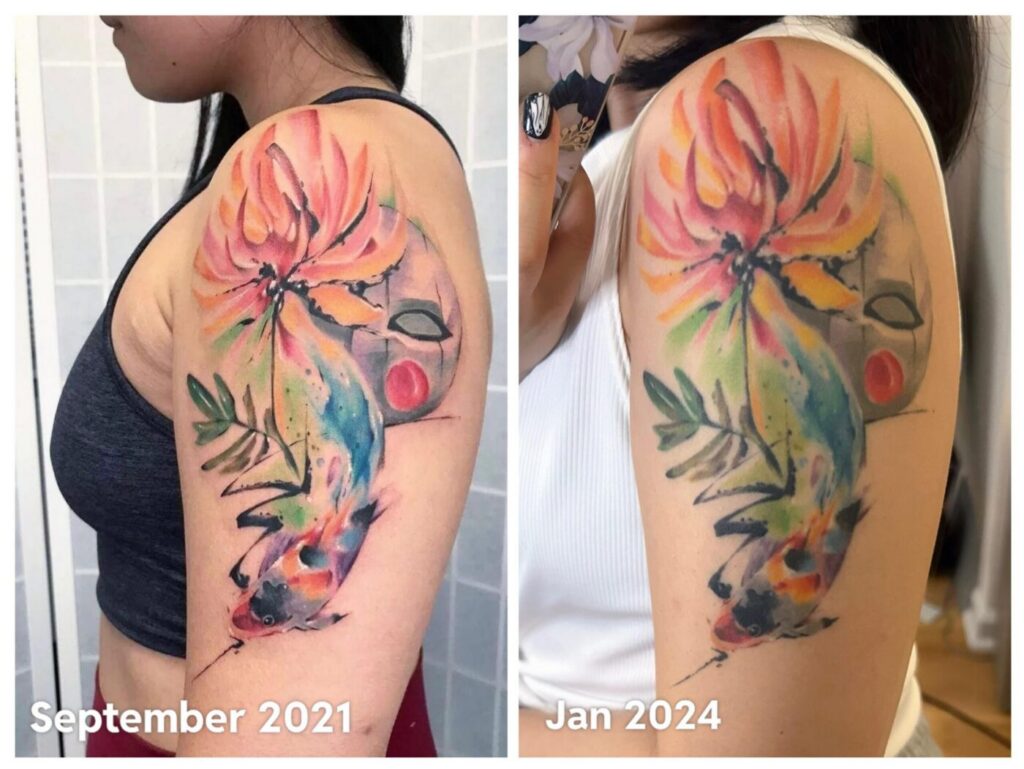
Watercolor tattoo is a style that lives or dies by its healed result. Fresh photos can hide poor saturation, blurry edges, and pigment migration. Before you book, demand a healed portfolio review. This guide gives you a specialist framework to evaluate edge strategy, pigment contrast, and long-term maintenance. For a broader look at style rankings and artist credibility, see our ranking section and verified studios.
This article focuses on one narrow question: how to read a healed Watercolor portfolio to predict long-term results. It is not a generic style overview. If you are comparing artists, treat the portfolio as a technical document, not an art gallery.
1. Edge Strategy: The Make-or-Break Factor
Hard vs. Soft Edges
Watercolor tattoos rely on controlled bleeding. A skilled artist uses hard edges where structure is needed (e.g., a petal tip) and soft edges for atmospheric blends. In a healed portfolio, check for:
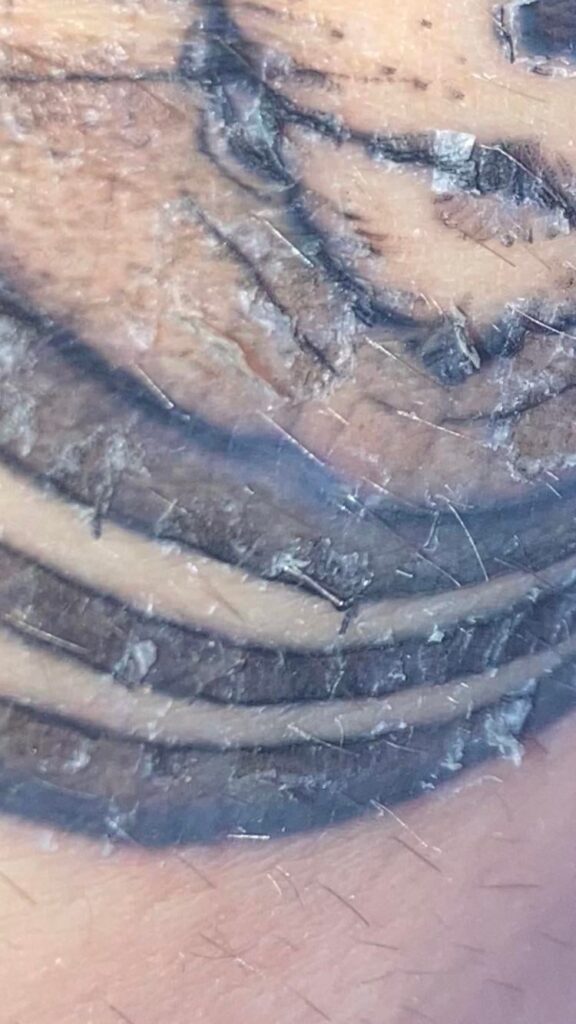
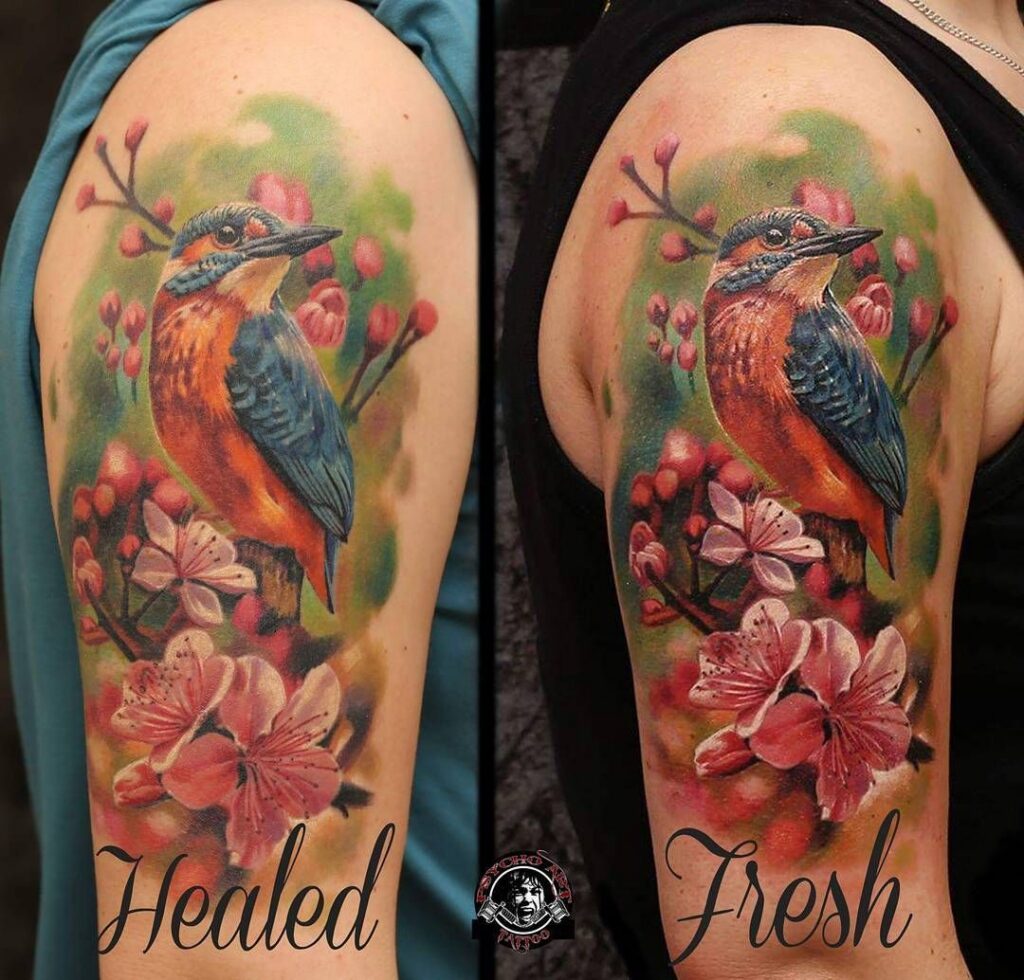
- Edge integrity: Do hard edges remain crisp after 6–12 months? If they look fuzzy or blown out, the artist likely overworked the skin.
- Gradient transitions: Are soft edges still smooth, or did they turn muddy? Muddy transitions indicate poor pigment choice or excessive trauma.
- Negative space: Is the skin break used intentionally? Watercolor often uses skin as white, but if the artist didn’t plan for it, the design can look unfinished.
Linework as Skeleton
Many watercolor tattoos use minimal or no linework. However, a fine line or dotwork skeleton can anchor the color. In healed photos, look for linework that hasn’t disappeared or thickened. If the artist avoids all linework, ask how they prevent color drift.
Transition Edges
Transition edges are where two contrasting colors meet. A good transition has an intermediate zone—either a neutral layer or a deliberate overlap. If red meets green with no buffer, the healed result often looks muddy or bruised. Ask the artist about their layering order and whether they use a transitional pigment.
2. Pigment Contrast: Saturation, Value, and Longevity
Pigment Quality and Packing
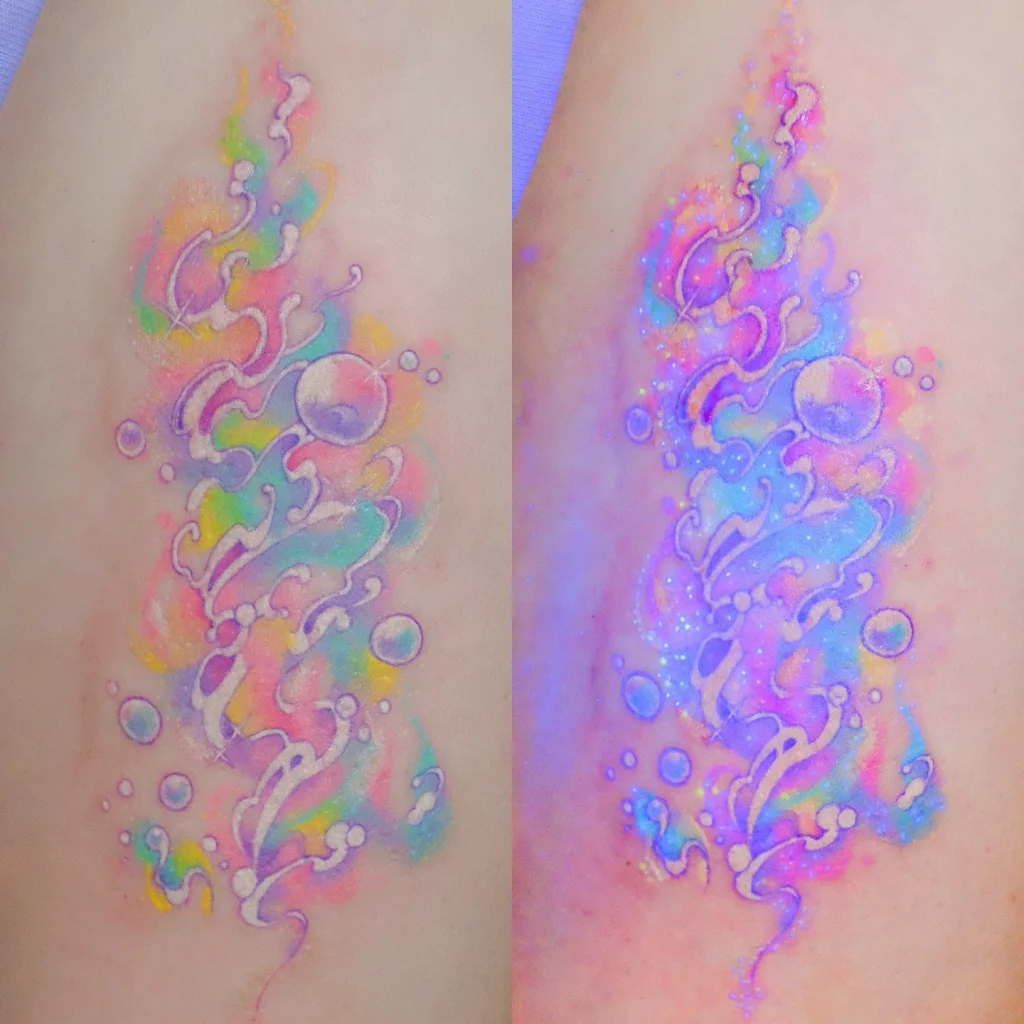
Watercolor tattoos often use diluted pigments. The risk: low pigment load leads to poor retention. In healed portfolios, check for:
- Value range: Are there true darks and lights? A washed-out healed tattoo suggests under-packing.
- Saturation: Do colors remain vibrant or fade to gray? Yellows and light greens are notorious for fading; a good artist compensates with layering.
- Contrast: Without black, contrast must come from complementary colors and value shifts. Look for deliberate placement of warm and cool tones.
Color Theory in Healed Skin
Skin is not paper. Pigments shift as they settle. A healed portfolio should show how the artist handles:
- Cool tones over warm skin: Blues and purples can turn gray if not packed well.
- Warm tones over cool skin: Reds and oranges may need extra saturation.
- White highlights: White ink often fades to a yellowish tint; check if the artist uses it sparingly.
For a deeper dive into pigment behavior, consult our magazine articles.
3. Long-Term Maintenance: What Healed Photos Reveal

Age of Healed Photos
Ask for photos at 3, 6, and 12+ months. A 3-month photo is still early; 12 months shows true settling. If the artist only shows 1-month photos, be cautious.
Aftercare Impact
Healed results depend on aftercare. In a portfolio review, ask:
- What aftercare did the client follow?
- Were there touch-ups? How many?
- How did sun exposure affect the tattoo?
Good artists document aftercare and touch-up history. They also advise on sun protection and moisturizing without giving medical advice.
Touch-Up Policy
A reputable artist offers a touch-up window (e.g., 3–6 months). In the portfolio, look for healed photos after touch-ups. If the artist claims no touch-ups are ever needed, that’s a red flag.
4. Practical Checklist for Reviewing a Healed Watercolor Portfolio
- Consistency: Do multiple healed pieces show the same edge control and saturation?
- Variety: Can they handle different skin tones and placements?
- Documentation: Are photos taken in neutral light without filters?
- Client feedback: Are there testimonials about longevity?
- Artist’s own critique: Do they point out flaws and how they’d improve?
Use this checklist when comparing artists. For pricing context, see our price estimation guide.
5. Booking and Safety Questions
When you find a promising artist, ask these questions before booking:
- Can I see healed photos of watercolor tattoos on skin similar to mine?
- What pigments do you use, and how do you ensure saturation?
- How do you prevent blowouts on thin skin or over bony areas?
- What is your touch-up policy, and how often do clients need them?
- How do you advise clients on sun protection and aftercare?
For consultation guidance, visit our consultation page.
6. Red Flags in a Healed Portfolio
- Only fresh photos or heavily filtered images.
- Inconsistent edge quality across pieces.
- No healed photos older than 6 months.
- Claims that watercolor tattoos never need touch-ups.
- Reluctance to discuss pigment brands or aftercare.
FAQ
How long should I wait to judge a healed watercolor tattoo?
Wait at least 6–12 months. At 3 months, the tattoo is still settling. By 12 months, you’ll see true pigment retention and edge stability.
Can watercolor tattoos be touched up without losing softness?
Yes, but touch-ups must be done carefully. Overworking can blur edges. A skilled artist will add pigment with minimal trauma.
Do watercolor tattoos age worse than blackwork or fine line?
They can fade faster due to lower pigment density. However, with proper packing and maintenance, they can age well. Blackwork and fine line have different aging patterns.
What should I look for in a healed portfolio if I have darker skin?
Look for healed photos on similar skin tones. Check for saturation and contrast. Some pigments may not show well; the artist should adjust the palette.
Ready to find a specialist? Browse our studio directory for artists with verified healed portfolios.
Content hub
Tattoo styles pillar
This article belongs to the styles cluster. Open the pillar page to compare Irezumi, Old School, Realistic, Blackwork, Fine line, Geometric and Watercolor.
Related reading
Continue reading
Watercolor Tattoo: Placement, Body-Flow, Edge Strategy, Pigment Contrast, and Long-Term Maintenance
A specialist guide to watercolor tattoo placement and body-flow. Learn edge strategy, pigment contrast checks, long-term maintenance, and…

Watercolor Tattoo Design Consultation Checklist: Edge Strategy, Pigment Contrast, and Long-Term Maintenance
A specialist guide to watercolor tattoo consultations, covering edge strategy, pigment contrast, and long-term maintenance. Includes checklists and…

Dotwork Tattoo Portfolio Review: How to Assess Dot Density, Gradient Control, and Session Planning
Learn how to critically evaluate dotwork tattoo portfolios by examining dot density, gradient control, and session planning. A…