

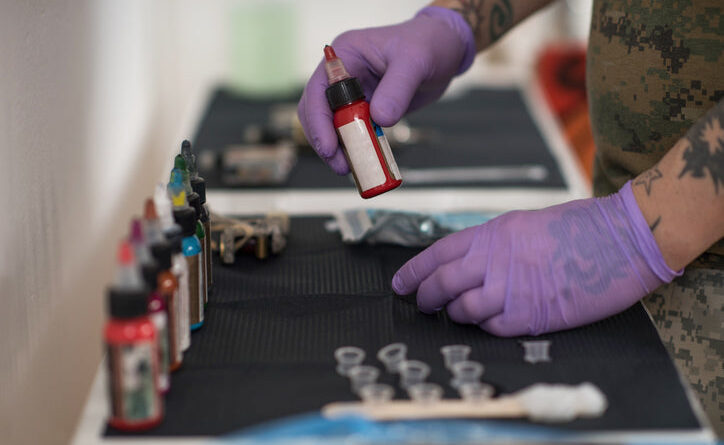
Tattoo Ink Safety: A Professional’s Guide to Pigment Composition, Risks, and Studio Protocols
Introduction: Why Ink Safety Matters More Than Ever
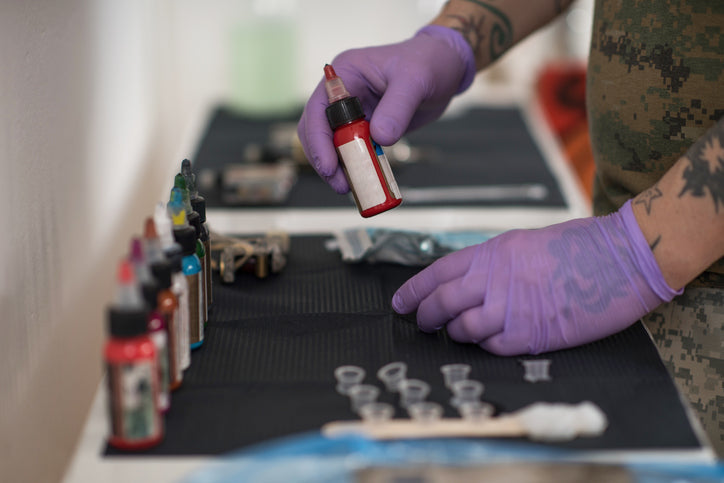
As tattoo professionals, ink is our primary medium. Beyond aesthetic choices, pigment safety directly impacts client health and studio reputation. With evolving regulations in Europe (REACH) and the U.S. (FDA scrutiny), understanding what goes into your ink bottles is no longer optional—it’s a professional obligation. This guide breaks down pigment chemistry, contamination risks, and best practices for selecting and handling inks in your studio.
Pigment Basics: What’s in Your Ink?
Modern tattoo inks consist of two main components: pigments (color particles) and carriers (liquid suspension). Pigments can be organic (carbon-based) or inorganic (metal salts). Organic pigments offer brighter colors but may fade faster; inorganic pigments (e.g., titanium dioxide for white, iron oxides for black) are more stable but carry heavy metal concerns.
Carriers: The Hidden Ingredient
Carriers include distilled water, witch hazel, glycerin, or alcohol. Some cheaper inks use impure carriers that can introduce bacteria or endotoxins. Always check the carrier list—avoid inks with known irritants like propylene glycol in high concentrations.
Regulatory Landscape: REACH and Beyond

The EU’s REACH regulation (2022) banned over 4,000 chemicals from tattoo inks, including certain azo dyes and preservatives. The FDA has not yet enforced similar bans in the U.S., but many reputable manufacturers now comply voluntarily. As a professional, you should only stock inks that meet REACH standards or are certified by independent labs.
Choosing Safe Inks: A Checklist for Studios
- Check MSDS/SDS: Every ink should have a Material Safety Data Sheet listing ingredients and hazards.
- Look for third-party testing: Brands like Intenze, Eternal, and Kuro Sumi publish batch-test results for heavy metals and microbial contamination.
- Avoid unlabeled products: No ingredient list? No batch number? Don’t use it.
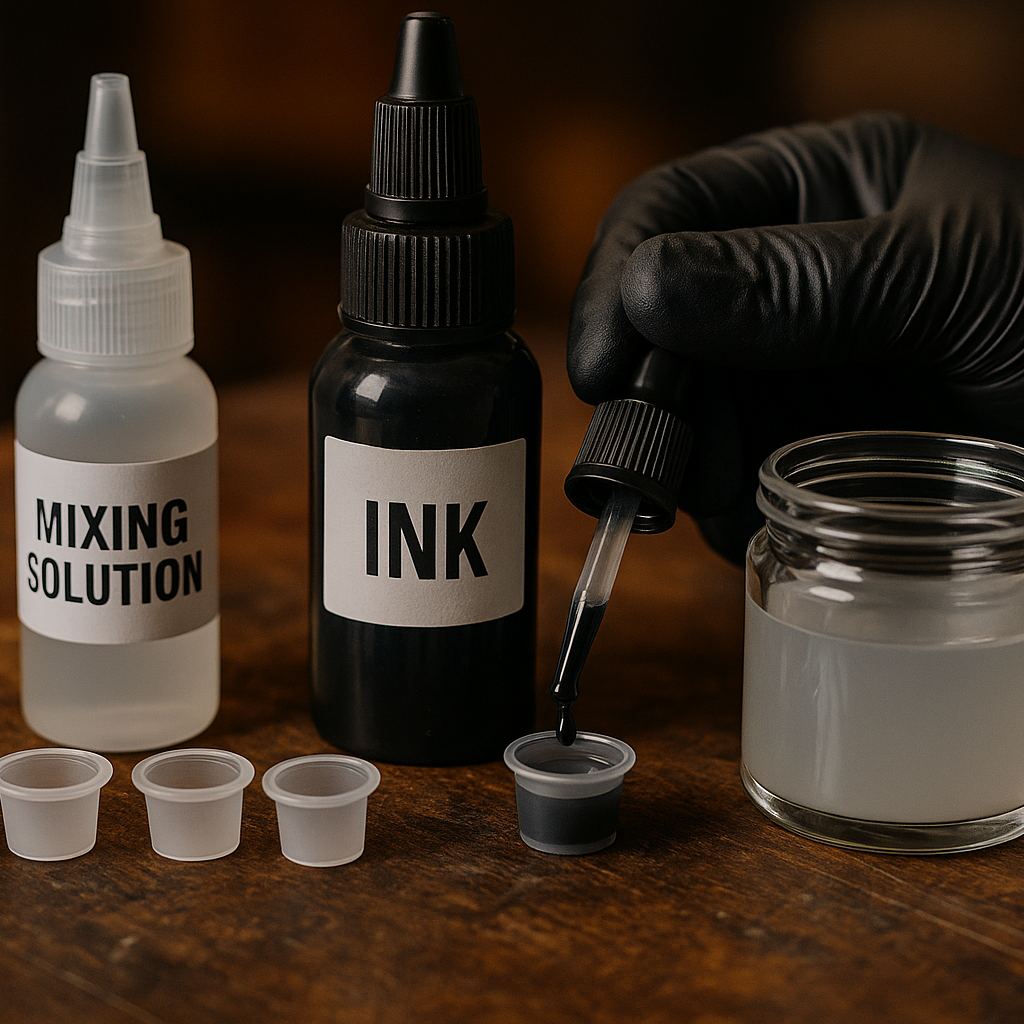
- Pre-diluted vs. concentrate: Diluting your own ink with distilled water can introduce contamination if not sterile.
Common Contaminants and Health Risks
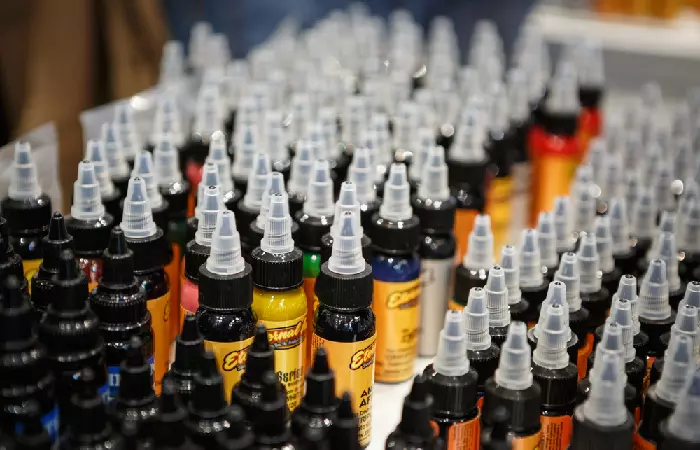
Studies have found tattoo inks contaminated with bacteria (Pseudomonas, Staphylococcus), mold, and endotoxins. Heavy metals like lead, arsenic, and nickel can cause allergic reactions, granulomas, or long-term toxicity. Carbon black (for black ink) is generally safe, but some black inks contain polycyclic aromatic hydrocarbons (PAHs) from incomplete combustion.
Allergic Reactions: What to Watch For
Red pigments are notorious for allergies due to azo compounds or mercury sulfide. Symptoms include itching, raised bumps, or persistent inflammation. Pre-patch testing is not standard but can be offered to clients with known sensitivities.
Sterile Handling and Storage Protocols
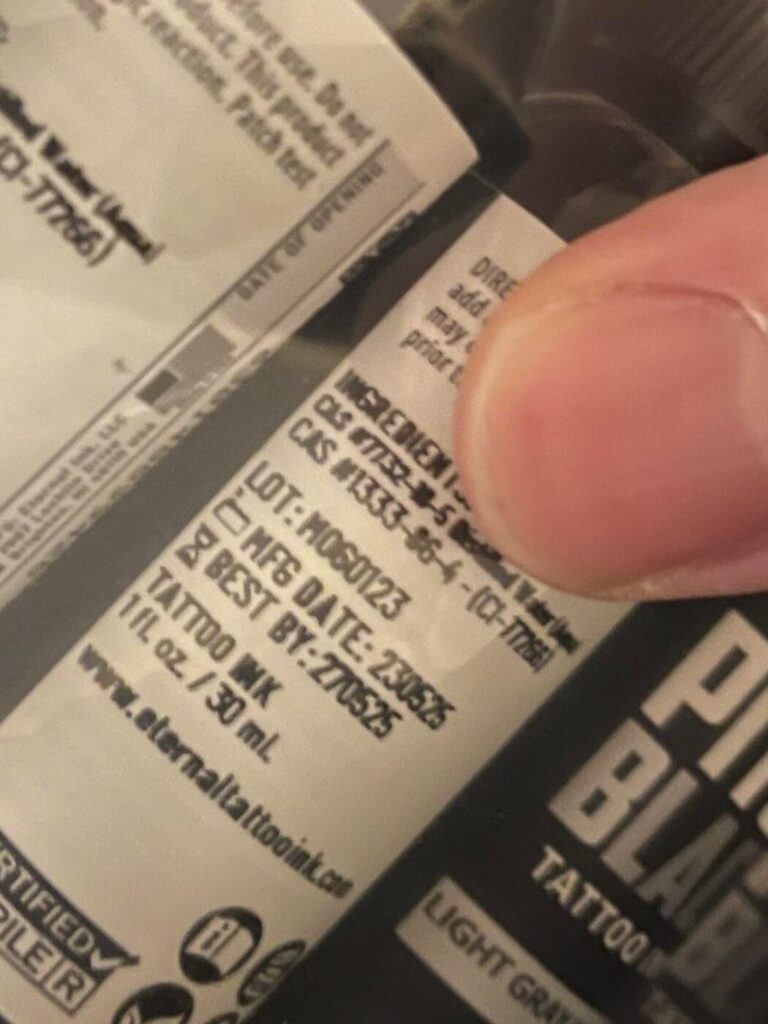
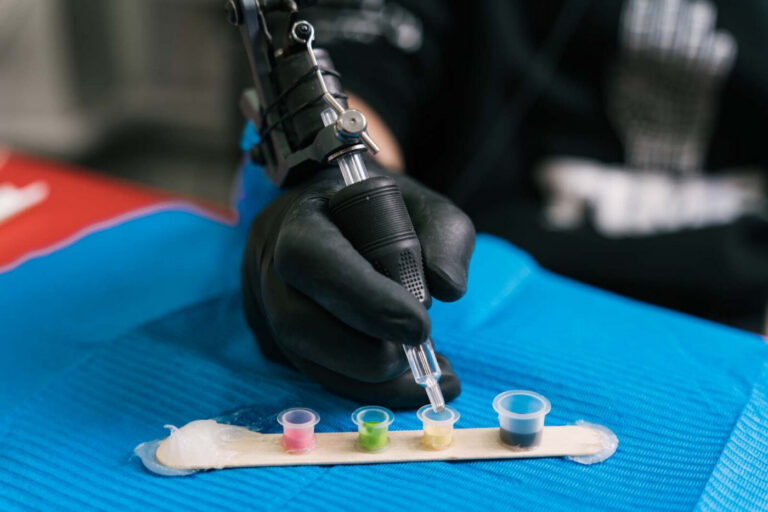
Ink bottles are single-use only—never dip a needle directly into the bottle. Use disposable ink caps and pour only what you need. Store inks at room temperature away from sunlight. Discard any ink that changes color, consistency, or develops a foul odor.
FAQ: Ink Safety Questions from Professionals
1. Can I mix different brands of ink?
Mixing inks from different manufacturers can alter pH and stability, potentially causing separation or contamination. If you must mix, do it in a sterile cup and use immediately.
2. How long does tattoo ink last in the bottle?
Most inks have a shelf life of 2–5 years if unopened. Once opened, use within 6–12 months. Check the expiration date and batch number.
3. Are vegan inks safer?
Vegan inks avoid animal-derived glycerin, which can reduce risk of allergic reactions in some clients. However, they are not inherently safer—always check for contaminants.
4. What should I do if a client has a reaction?
Advise them to see a dermatologist. Document the reaction, note the ink brand and batch, and report to the manufacturer. Consider switching to a different brand for future work.
Conclusion: Ink Safety as a Professional Standard
Staying informed about ink composition and regulations protects your clients and your business. Make safety a part of your brand—clients trust studios that prioritize knowledge over trends. For more resources, visit our consultation page or explore our magazine for deeper dives.
Keep exploring Vietnam Tattoo
- Browse Ranking for notable studios by city, style, and intent.
- Search studios by city, verification level, and contact channel.
- View verified profiles to check approved and verified entries.
- Request a consultation if you need help choosing style, placement, or a suitable studio.
Content hub
Pro corner hub
Read more about needles, inks, machines, cartridges and safer professional practice.
Related reading
Continue reading
Tattoo Stencil Troubleshooting: Smudging, Transfer Gel, and Skin Prep – A Studio Workflow Guide
Master stencil application with this practical guide covering smudging causes, transfer gel selection, and a step-by-step skin prep…
Tattoo Machine Stroke Length: Lining, Shading, and Color Packing Decisions – A Pro Guide
Master the relationship between stroke length and tattoo results. Expert guide on lining, shading, and color packing machine…
The Pro’s Guide to Tattoo Ink Mixing: Greywash, Color Dilution & Safety Workflow
Master ink mixing for pros: greywash ratios, color dilution techniques, and a step-by-step safety workflow to prevent contamination…