Polynesian Tattoo Healed Portfolio Review: A Specialist Guide to Body Mapping, Symbol Research and Respectful Consultation
Why a Healed Portfolio Matters More Than a Fresh One
Polynesian tattoo is not a single style you can judge from a crisp Instagram photo taken under studio light. It is a family of related traditions from across the Pacific, built on blackwork, negative space, and motifs that carry lineage, protection, and genealogy. A fresh tattoo hides everything: swelling, ink saturation, line weight, and how the design sits on the muscle. A healed review is the only honest test. If you are comparing artists, start with our ranking methodology and then apply the checks below.
This guide is for collectors who already know they want Polynesian work and need a repeatable way to review healed portfolios, map the design to their body, research symbols without appropriating, and run a respectful consultation.
1. Read the Healed Portfolio Like an Editor
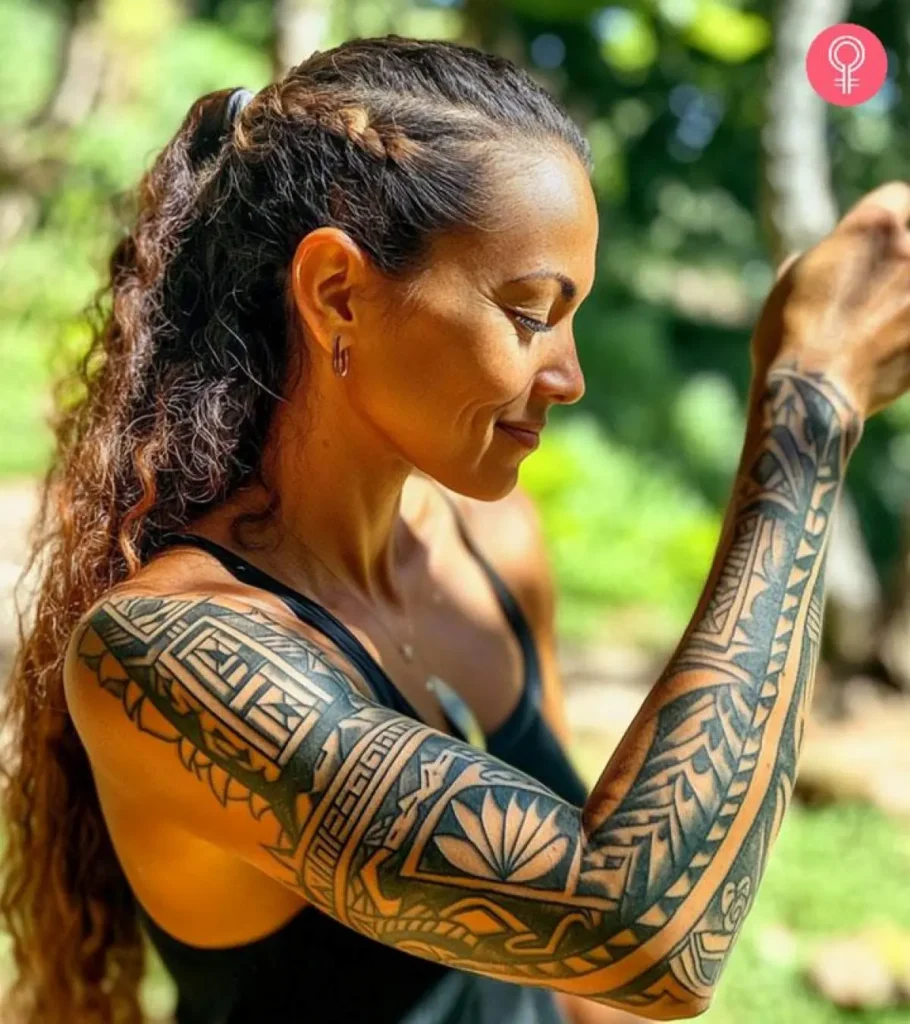
Line weight and saturation
Polynesian blackwork lives or dies on line consistency. On a healed piece, look for uniform edges along the main outlines. If a line fades into grey at the elbow or knee, the artist may have under-packed the ink. If lines bleed into each other after healing, the needle may have been too deep or the skin overworked. Ask for healed photos at 6–12 months, not 6 weeks.
Negative space and pattern rhythm
Traditional Polynesian design uses the skin as part of the pattern. Check that the gaps between bands are even and intentional. A healed piece should still read as a clear rhythm of solid black, fine line, and open skin. If the negative space collapses after healing, the composition was too dense.
Healed on different skin tones
Blackwork behaves differently on different skin. Ask to see healed work on skin tones similar to yours. On deeper tones, contrast comes from saturation and negative space, not from black-on-white contrast. A portfolio that only shows fresh work on light skin tells you very little.
- Request 3–5 healed photos per artist, dated and ideally with a body-part label.
- Look for healed close-ups, not just full-body wide shots.
- Check whether the artist credits the cultural source of the motifs.
- Compare fresh vs. healed pairs from the same session.
2. Body Mapping Before You Choose Motifs
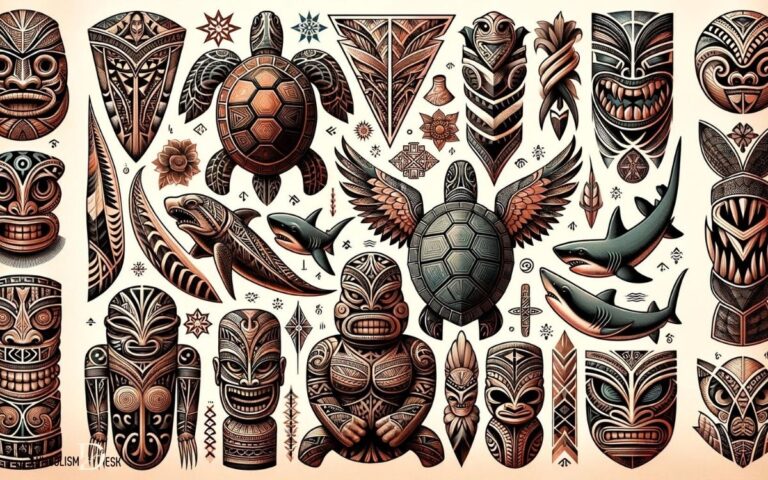
Body mapping means planning the tattoo around anatomy, movement, and future expansion. Polynesian work is often designed as a continuous piece, so a bad map today blocks a good sleeve tomorrow.
Muscle flow and joint behavior
Bands that run across a joint will distort when the limb bends. A skilled artist will either break the band at the joint or angle it so the distortion reads as intentional. On a healed portfolio, check the inner elbow, the back of the knee, and the wrist. If the pattern looks stretched or pinched there, the mapping was weak.
Symmetry and asymmetry
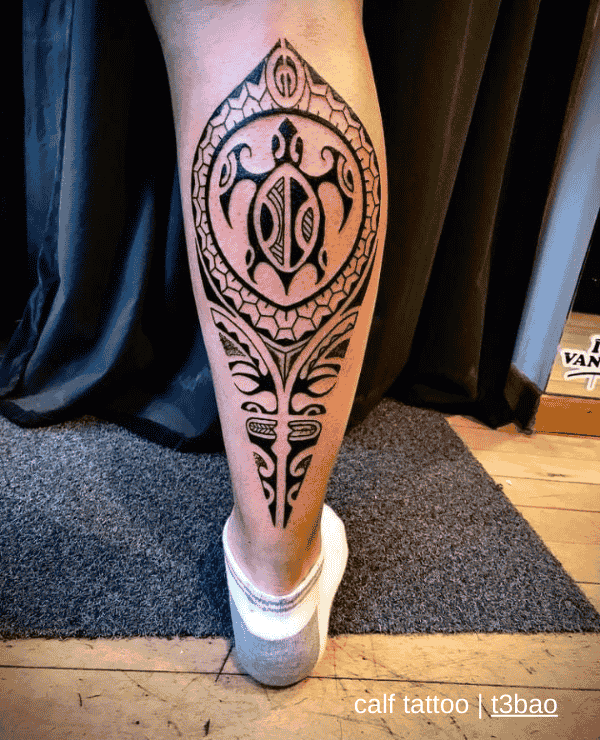
Some Polynesian traditions favor asymmetry, others use mirrored bands. Decide which logic you want before the stencil. A healed portfolio should show the artist can hold symmetry on curved surfaces like the shoulder or calf, where a flat stencil is misleading.
Coverage and future space
Map the piece with room for extension. A half-sleeve that ends mid-bicep can be extended into a full sleeve if the artist leaves a clean transition band. Ask how the design will age if you add more work in five years.
3. Symbol Research Without Appropriation
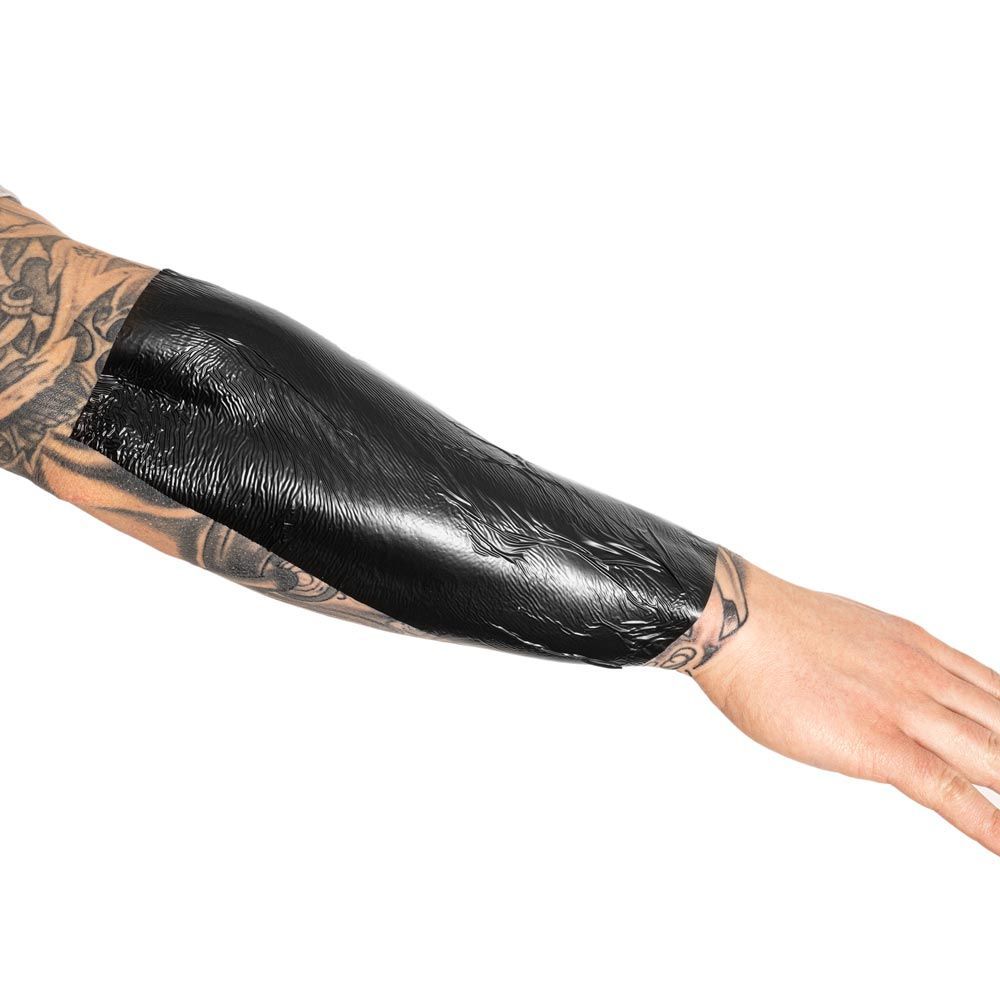
Polynesian motifs are not a menu of decorative shapes. Many carry specific meanings tied to family, rank, protection, or genealogy, and those meanings vary by island group and lineage. Research is part of the process, not an obstacle.
Ask what a motif means and where it comes from
A serious artist can explain the origin of a motif and will say when they do not know. If an artist sells you a “Polynesian symbol” with no source, treat that as a warning. Use our consultation resources to prepare questions before you book.
Respectful consultation questions
- Which tradition or island group does this motif come from?
- Is this motif appropriate for someone outside that lineage?
- Do you work with cultural advisors or reference books?
- Can you show healed examples of this specific motif?
- How do you handle requests that mix unrelated traditions?
If you want a culturally grounded piece, be ready to accept “no” or a redesigned motif. Respect is not a marketing line; it changes the design.
4. Specialist Checks for Healed Polynesian Work
Blackwork and Dotwork detail
Polynesian work often combines solid blackwork with dotwork shading. On healed skin, dotwork should still show individual dots or a controlled gradient, not a muddy smear. Fine line accents should remain crisp at 12 months.
Skin texture and scarring
Healed photos reveal scarring that fresh photos hide. Look for raised lines, keloid tendency, or patchy ink. This is not automatically the artist’s fault, but it is information. Ask how they adjust technique for clients with a history of scarring.
Consistency across a series
If an artist has done multiple Polynesian pieces, compare them. Consistent line weight, band spacing, and saturation across different bodies is a strong signal of skill. Inconsistency suggests the result depends on luck rather than method.
5. Booking, Safety and Aftercare Questions
Before you book, confirm practical details. Use our price estimation guide to set a realistic budget, and check verified studios for hygiene standards.
- What is your healing timeline, and when should I send healed photos?
- How many sessions will this design need, and how long between them?
- What aftercare do you recommend for blackwork on my skin type?
- How do you handle touch-ups if a line fades?
- Can I see the stencil placement before we start?
Do not treat aftercare advice from a forum as medical guidance. Follow your artist’s instructions and seek a medical professional if you see signs of infection.
6. Red Flags in a Polynesian Portfolio
- Only fresh photos, no healed work.
- Motifs labeled generically with no cultural source.
- Copy-pasted designs sold as custom.
- Lines that already look blown out in fresh photos.
- No discussion of body mapping or future expansion.
- Pressure to book without a consultation.
For more editorial breakdowns of styles and healed reviews, browse our magazine and compare artists through the studio directory.
FAQ
How long should I wait before judging a healed Polynesian tattoo?
Wait at least 6 months, ideally 12, before judging line weight and saturation. Surface healing finishes in weeks, but ink settles and skin texture changes over months.
Can I combine Polynesian motifs from different traditions?
You can ask, but a respectful artist may decline or redesign. Mixing unrelated traditions can misrepresent meaning. Discuss it in consultation and accept the artist’s cultural boundaries.
Does Polynesian tattoo work on all skin tones?
Yes, but contrast strategy changes. On deeper skin tones, rely on saturation and negative space rather than fine detail. Ask for healed examples on skin similar to yours.
What should I bring to a Polynesian tattoo consultation?
Bring reference images, your body-mapping goals, questions about motif origin, and healed photo requests. A prepared consultation leads to a better design and fewer surprises.
Content hub
Tattoo styles pillar
This article belongs to the styles cluster. Open the pillar page to compare Irezumi, Old School, Realistic, Blackwork, Fine line, Geometric and Watercolor.
Related reading
Continue reading
Polynesian Tattoo: Placement and Body-Flow Decisions
A specialist guide to Polynesian tattoo placement and body-flow decisions: body mapping, motif density, symbol research, respectful consultation…

Polynesian Tattoo Design Consultation Checklist: Body Mapping, Symbol Research & Respectful Planning
A specialist Polynesian tattoo consultation checklist covering body mapping, symbol research, cultural permission, technique, booking questions, and respectful…

Chicano Tattoo Healed Portfolio Review: Lettering, Portrait Transitions & Black-and-Grey Flow
A specialist guide to reviewing a healed Chicano tattoo portfolio, focused on lettering legibility, portrait transitions, and black-and-grey…