
Ornamental Tattoo Placement: Rhythm, Alignment, and Negative Space
Why Placement Is the Real Design

Ornamental tattooing is not a motif you slap on a shoulder. It is a structural system of repeating lines, dots, and shapes that must follow the body’s contours. When done well, the tattoo looks as if it grew there. When done poorly, it fights the anatomy. This guide focuses on the three decisions that make or break an ornamental piece: pattern rhythm, central alignment, and negative space. If you are considering an ornamental tattoo, read this before you book.
Pattern Rhythm: The Pulse of the Design
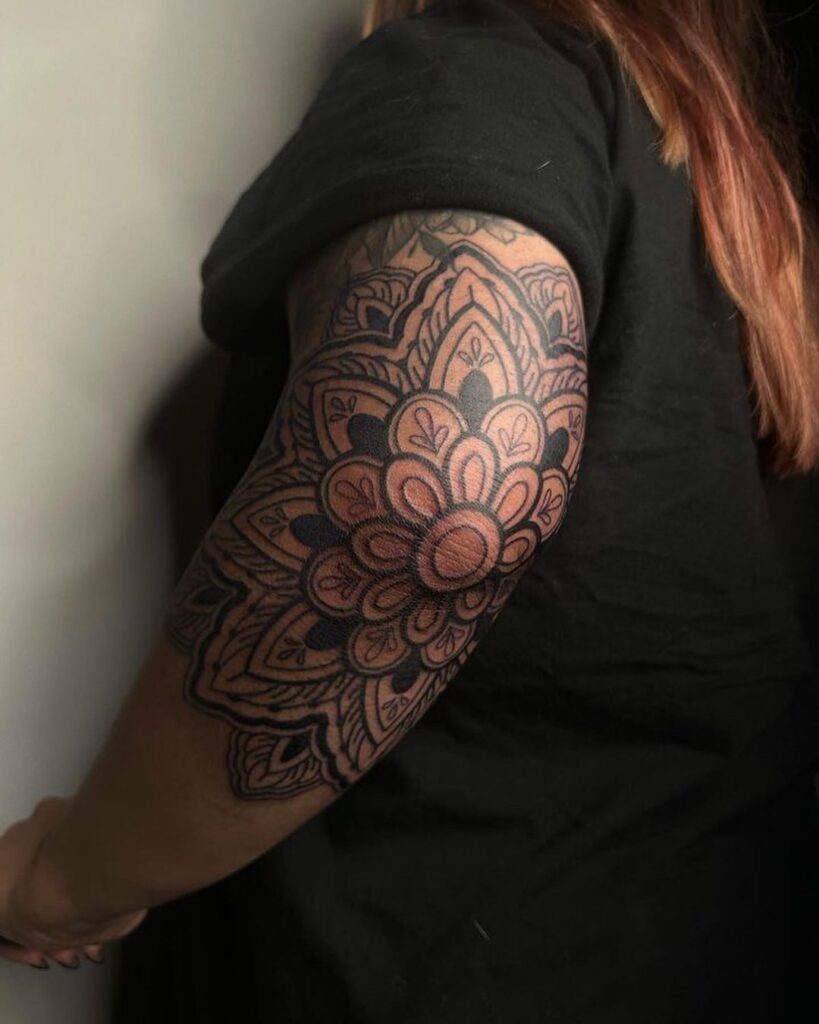
Rhythm in ornamental work is the visual tempo created by repeating elements—lines, dots, curves, and angles. A senior artist will always ask: Is the rhythm consistent? Inconsistent spacing or weight will make the pattern feel jittery. For example, a band of fine line chevrons around the forearm should have identical stroke weight and spacing. If one chevron is thicker or slightly wider, the eye catches it immediately.
How to Check Rhythm
- Look at the design from arm’s length. Does the pattern flow like a continuous pulse?
- Trace the main lines with your finger. Are there sudden stops or awkward bends?
- Ask your artist to show you the stencil with a mirror. Check that the rhythm follows the muscle, not a flat drawing.
For blackwork and dotwork ornamental pieces, rhythm is even more critical. Dot clusters must have consistent density. A gradient of dots that fades too fast can break the illusion of depth. Discuss fine line versus bold line—each creates a different rhythm. Fine line ornamental is more delicate and forgiving, but bold blackwork demands perfect symmetry.
Central Alignment: The Spine of the Design
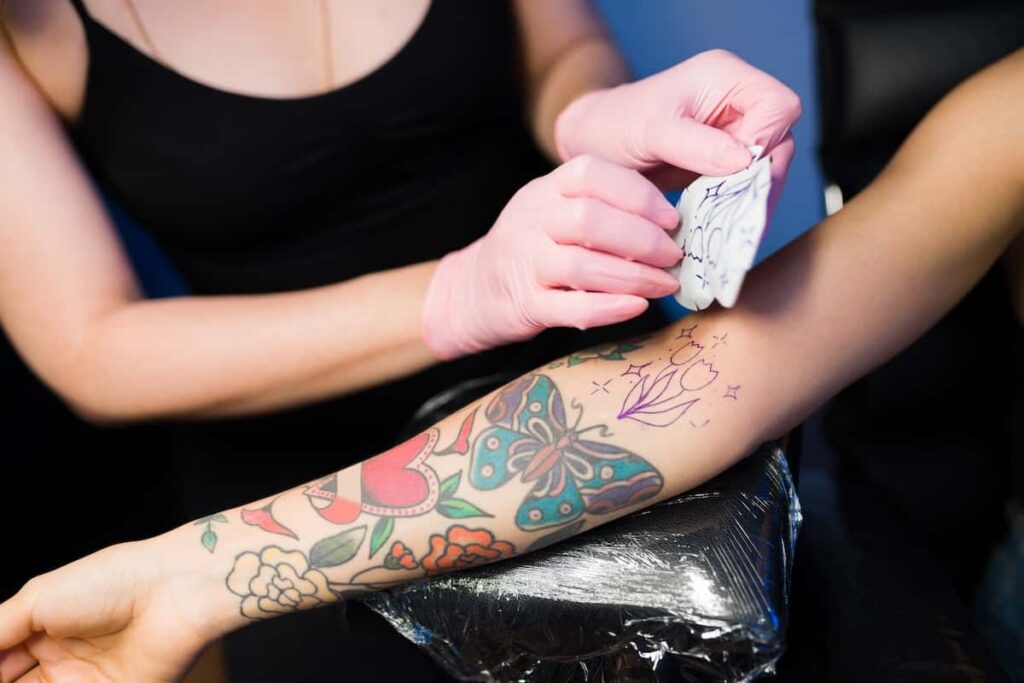
Central alignment refers to how the ornament is positioned relative to the body’s midline or a specific anatomical axis. For example, a chest piece should have its central axis exactly on the sternum. A back piece should follow the spine. If the alignment is off by even a few millimeters, the tattoo will look crooked, especially when viewed from the front or back.
Key Alignment Points
- Sternum: For chest and sternum tattoos, the center line must match the breastbone. Any deviation is glaring.
- Spine: Back pieces often use the spine as a central axis. The pattern should mirror on both sides.
- Navel: Lower abdomen ornamental designs often center on the navel. Be aware that the navel shifts with weight changes.
- Limbs: For arm or leg bands, the central axis is the limb’s midline. The pattern should wrap evenly.
When the body moves, the alignment can shift. A design that looks centered when standing may shift when you sit or twist. The artist must anticipate this. For example, a sternum piece will stretch when you raise your arms. The pattern must be designed to flex without distorting the central axis.
Negative Space: The Breathing Room
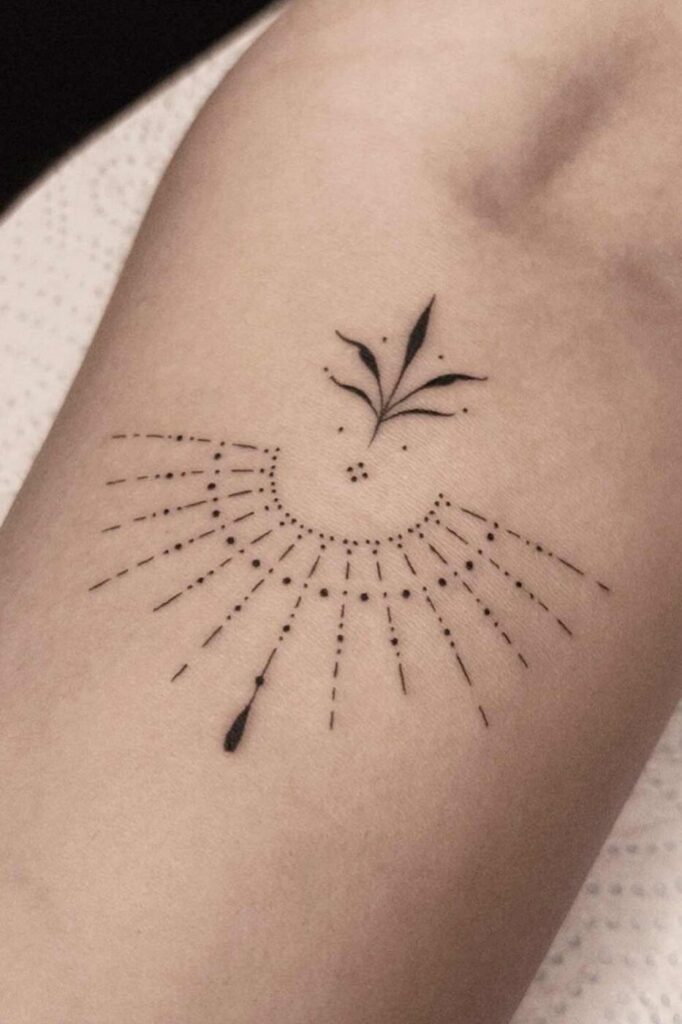
Negative space is the un-inked skin that shapes the tattoo as much as the ink itself. In ornamental work, negative space creates contrast and structure. Without it, the pattern becomes a muddy mass. A skilled artist will use negative space to guide the eye and define the body’s natural contours.
Using Negative Space Strategically
- Separate patterns: Use clear skin gaps between different ornamental bands to avoid visual clutter.
- Highlight curves: Leave negative space along the deltoid or calf to emphasize the muscle’s shape.
- Create focal points: A negative space diamond or circle can anchor the design.
For geometric tattoo and abstract tattoo styles, negative space is often the main design element. In ornamental, it is the pause between the notes. If your artist suggests adding more ink to fill a gap, ask why. Sometimes the gap is intentional.
Placement-by-Body-Area Checks
Forearm and Wrist
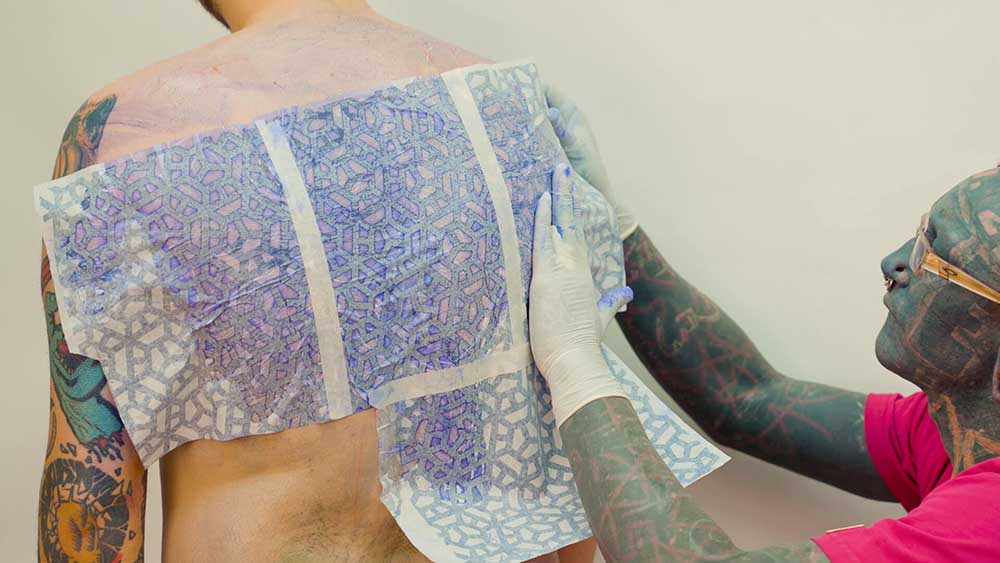
The forearm is a common placement for ornamental bands. The rhythm must align with the radius and ulna. A full sleeve of ornamental patterns requires careful planning because the skin twists when you rotate your arm. Ask to see the stencil with your arm in different positions.
Ribs and Side
Rib placements are painful and the skin is thin. The pattern must follow the ribcage’s curve. Because the ribs move with breathing, the design will stretch. Avoid overly rigid patterns that will distort. Fine line ornamental can be more forgiving here.
Back and Spine
The back is the largest canvas. Central alignment is crucial. A symmetrical ornamental back piece can be stunning, but it requires a design that mirrors perfectly. The artist must account for the spine’s slight natural curve. Use a mirror to check alignment from behind.
Thigh and Calf
Leg placements are popular for larger ornamental pieces. The thigh’s skin stretches with movement, so the pattern must be placed to avoid distortion when you walk. The calf has a natural taper; a band that is too wide at the top will look off.
Booking and Safety Questions
Before you book, ask your artist these questions:
- How will you ensure the central alignment stays correct when I move?
- Can you show me examples of ornamental work on similar body areas?
- How do you handle skin stretching over time?
- What is your approach to negative space in this design?
Also, check that the studio follows proper hygiene protocols. You can find verified studios that meet high standards. For pricing estimates, use our tattoo cost calculator to get a ballpark figure.
FAQ
Will an ornamental tattoo stretch or distort with weight changes?
Yes. All tattoos are affected by significant weight gain or loss, pregnancy, or muscle growth. Ornamental patterns with strict symmetry may show distortion more clearly. Choose placements that are less prone to drastic changes, like the forearm or upper back. Discuss your lifestyle with your artist.
How do I know if a design is too busy?
If your eye doesn’t know where to rest, the design is too busy. Ornamental tattoos need negative space to breathe. A skilled artist will balance pattern density with skin breaks. If you feel overwhelmed by the stencil, ask for simplification.
Can ornamental tattoos be combined with other styles?
Absolutely. Ornamental elements often complement realism or micro realism pieces as framing devices. They also work with Japanese traditional or neo-traditional as background patterns. However, the rhythm and alignment must still be respected.
How long does an ornamental tattoo take to heal?
Healing time varies by size and placement. Typically, the outer skin heals in 2-3 weeks, but deeper layers take months. Fine line work may heal faster, but bold blackwork can scab more. Follow your artist’s aftercare instructions. For more tips, read our tattoo care advice.
Final Checklist Before You Commit
- Have you seen the stencil in a mirror at multiple angles?
- Does the pattern rhythm stay consistent across the entire design?
- Is the central alignment clearly defined and checked?
- Are there intentional negative space areas that balance the ink?
- Have you discussed how the design will move with your body?
- Is the artist experienced in ornamental work specifically?
If you answer yes to all, you are ready. For more inspiration, browse our tattoo magazine and explore top tattoo rankings. Remember, a great ornamental tattoo is a collaboration between your anatomy and the artist’s eye.
Read more
- Magazine for more tattoo knowledge, style guides and aftercare notes.
- Request a consultation if you need help with style, placement or preparation.
- Marketplace for equipment, supplies and learning resources.
Content hub
Tattoo styles pillar
This article belongs to the styles cluster. Open the pillar page to compare Irezumi, Old School, Realistic, Blackwork, Fine line, Geometric and Watercolor.
Related reading
Continue reading
Lettering Tattoo Healed Portfolio Review: Kerning, Baseline & Placement Distortion
A specialist healed-portfolio review guide for Lettering tattoos, focused on kerning, baseline control and placement distortion. Includes concrete…
Lettering Tattoo Placement: A Specialist Guide to Kerning, Baseline Control, and Body-Flow Distortion
A specialist guide to lettering tattoos focusing on kerning, baseline control, and placement distortion. Learn how to plan…

Lettering Tattoo Design Consultation Checklist: Kerning, Baselines, and Placement Distortion
A specialist consultation checklist for lettering tattoos covering kerning, baseline control, and placement distortion. Includes practical tests, booking…