Ornamental Tattoo: Healed Portfolio Review Guide – Pattern Rhythm, Central Alignment & Negative Space
Introduction: Why Healed Ornamental Work Demands a Different Eye
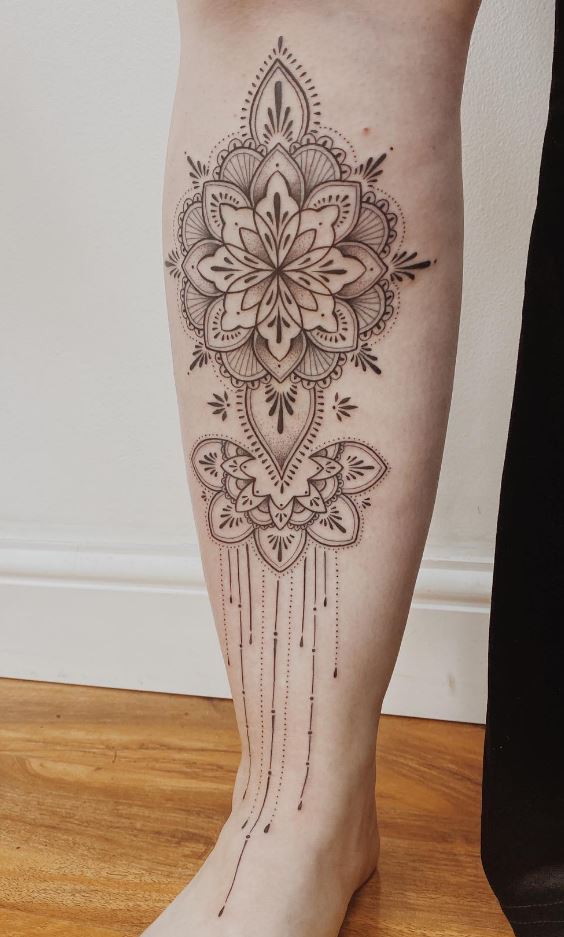
Ornamental tattooing is not another trend. It is a discipline built on symmetry, pattern, and deliberate placement. When you evaluate a healed portfolio, you cannot rely on the same criteria you would use for Realism or Japanese traditional. You must look for rhythm, alignment, and the intelligent use of negative space. This guide gives you the specialist checks to separate truly skilled ornamental artists from those who simply post fresh work that looks good on Instagram.
1. Pattern Rhythm: The Heartbeat of Ornamental Design
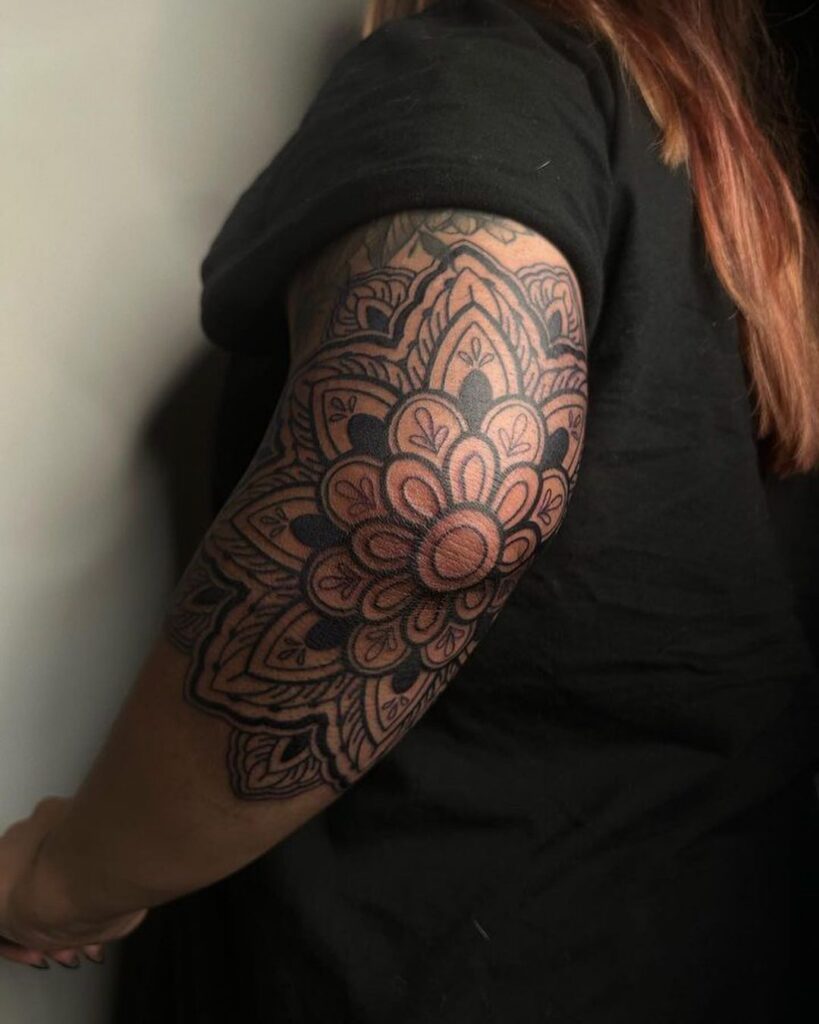
Pattern rhythm is the visual flow created by repeating elements – dots, lines, curves, and geometric motifs. In a healed tattoo, rhythm must remain consistent, even as skin ages and ink settles. Here is what to inspect:
- Line consistency: Are all lines the same weight? Look for any blown-out or fading lines that break the flow.
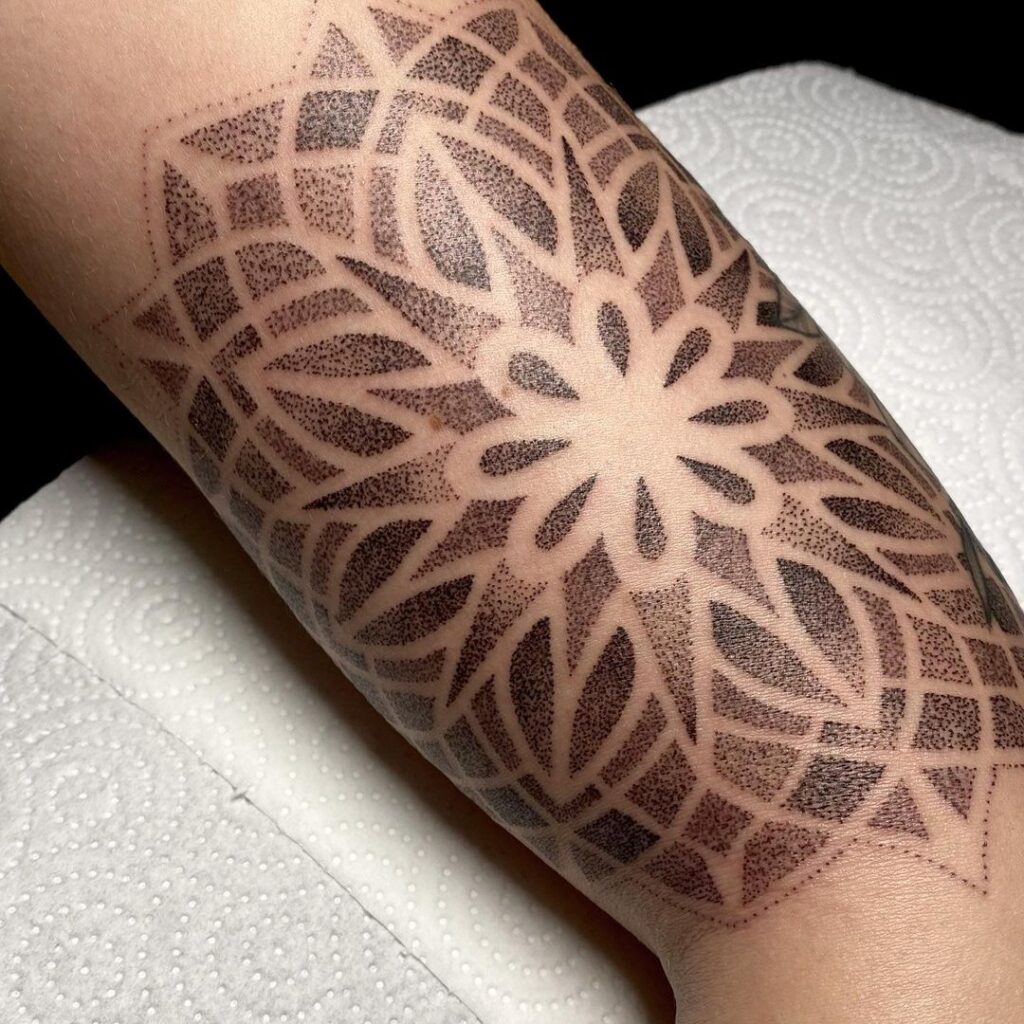
- Dotwork density: If the design uses Dotwork, check that the dots are evenly spaced and maintain their darkness. Patchy fading suggests poor technique or aftercare.
- Repeat accuracy: In symmetrical patterns, compare mirrored sections. Any asymmetry in the rhythm is a red flag.
- Flow with the body: Does the pattern follow the natural contour of the limb or torso? A good ornamental tattoo moves with the body, not against it.
When you look at healed photos, ask: Does the eye travel smoothly across the design? If you get stuck on a particular line or gap, the rhythm is broken.
2. Central Alignment: Precision That Must Survive Healing
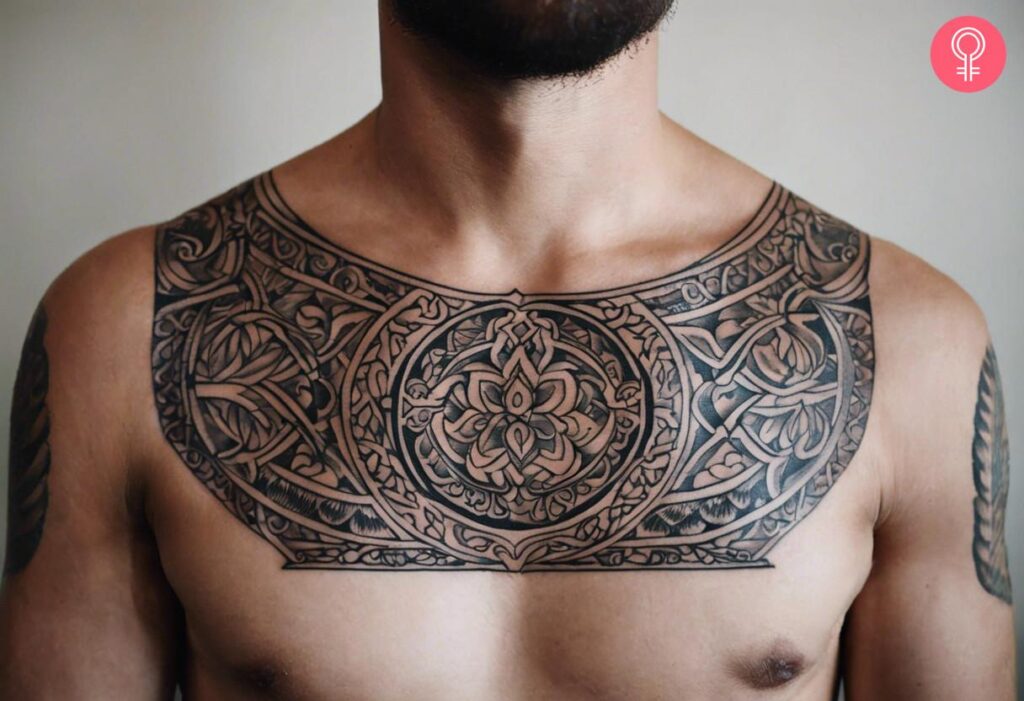
Central alignment is crucial for ornamental tattoos, especially those placed on the spine, sternum, or center of the arm. A few millimeters off can ruin the entire piece. In healed work, check:
- Spine and sternum placement: The design should sit exactly on the midline. Use the natural landmarks (e.g., the navel, the collarbones) to verify alignment.
- Symmetry across the axis: Both halves of the design should mirror each other perfectly. Look at the photos from straight-on angles.
- No distortion: Skin is elastic. Over time, tattoos can warp, especially on areas that stretch. A skilled artist accounts for this in the initial design.
Ask the artist for healed photos taken from multiple angles – front, side, and slightly rotated. This shows how the alignment holds up in real life, not just in a perfectly posed studio shot.
3. Negative Space: The Silent Partner
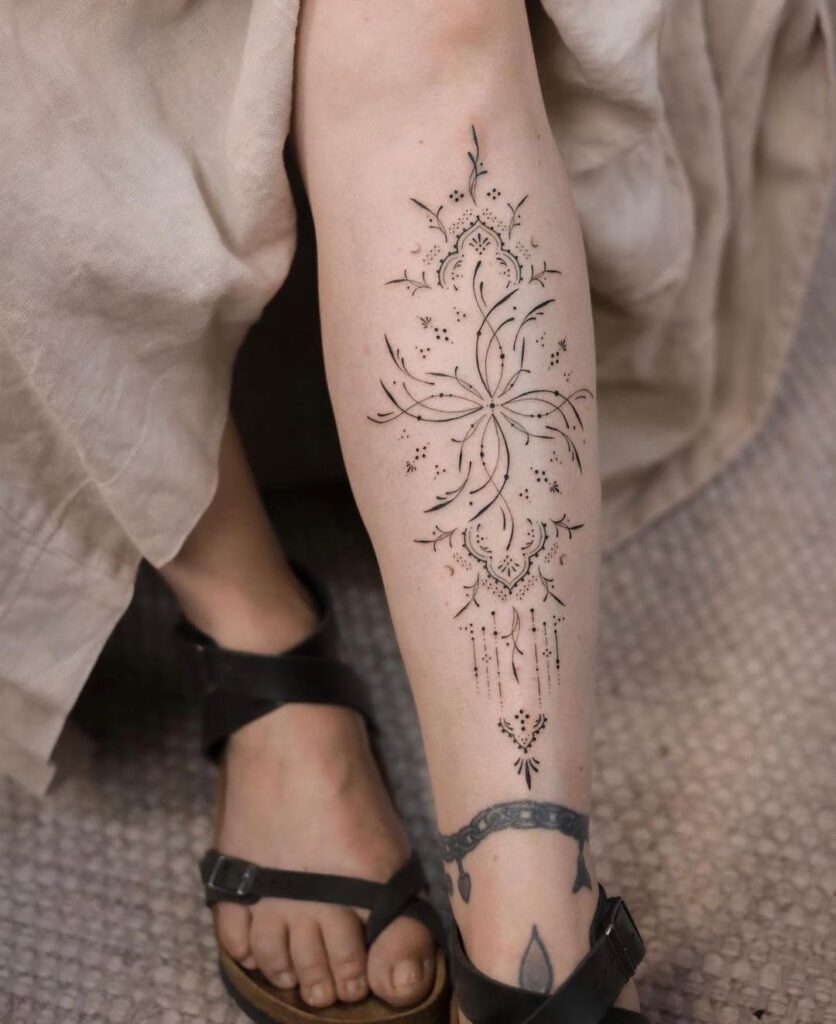
Negative space is the un-inked skin that shapes the design. In ornamental work, negative space is not just empty – it is a deliberate element. Evaluate how it holds up:
- Sharp edges: The borders between ink and skin should be crisp. Blurring or spreading ink into negative space ruins the design.
- Balance: Does the negative space feel intentional? It should create contrast and give the eye places to rest.
- Healing effects: Over time, some ink spreads slightly. This is normal, but a good artist leaves enough negative space to accommodate that spread without compromising the design.
Look for photos that show the tattoo in natural lighting. Bright studio lights can hide the subtle interactions between ink and skin.
4. Realistic Healed Portfolio Checks
Do not be fooled by fresh tattoos. Fresh ink is always more vibrant and sharp. Here is a checklist to apply to every healed photo you review:
- Age of the tattoo: Ask how long ago the tattoo was healed. Ideally, you want to see work that is at least 6 months old, preferably a year or more.
- Lighting consistency: Compare photos taken in similar lighting. If the artist only shows dark, moody shots, be cautious – they may be hiding imperfections.
- Skin texture: Look for any raised areas, scarring, or excessive ink spread. These can indicate poor technique.
- Color saturation: For blackwork, black should remain solid, not grayish. For any color, it should be vibrant but not blown out.
If an artist cannot provide healed photos, that is a red flag. A reputable artist will have a portfolio of healed work.
5. Style-Specific Considerations
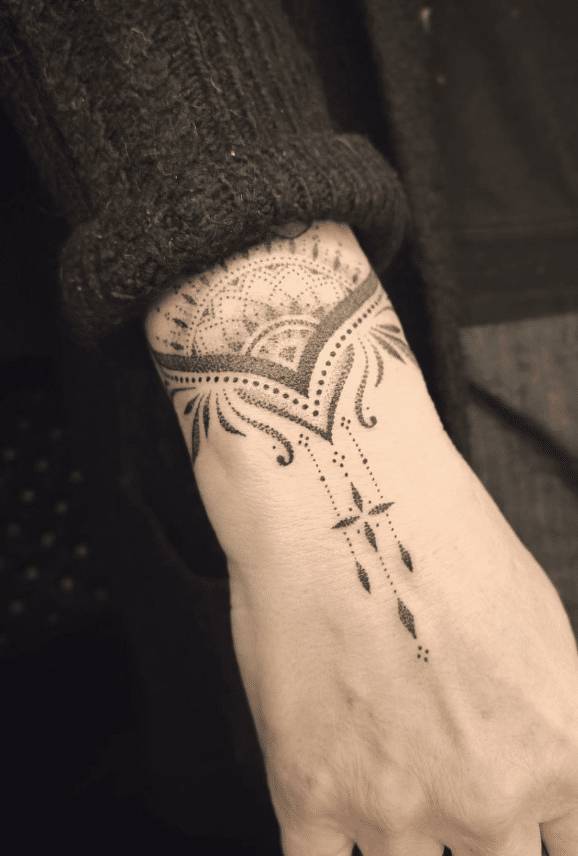
Ornamental tattoos often blend with other styles. Here is what to look for in hybrids:
Ornamental + Geometric
Geometric tattoos rely on precise angles and shapes. Check that all lines meet at exact points and that the geometry remains intact after healing.
Ornamental + Dotwork
Dotwork shading should be smooth and gradual. Look for any patchiness or uneven fading.
Ornamental + Abstract
Abstract ornamental designs may not follow strict symmetry, but they still need rhythm and flow. Check that the negative space still makes sense.
Ornamental + Fine Line
Fine line ornamental work is delicate. Look for any lines that have blown out or become too thick over time.
Remember, the style name matters less than the execution. A well-executed ornamental tattoo will have the same core principles regardless of the sub-style.
6. Booking and Safety Questions to Ask
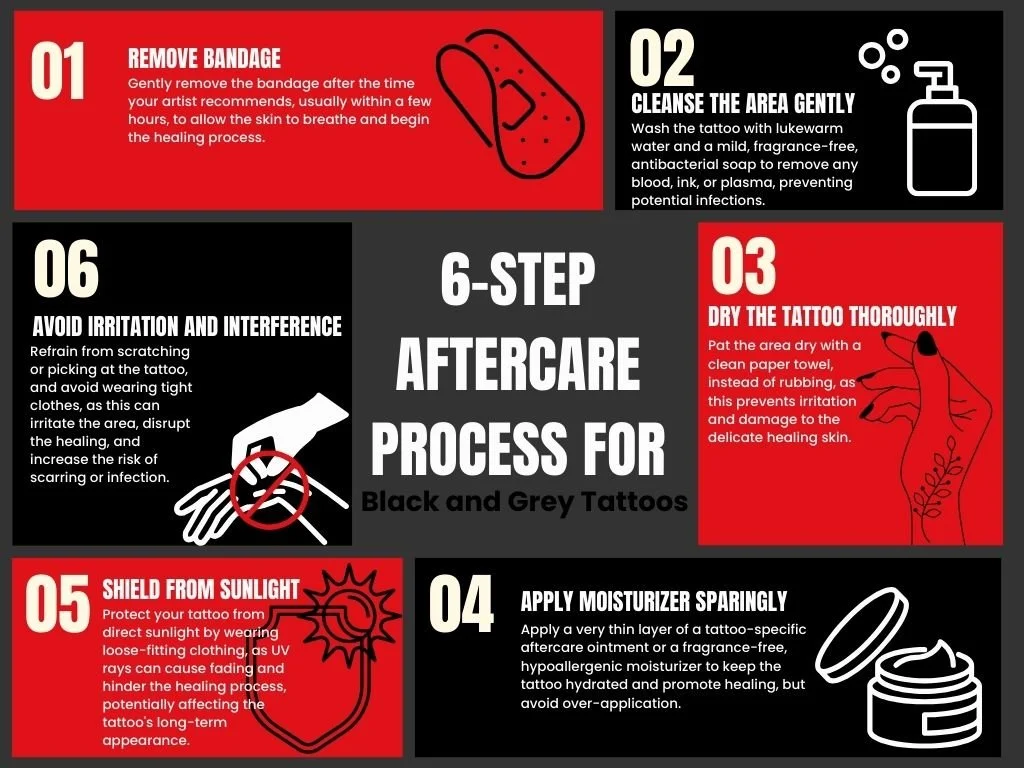
Before you book, ask these questions to ensure the artist is right for you:
- “Can I see healed photos of this type of design?” – This is non-negotiable. If they hesitate, move on.
- “How do you handle symmetry on curved body parts?” – A good artist will explain their process, such as using stencils that wrap correctly.
- “What is your approach to negative space?” – They should be able to articulate why they leave certain areas open.
- “Do you have experience with my skin tone?” – Ornamental work can be affected by melanin levels. An experienced artist will know how to adapt.
Also, check the studio’s hygiene practices. You can find verified studios on our verified studios page. For more tips on choosing an artist, read our consultation guide.
7. Common Red Flags in Ornamental Portfolios
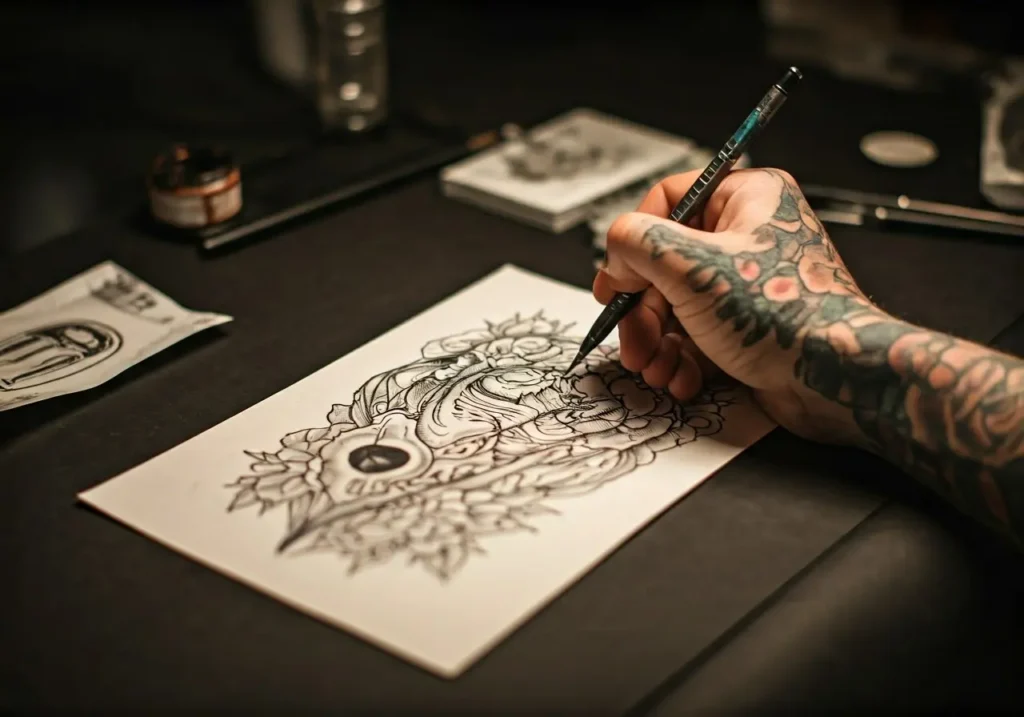
- Only fresh photos: This is the biggest red flag. If they cannot show healed work, they are either new or hiding poor results.
- Photoshopped images: Look for overly smooth skin or distorted lines. If it looks too perfect, it might be edited.
- No close-ups: Ornamental details need close inspection. If the artist only shows full-body shots, you cannot see the line quality.
- Inconsistent style: If the artist’s portfolio jumps between many styles with varying quality, they may not be a specialist.
Trust your gut. If something feels off, it probably is.
8. Healed Portfolio Review Checklist
Use this checklist when you review any ornamental tattoo portfolio:
- Are there healed photos? Yes/No
- If yes, what is the age of the oldest healed piece? ____
- Are the lines crisp and consistent? Yes/No
- Is the pattern rhythm unbroken? Yes/No
- Is the central alignment precise? Yes/No
- Is negative space used intentionally? Yes/No
- Are there any signs of ink spread or blurring? Yes/No
- Do the healed photos show the tattoo in natural light? Yes/No
If you answer “No” to any of these, reconsider. A single flaw might be acceptable, but multiple flaws indicate a lack of skill.
9. How to Use This Guide for Your Own Tattoo
When you get your own ornamental tattoo, keep this guide in mind. After it heals, take photos in consistent lighting and compare them to the fresh photos. This will help you track how the tattoo ages and whether it meets your expectations. If you notice issues, contact your artist – a good artist will want to know and may offer a touch-up.
For more inspiration, browse our top tattoo rankings and tattoo magazine. If you are planning your budget, use our tattoo cost estimator.
10. FAQ
Q1: How long should I wait before judging a healed ornamental tattoo?
You should wait at least 6 months, but ideally a year. This allows the skin to fully settle and any ink spread to become visible. Fresh tattoos look different from healed ones, so patience is key.
Q2: Can ornamental tattoos be done in color?
Yes, but blackwork is the most common because it emphasizes line and shape. If you see color ornamental work, check that the color is saturated and the lines remain sharp. Color can fade faster than black, so ask about touch-ups.
Q3: What if I have an asymmetrical body – can ornamental tattoos still work?
Absolutely. A skilled artist will adapt the design to your body’s natural asymmetries. The key is that the design feels balanced, not necessarily perfectly mirrored. Discuss this with your artist during the consultation.
Q4: How do I know if an artist is a true ornamental specialist?
Look for a portfolio that is predominantly ornamental. Check for healed photos, consistent quality, and a deep understanding of pattern and symmetry. You can also read reviews on our ranking page to see what other clients say.
Read more
- Magazine for more tattoo knowledge, style guides and aftercare notes.
- Request a consultation if you need help with style, placement or preparation.
- Marketplace for equipment, supplies and learning resources.
Content hub
Tattoo styles pillar
This article belongs to the styles cluster. Open the pillar page to compare Irezumi, Old School, Realistic, Blackwork, Fine line, Geometric and Watercolor.
Related reading
Continue reading
Lettering Tattoo Healed Portfolio Review: Kerning, Baseline & Placement Distortion
A specialist healed-portfolio review guide for Lettering tattoos, focused on kerning, baseline control and placement distortion. Includes concrete…
Lettering Tattoo Placement: A Specialist Guide to Kerning, Baseline Control, and Body-Flow Distortion
A specialist guide to lettering tattoos focusing on kerning, baseline control, and placement distortion. Learn how to plan…

Lettering Tattoo Design Consultation Checklist: Kerning, Baselines, and Placement Distortion
A specialist consultation checklist for lettering tattoos covering kerning, baseline control, and placement distortion. Includes practical tests, booking…