Japanese Traditional Tattoo: Motif Rules, Background, and Body Suit Planning
Introduction
Japanese traditional tattooing, known as Irezumi or Tebori, is one of the most respected and visually powerful styles in the tattoo world. It is not merely a collection of images but a structured art form with deep symbolism, strict motif rules, and a specific approach to background and composition. This guide provides an expert-level overview of the key elements: motif selection, background integration, scaling for body suits, and the cultural respect required.
Understanding Motif Rules
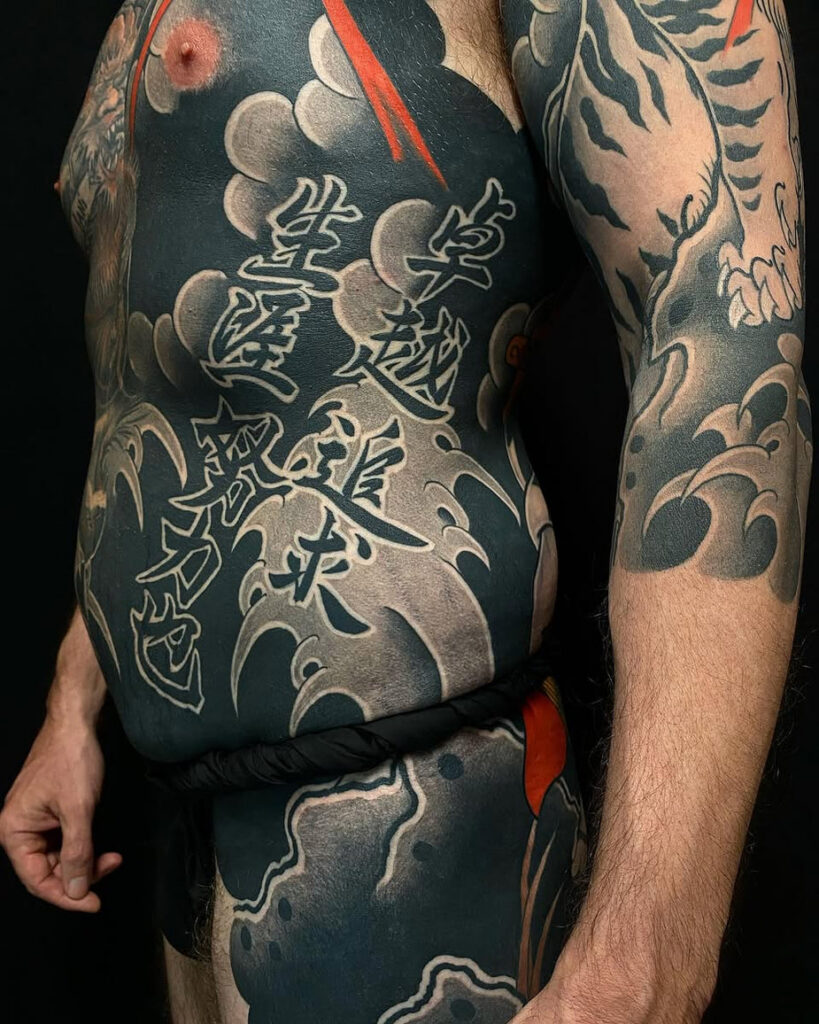
In Japanese traditional tattooing, every motif carries meaning. The rules are not arbitrary; they stem from centuries of ukiyo-e art, folklore, and religious symbolism. Here are the core categories:
Mythical Creatures
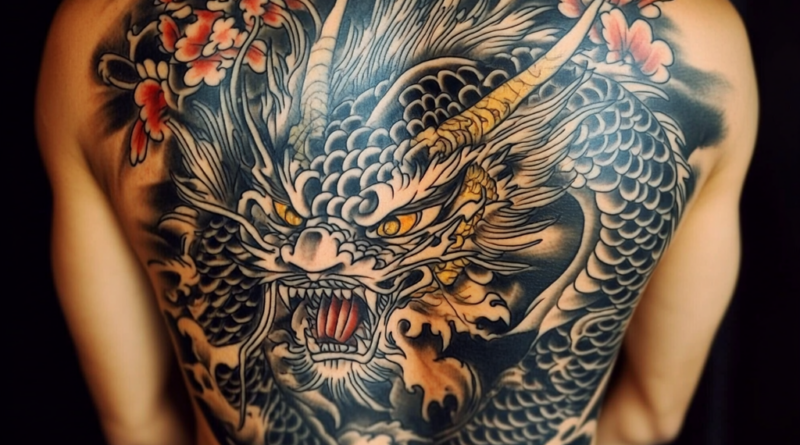
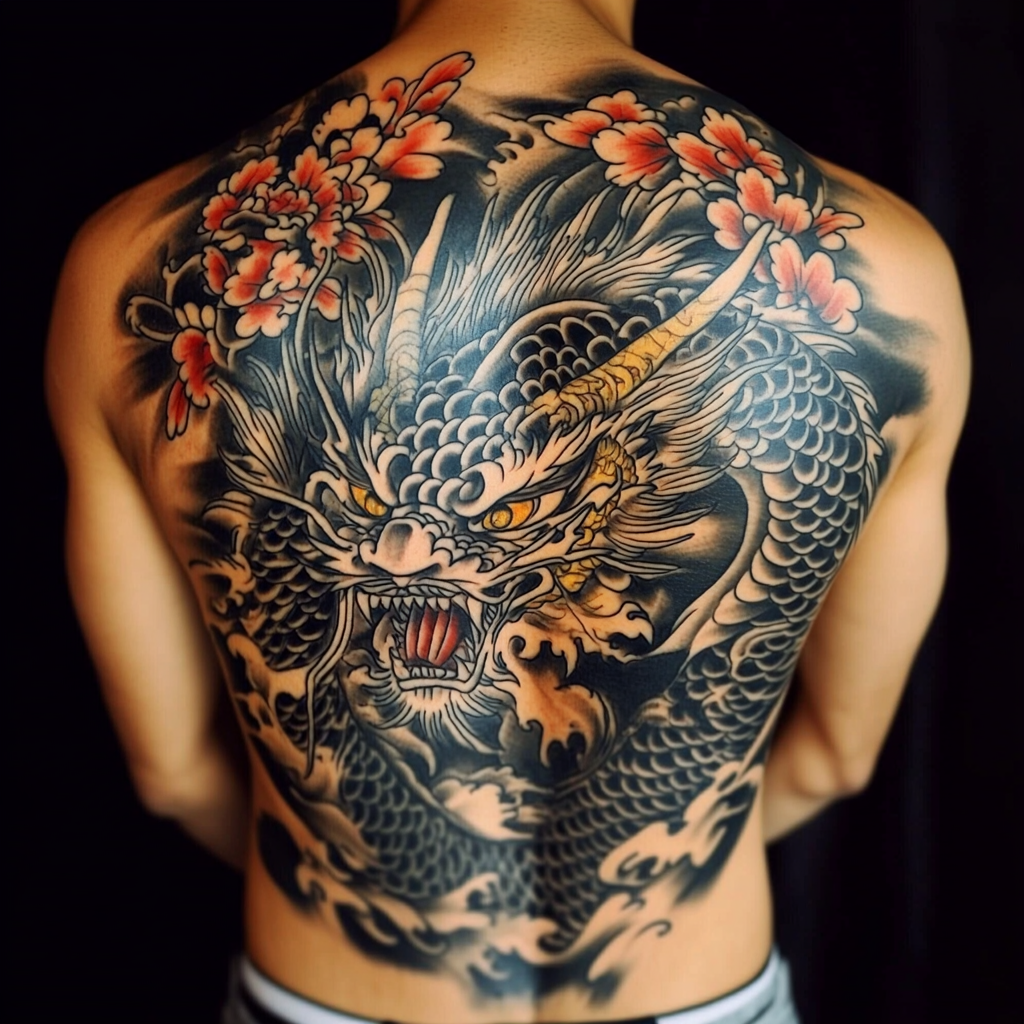
- Dragon (Ryū): Symbolizes wisdom, strength, and protection. Often depicted with scales, claws, and a pearl of wisdom.
- Phoenix (Hōō): Represents rebirth, fire, and grace. Usually placed on the back or chest.
- Kirin: A mythical hooved creature associated with justice and good fortune.
- Baku: A dream-eating creature believed to ward off nightmares.
Floral and Nature Motifs
- Cherry Blossoms (Sakura): Symbolize the transient nature of life. Often used as background or accent.
- Chrysanthemum (Kiku): Represents longevity and rejuvenation. A common motif for the back or shoulders.
- Peony (Botan): Signifies wealth, honor, and bravery. Frequently paired with lions or dragons.
- Maple Leaves (Momiji): Represent autumn and the passage of time.
Animals and Real Creatures
- Koi Fish: Symbolizes perseverance and strength. Often shown swimming upstream or transforming into a dragon.
- Tiger (Tora): Represents courage and protection. Usually placed on the back or arm.
- Snake (Hebi): Associated with wisdom, protection, and renewal. Often coiled around a weapon or flower.
Human Figures and Deities
- Samurai: Represent loyalty, honor, and martial prowess.
- Geisha: Symbolize beauty, art, and mystery.
- Fudo Myoo: A wrathful deity who protects against evil. Often depicted with a sword and rope.
- Hannya: A female demon mask representing jealousy and rage. Commonly used in sleeves.
Background Elements: The Key to Cohesion
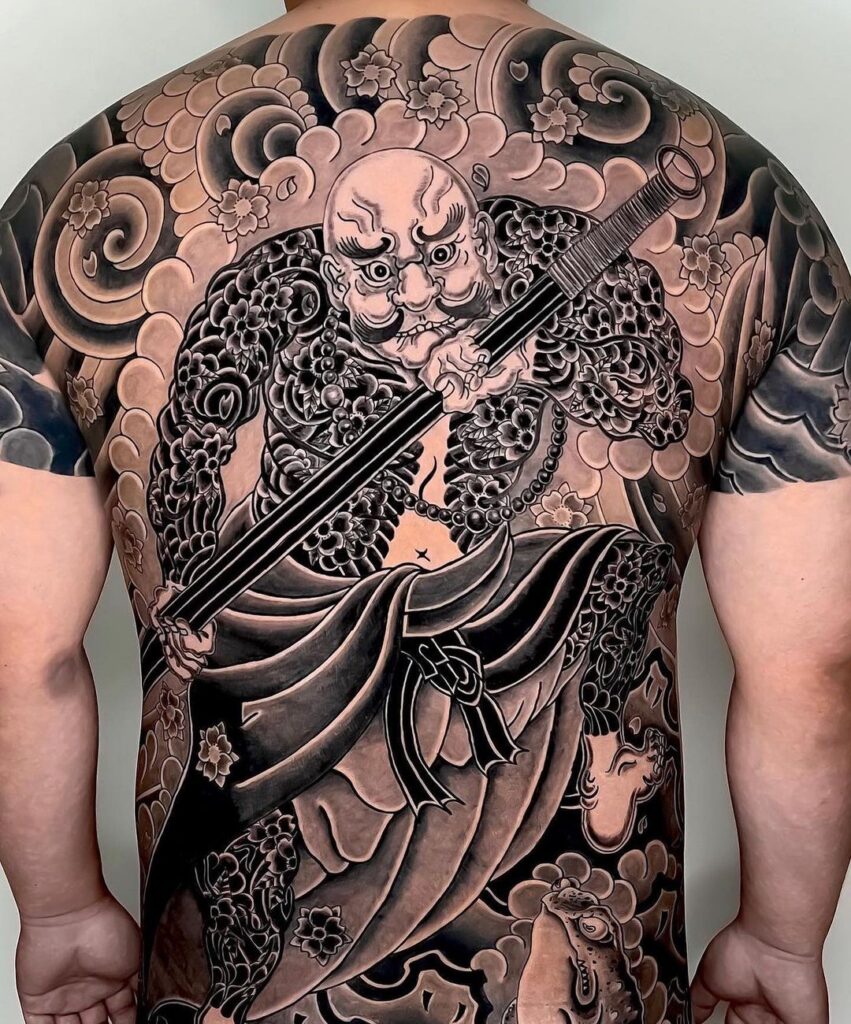
In Japanese traditional tattooing, the background is as important as the main motif. The most common backgrounds are:
- Water (Mizu): Waves, swirling currents, or splashes. Often used with koi, dragons, or boats.
- Clouds (Kumo): Stylized clouds that add movement and depth. Typically in blue or grey.
- Wind Bars (Kaze no Tori): Diagonal lines representing wind. They create a sense of motion and connect different elements.
- Lightning (Kaminari): Zigzag lines symbolizing power and danger.
- Flames (Hi): Used with phoenixes, dragons, or deities to represent energy.
The background should flow seamlessly around the motifs, often using irezumi shading (gradient from dark to light) to create depth. The background is not an afterthought; it is the glue that holds the composition together.
Body Suit Planning: Scaling and Flow
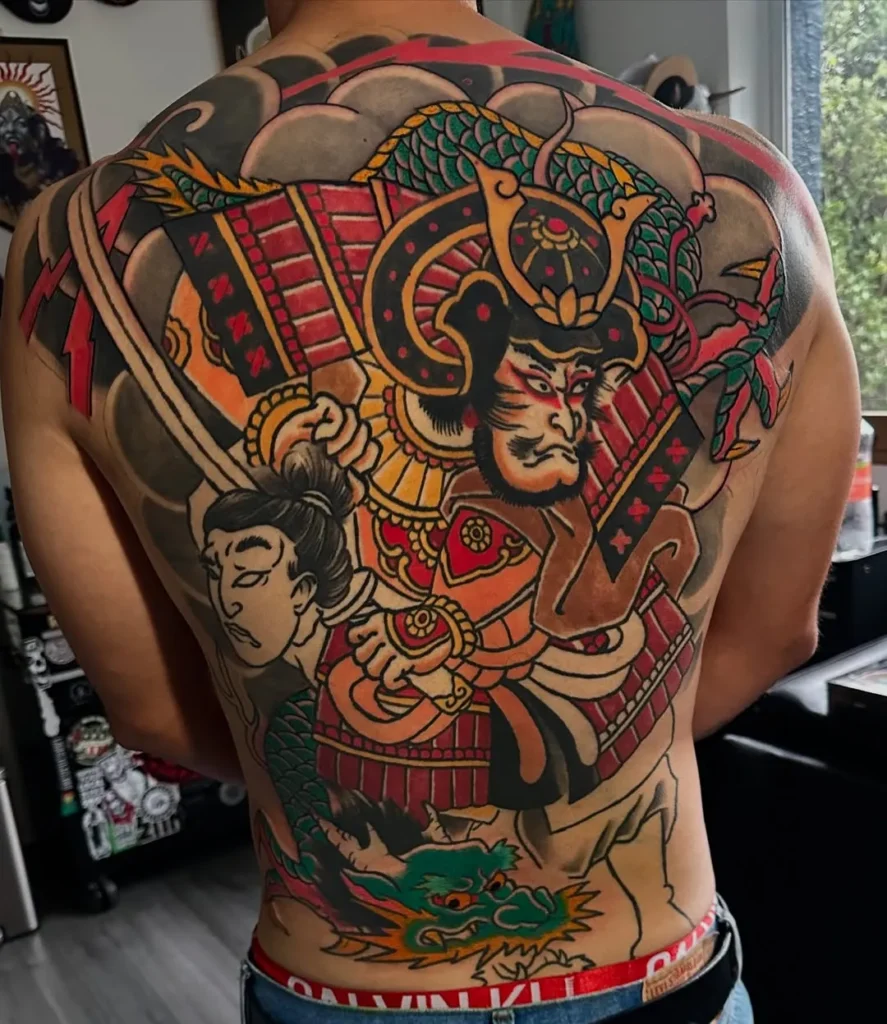
A full body suit in Japanese traditional style is a lifelong commitment. Planning involves several key considerations:
Scale and Placement
Motifs must be scaled to fit the body’s natural curves. Large motifs (e.g., dragon, phoenix) are typically placed on the back, chest, or thighs. Smaller motifs (e.g., cherry blossoms, hannya masks) are used for arms, legs, or filler. The tebori technique allows for precise shading and fine lines, but the design must respect the body’s anatomy.
Flow and Movement
The composition should follow the body’s contours. For example, a dragon’s tail might wrap around the shoulder, while its head rests on the chest. Wind bars and water can guide the eye across the body. Avoid placing static motifs that break the flow.
Sequencing
Traditional body suits are often done in stages: back piece first, then chest, arms, and legs. The back is considered the canvas’s centerpiece. Many clients start with a back piece and then add sleeves and leg panels over years.
Cultural Respect and Authenticity
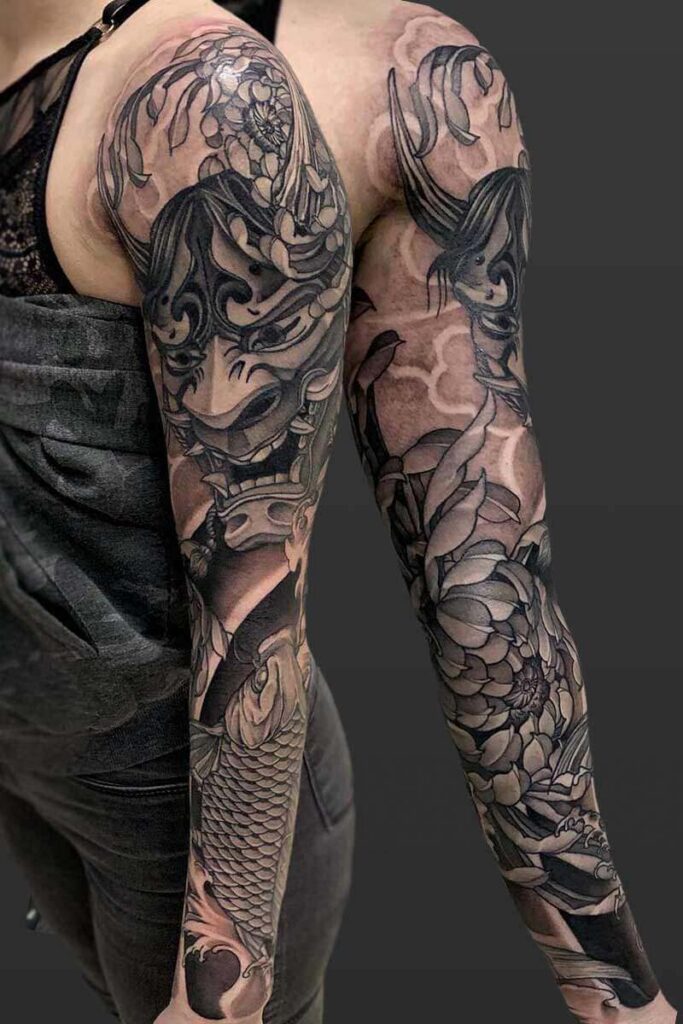
Japanese traditional tattooing is deeply rooted in Japanese culture. As a tattoo artist or enthusiast, it is crucial to approach this style with respect:
- Understand the symbolism: Do not mix motifs that have conflicting meanings. For example, pairing a dragon (yang) with a phoenix (yin) is harmonious, but mixing a koi (perseverance) with a skull (death) may be culturally jarring.
- Avoid sacred motifs: Some motifs, like the Buddha or certain temple imagery, are considered sacred and should not be used without deep understanding and permission.
- Learn the history: Study ukiyo-e prints, traditional tattoo masters like Horiyoshi III, and the cultural significance of each element.
- Work with a specialist: If you are not experienced in Japanese traditional, collaborate with a tattoo artist who specializes in this style. The technique, from needle depth to shading, is distinct.
Common Mistakes and How to Avoid Them
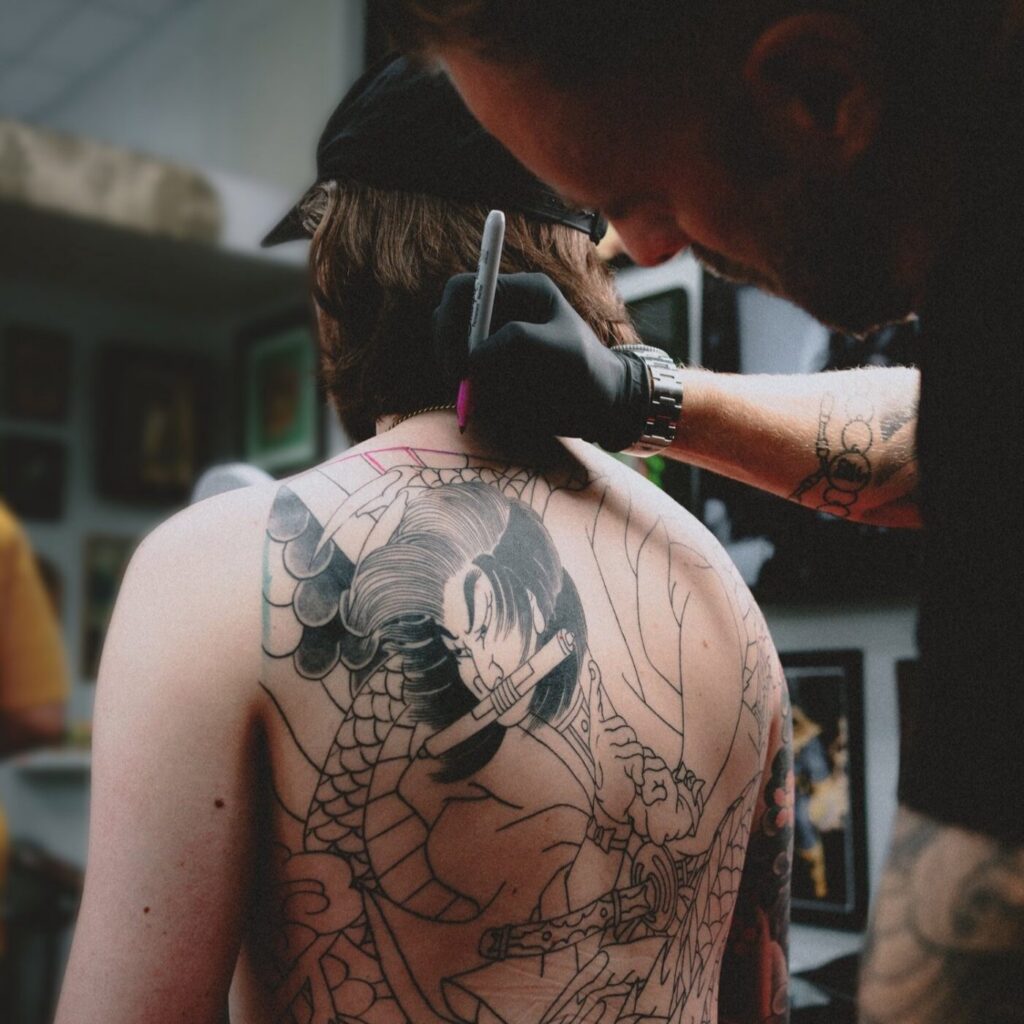
- Overcrowding: Too many motifs without proper background can look chaotic. Use backgrounds to separate and balance.
- Wrong scale: A tiny dragon on a large back looks lost. Ensure motifs are appropriately sized.
- Ignoring flow: A design that does not follow the body’s movement will look static. Use wind bars and water to create motion.
- Cultural appropriation: Avoid using motifs without understanding their meaning. This can be offensive.
Comparison: Traditional vs. Neo-Japanese
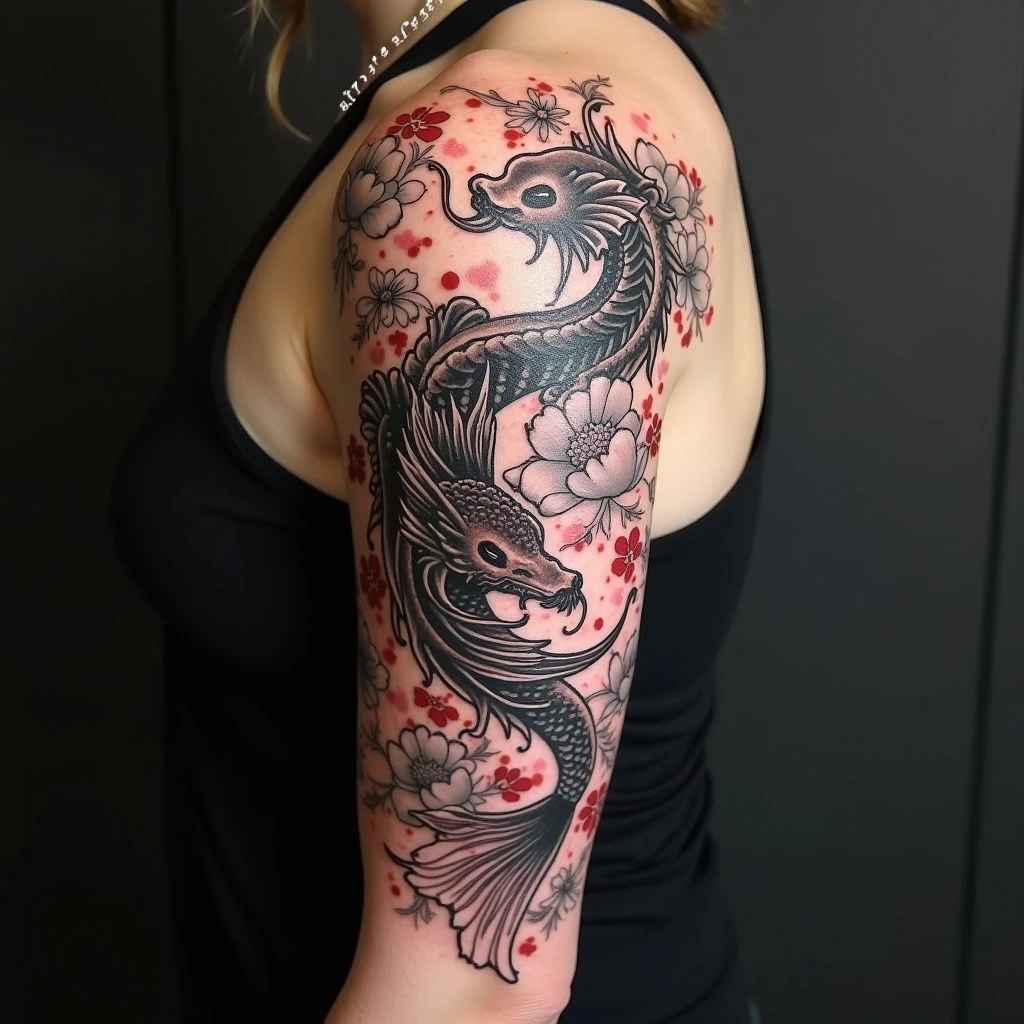
While Japanese traditional follows strict rules, Neo-Japanese (or New School Japanese) allows for more creative freedom. In traditional, colors are limited (black, grey, red, blue, yellow, green), while Neo-Japanese may use a wider palette and modern imagery. Traditional emphasizes bold outlines and solid shading, whereas Neo-Japanese may incorporate fine lines and gradients. Both are valid, but they serve different aesthetic goals.
FAQ
1. How long does a full Japanese body suit take?
Depending on the complexity, a full body suit can take 50 to 100+ hours over several sessions, often spanning 2-5 years. Tebori (hand-poking) takes longer than machine work.
2. Can I combine Japanese motifs with other styles?
It is generally not recommended to mix Japanese traditional with Western styles like realism or tribal, as the aesthetics clash. Stick to one style for cohesion.
3. Is it painful?
Japanese traditional tattooing, especially tebori, can be more painful than machine tattooing due to the repetitive hand movements. However, many practitioners find the pain manageable with breaks.
4. How do I find a reputable Japanese traditional artist?
Look for artists who have studied under a master or have a portfolio of full body suits. Check for consistent linework, proper use of background, and knowledge of symbolism. You can search on rankings or our magazine for profiles.
Conclusion
Japanese traditional tattooing is a profound art form that requires study, patience, and respect. By understanding motif rules, background techniques, and body suit planning, you can create or choose a tattoo that honors this rich tradition. Always prioritize cultural respect and work with skilled specialists.
Keep exploring Vietnam Tattoo
- Browse Ranking for notable studios by city, style, and intent.
- Search studios by city, verification level, and contact channel.
- View verified profiles to check approved and verified entries.
- Request a consultation if you need help choosing style, placement, or a suitable studio.
Content hub
Tattoo styles pillar
This article belongs to the styles cluster. Open the pillar page to compare Irezumi, Old School, Realistic, Blackwork, Fine line, Geometric and Watercolor.
Related reading
Continue reading
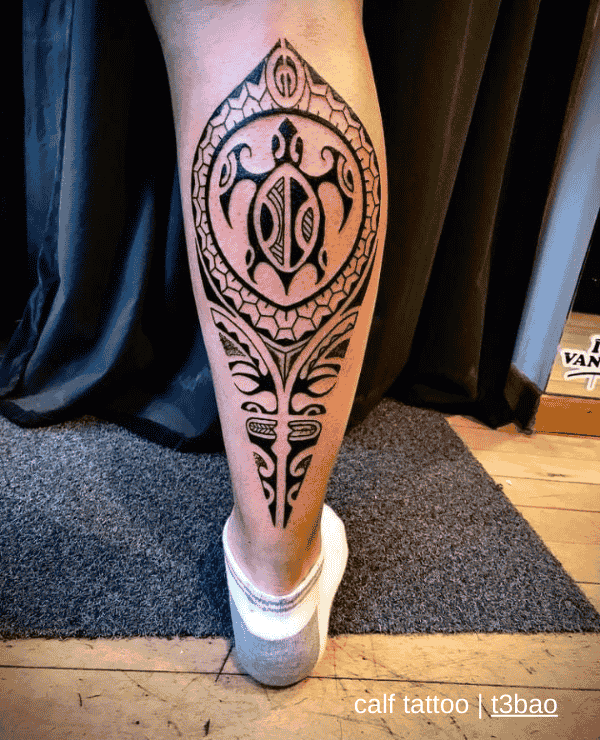
Polynesian Tattoo: Placement and Body-Flow Decisions
A specialist guide to Polynesian tattoo placement and body-flow decisions: body mapping, motif density, symbol research, respectful consultation…
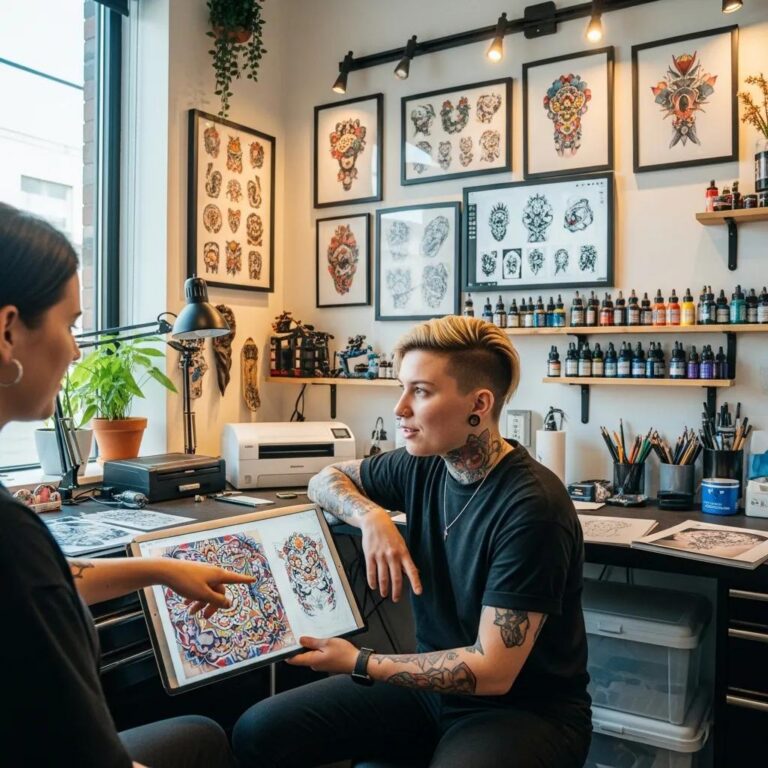
Polynesian Tattoo Design Consultation Checklist: Body Mapping, Symbol Research & Respectful Planning
A specialist Polynesian tattoo consultation checklist covering body mapping, symbol research, cultural permission, technique, booking questions, and respectful…
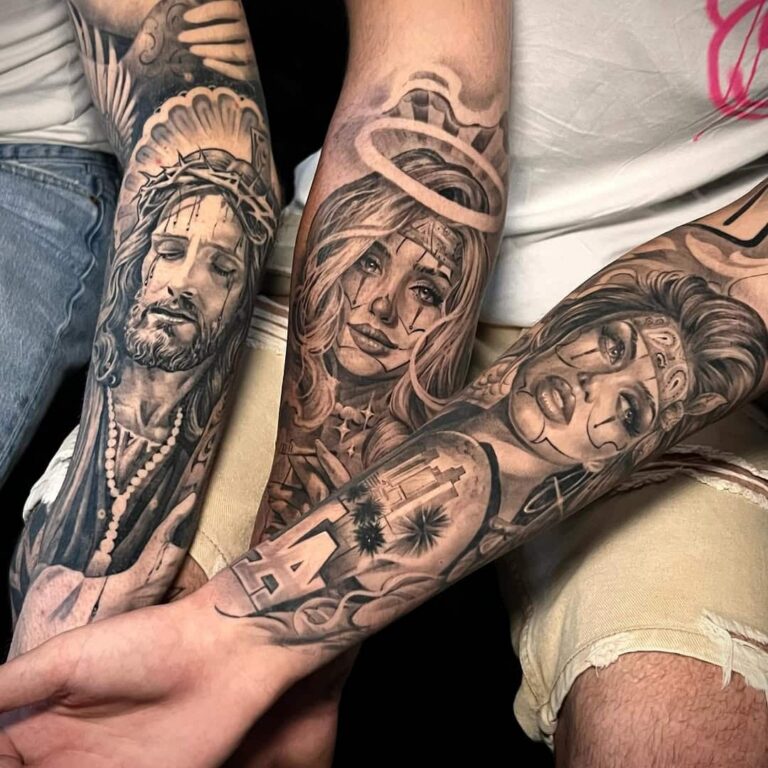
Chicano Tattoo Healed Portfolio Review: Lettering, Portrait Transitions & Black-and-Grey Flow
A specialist guide to reviewing a healed Chicano tattoo portfolio, focused on lettering legibility, portrait transitions, and black-and-grey…