Fine Line Tattoo Placement: Minimum Spacing, Line-Weight Limits & Healed Readability
Fine Line Is a Discipline of Limits
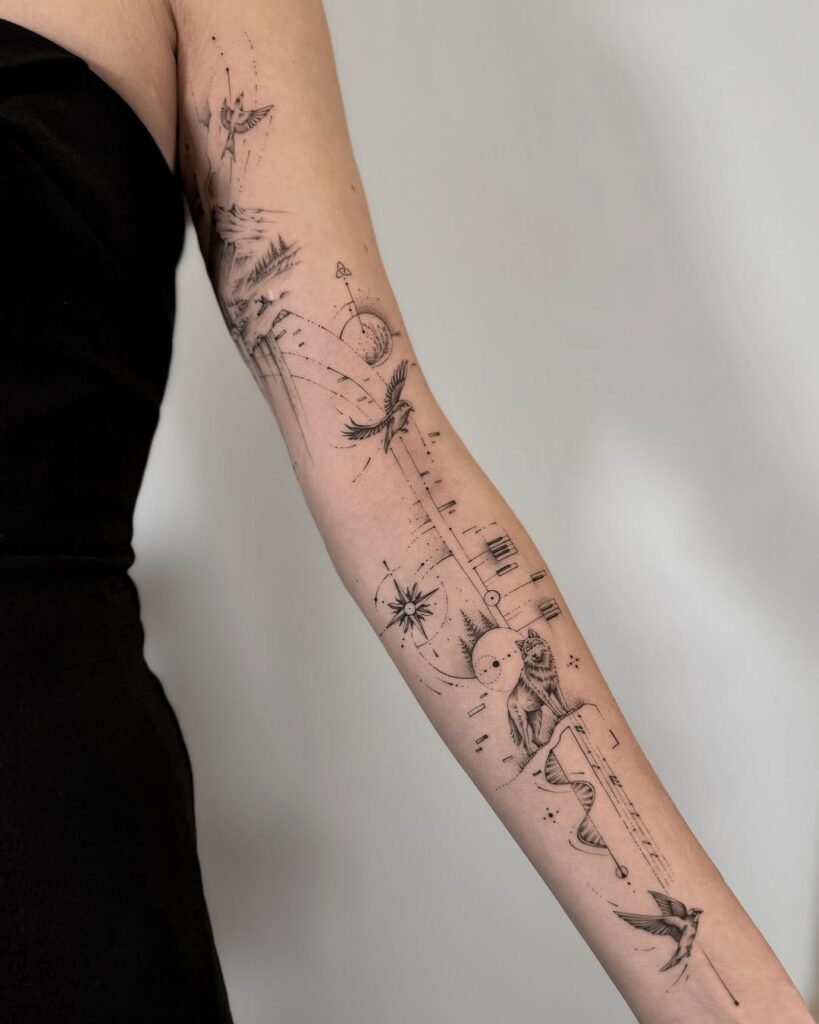
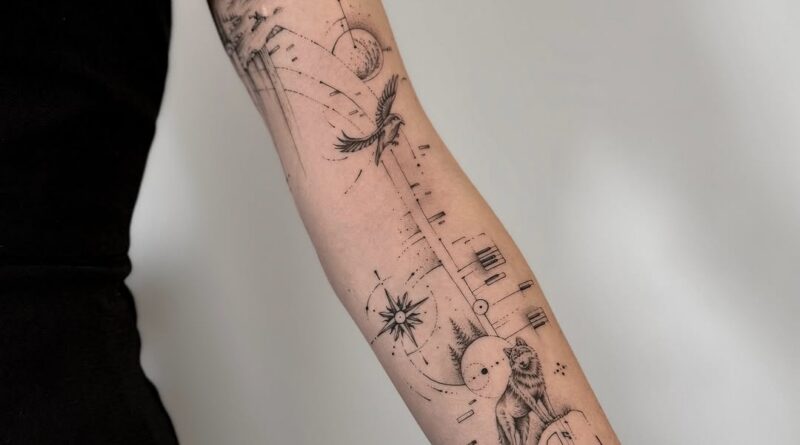
Fine line tattooing is not simply a thinner needle. It is a set of constraints: maximum line weight, minimum spacing between strokes, and a healed result that must remain legible for decades. When you choose a fine line design, you are committing to a specific relationship with your skin’s aging, your body’s movement, and the tattooist’s technical skill. This guide is not about style inspiration; it is about the physical decisions that determine whether your fine line piece will look sharp at three months or blur into a grey smudge at three years.
Why Placement Is a Structural Decision
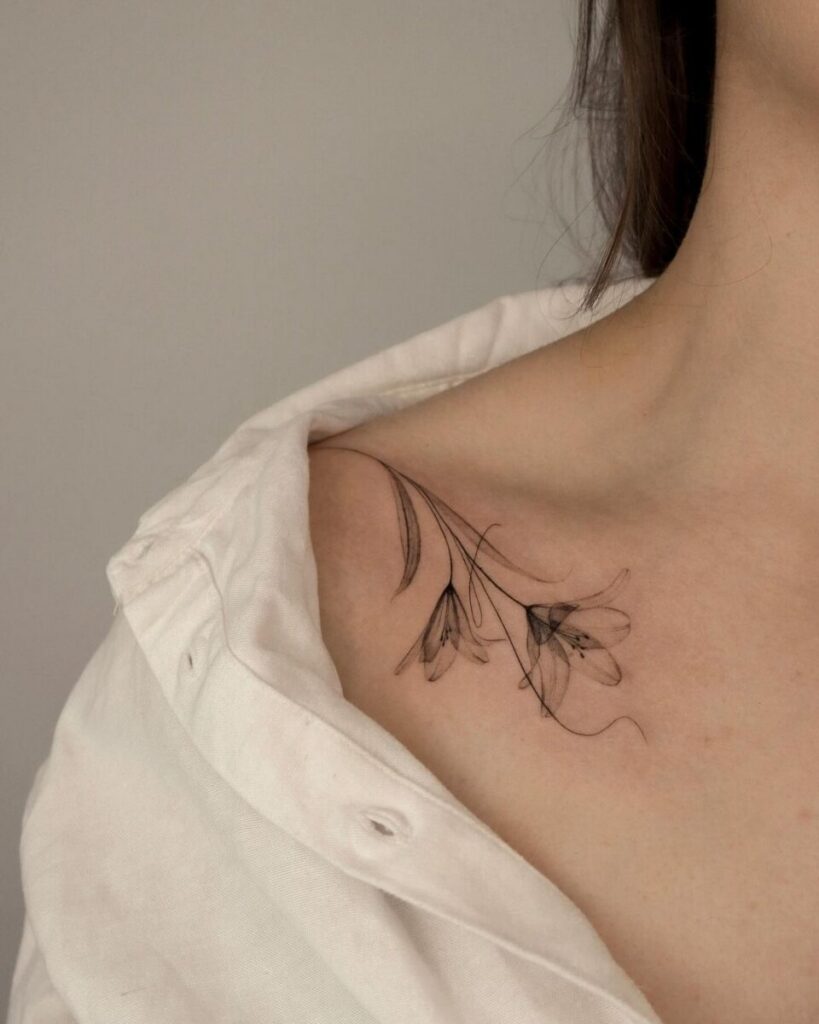
Your skin is not a flat canvas. It stretches, creases, and changes with muscle movement and age. Fine line work relies on crisp edges and subtle value shifts. If you place a design over a high-mobility joint or an area prone to sagging, those lines will spread and distort faster than on a stable surface. The rule of thumb: the more the skin moves, the thicker the line should be. For fine line, you must choose zones where the skin is relatively taut and does not fold repeatedly.
Consider the difference between a tattoo consultation for a wrist piece versus one on the inner forearm. The wrist’s flexor creases are high-traffic areas; even a small fine line pattern can become a blurred mess if lines cross those creases. The inner forearm, by contrast, offers a broad, relatively stable surface that tolerates fine detail well. Similarly, the collarbone area moves with shoulder rotation, but the skin is thin and heals well—just keep lines away from the sternal notch where clothing friction is constant.
Minimum Spacing: The 1:1 Rule and Beyond
In fine line, spacing is everything. A common professional benchmark is the 1:1 rule: the gap between two parallel lines should be at least equal to the line width itself. If you are using a 3RL (three-needle round liner) that deposits a line around 0.25 mm wide, your minimum gap should be 0.25 mm. In practice, most artists recommend more—double the line width for areas that will be viewed up close, and triple for areas that will be seen from a distance.
Why? Because ink spreads over time. The body’s immune response gradually pushes pigment particles outward, a process called blowout diffusion or simply ink migration. On fine lines, this spread is more visible because the original line is so thin. A gap that is too narrow will close, turning two lines into one thick, muddy stroke. For top-rated fine line artists, the spacing check is a non-negotiable part of the design phase.
Spacing Guidelines by Area
- Fingers and hands: Minimum 2mm spacing. Skin here is thin and moves constantly. Fine line on the sides of fingers can work, but never place parallel lines closer than 2mm.
- Inner forearm: 1.5mm spacing is safe for most fine line work. The skin is relatively stable.
- Ribs and torso: 2mm or more. Breathing and posture changes cause expansion; tight spacing will blur.
- Ankles and feet: Avoid fine line entirely if you want longevity. If you must, use 3mm spacing and be prepared for touch-ups.
Line-Weight Limits: What Fine Line Can and Cannot Do
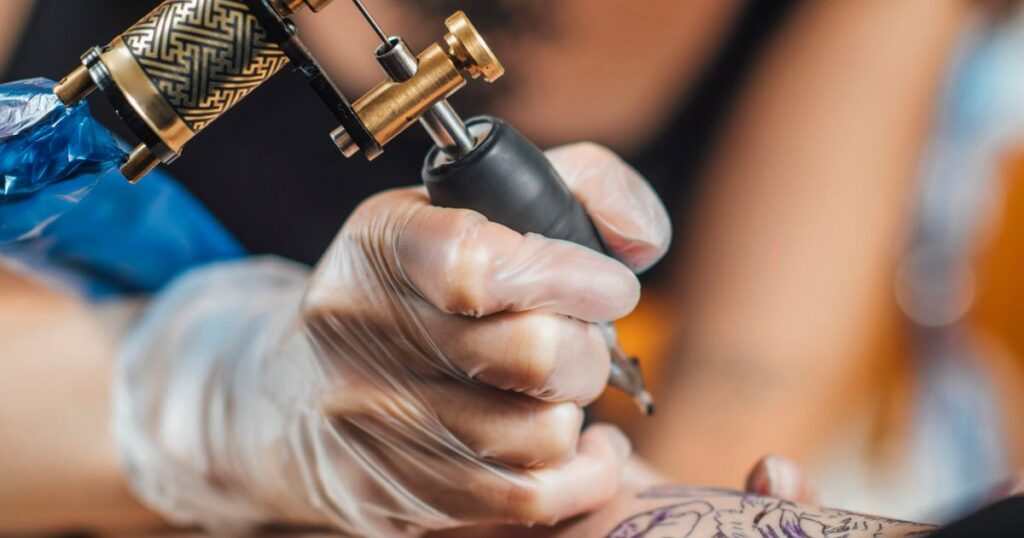
Fine line is usually defined as lines under 1pt (about 0.35mm) when healed. That means using needles like 1RL, 3RL, or 5RL (but not 7RL or larger) and keeping the needle depth shallow—around 1-1.5mm into the skin. The result is a delicate, hair-like stroke. But there are limits:
- Cannot create bold contrast: Fine line cannot produce the heavy black areas of Japanese traditional or Neo-traditional. If your design relies on blackout or dramatic shading, fine line is the wrong tool.
- Cannot hide mistakes: A blown-out fine line is permanent. There is no thick line to cover it. You will need laser or a cover-up with a heavier style.
- Cannot mimic realism’s depth: Micro realism often uses fine lines, but true Realism requires smooth gradients that fine line alone cannot achieve. Artists use dotwork or stipple shading to build value, not line weight.
When you look at a fine line piece, the line weight must be consistent. If the artist’s hand pressure varies, some lines will heal thicker than others, breaking the visual rhythm. That is why fine line is often paired with dotwork or geometric patterns—they allow for precise, repeatable strokes.
Body-Flow: Working with Your Anatomy
Body-flow means the tattoo follows the natural lines of your muscles and bones. A fine line design that ignores body flow will look like a sticker, no matter how well executed. For example, a geometric tattoo on the shoulder should align with the deltoid’s curve. A lettering piece on the ribs should follow the intercostal spaces, not run perpendicular to them.
When you are planning placement, stand in front of a mirror and move. Twist, bend, reach. Watch how the skin bunches and stretches. The tattoo should be placed so that the design’s main lines are not interrupted by a crease or a fold. For instance, a fine line abstract tattoo on the thigh will distort when you sit. If the design has a straight horizontal line, it will bend at the hip crease. Instead, curve the line to follow the thigh’s natural contour.
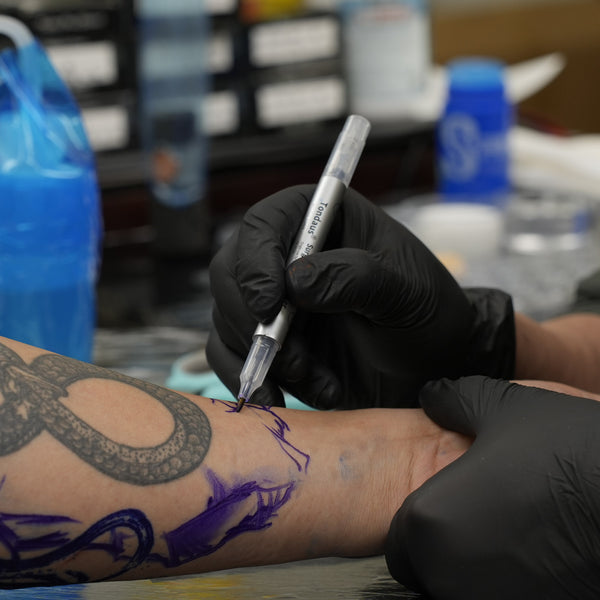
Artists often use stencils that are applied while you are in a neutral position, but they should also check how the stencil moves when you flex. A skilled artist will adjust the design to “flow” with your body. Do not be afraid to ask: “How will this look when I bend?” A good artist will show you on the stencil.
Healed Readability: The 6-Month and 5-Year Test
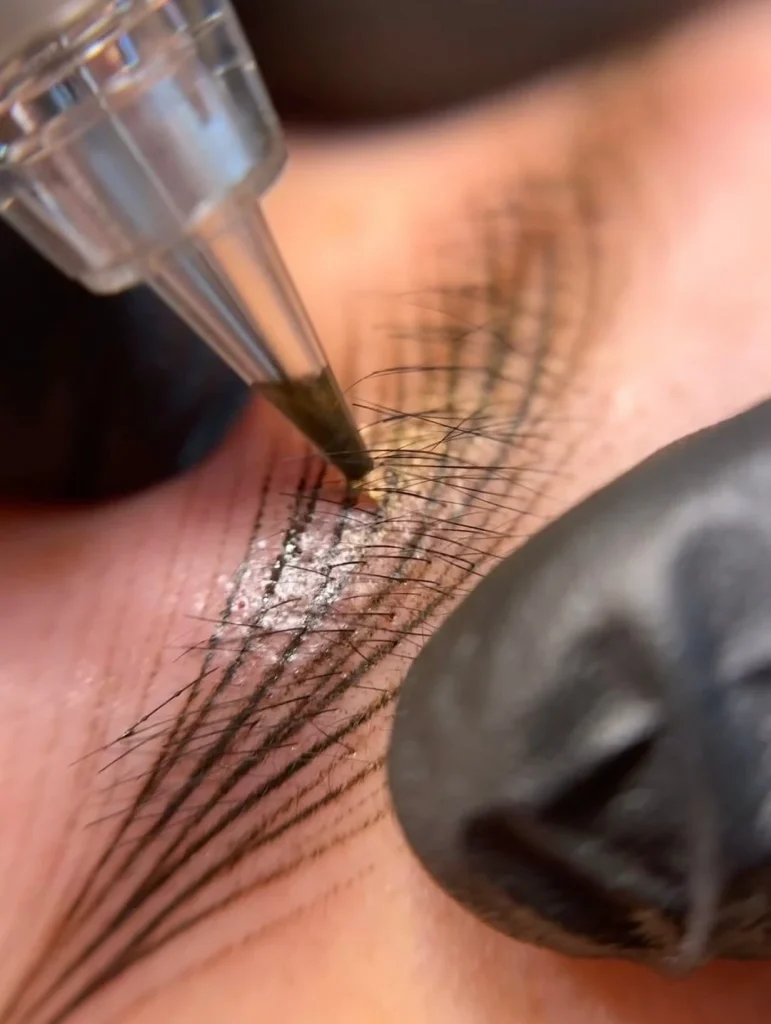
Healed readability is the ultimate measure of a fine line tattoo. Immediately after healing, fine line looks crisp. But over the next six months, the skin’s top layer regenerates, and any pigment that was placed too deep or too shallow will shift. By five years, the ink has spread and faded. To ensure your tattoo remains readable:
- Choose designs with clear negative space: Do not fill every gap. Let the skin breathe. This creates contrast that survives ink spread.
- Avoid micro-details that will merge: Tiny leaves, small letters, or intricate patterns with less than 1mm spacing will become illegible. Simplify.
- Consider aging: Skin loses elasticity and collagen over time. A design that sits on a flat area today may sag in 20 years. Place fine line work on areas that will not change drastically—like the upper chest, inner forearm, or calf.
For a cost estimate, remember that fine line often requires more touch-ups than bold styles. Budget for a follow-up session.
Placement Checklist Before You Book
- Is the skin area relatively stable? (Avoid joints, hands, feet, and stomach if you plan pregnancy or weight changes.)
- Are the design’s lines at least 1-2mm apart, depending on the zone?
- Will the design flow with your muscles? Ask to see the stencil in different positions.
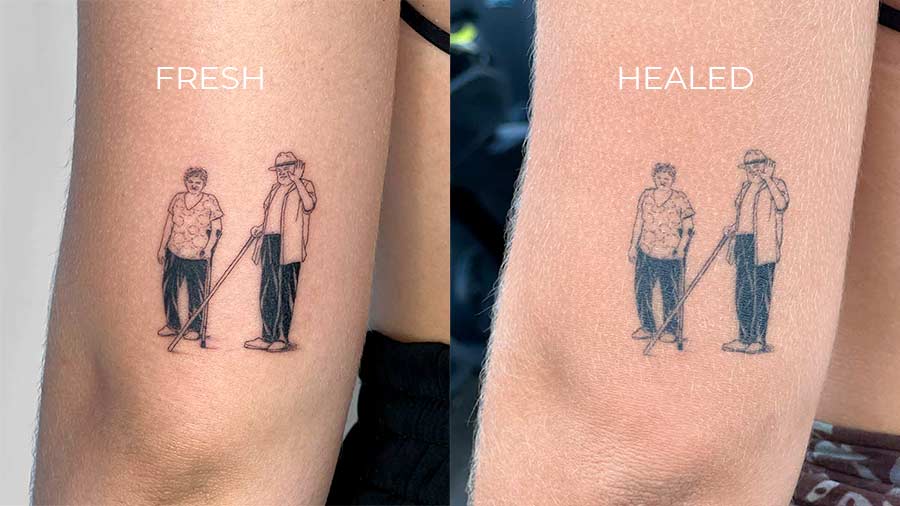
- Is the line weight consistent? Ask the artist to show healed examples of their fine line work.
- Are you prepared for touch-ups? Fine line may need a refresh every few years.
Booking and Safety Questions

When you contact a verified studio, ask specific questions:
- What needle configurations do you use for fine line? (Expect 1RL, 3RL, or 5RL.)
- How do you manage blowout risk? (They should mention using lower voltage and shallower depth.)
- Can I see healed photos at 6 months and 1 year? (Not just fresh.)
- What is your policy on touch-ups? (Many offer one free touch-up within 6 months.)
Never accept a fine line tattoo from an artist who does not have a strong portfolio of healed fine line work. The style is unforgiving.
FAQ
1. How much does fine line tattoo cost?
Pricing varies, but fine line is often charged by the hour due to the precision required. Use a tattoo cost calculator for a rough estimate. Expect to pay a premium for experienced artists.
2. Does fine line tattoo hurt more?
Pain is similar to other styles. However, fine line uses fewer needles and shallower depth, which some find less painful. But placement matters more: ribs and ankles hurt more regardless of needle size.
3. How long does fine line tattoo last?
With proper care, fine line can last many years, but it will fade and spread. You will likely need touch-ups every 3-5 years to keep it crisp. Bold styles last longer between touch-ups.
4. Can I combine fine line with other styles?
Yes. Fine line works well with dotwork, geometric, abstract, and even watercolor (though watercolor itself fades faster). Avoid mixing with Japanese traditional or tribal because the contrast in line weight will clash.
For more inspiration, browse our tattoo magazine and studio directory to find artists who specialize in fine line.
Content hub
Tattoo styles pillar
This article belongs to the styles cluster. Open the pillar page to compare Irezumi, Old School, Realistic, Blackwork, Fine line, Geometric and Watercolor.
Related reading
Continue reading
Lettering Tattoo Healed Portfolio Review: Kerning, Baseline & Placement Distortion
A specialist healed-portfolio review guide for Lettering tattoos, focused on kerning, baseline control and placement distortion. Includes concrete…
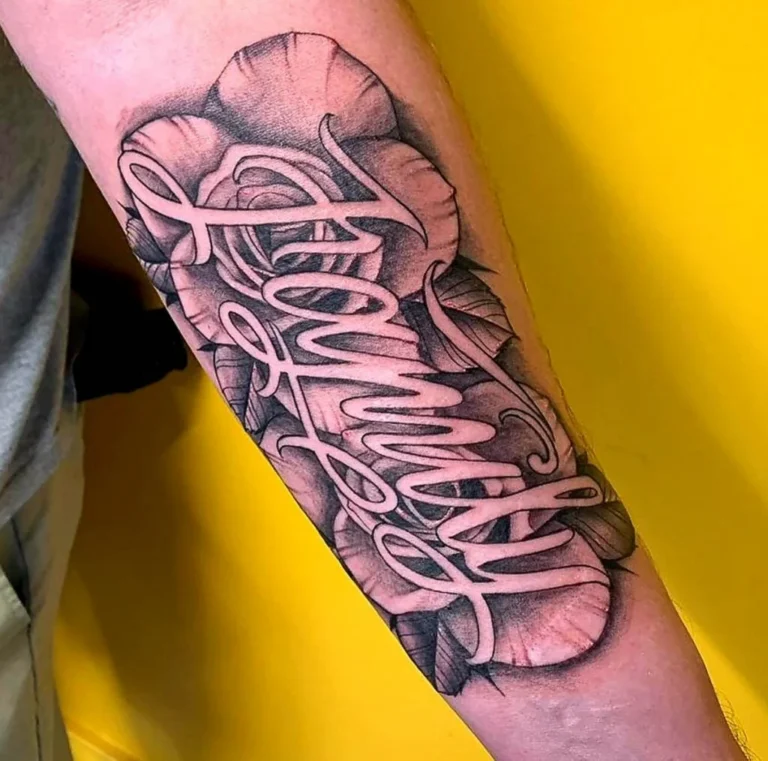
Lettering Tattoo Placement: A Specialist Guide to Kerning, Baseline Control, and Body-Flow Distortion
A specialist guide to lettering tattoos focusing on kerning, baseline control, and placement distortion. Learn how to plan…

Lettering Tattoo Design Consultation Checklist: Kerning, Baselines, and Placement Distortion
A specialist consultation checklist for lettering tattoos covering kerning, baseline control, and placement distortion. Includes practical tests, booking…