Fine Line Tattoo Healed Portfolio Review: Spacing, Line Weight & Readability
Why a Healed Portfolio Review Matters
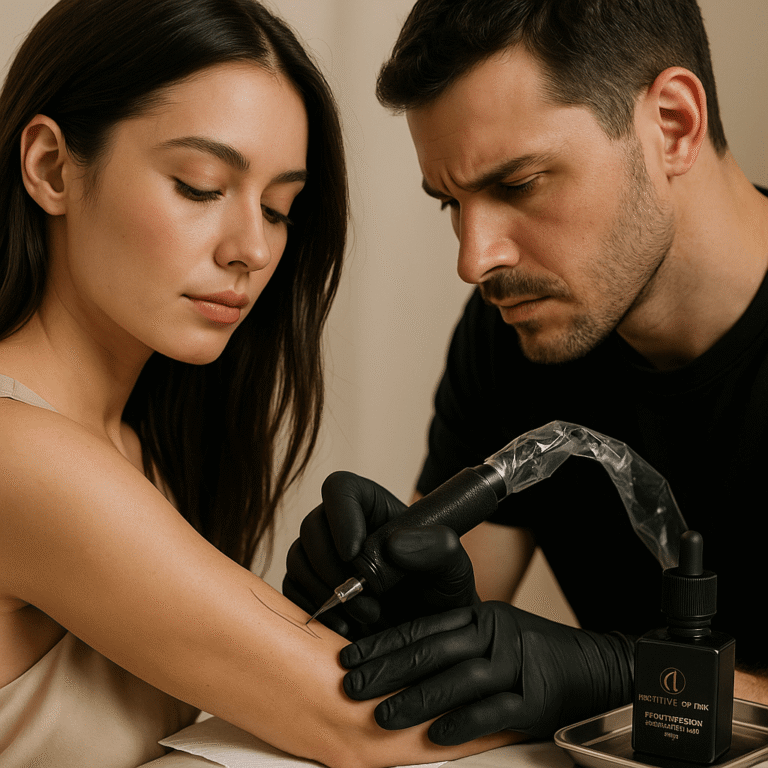
Fine line tattoos have become a dominant force in modern tattoo styles, but their delicate aesthetic demands a different set of standards when evaluating a portfolio. A fresh fine line piece can look crisp, but the true test is how it heals. As a specialist editor, I’ve seen countless fine line tattoos that looked stunning on the day of application, only to blur, fade, or lose definition within months. This guide is not about style appreciation; it’s a practical checklist for assessing healed fine line work, focusing on minimum spacing, line-weight limits, and long-term readability. Whether you’re a collector or an artist, these criteria will help you separate durable fine line from fleeting trends.
Minimum Spacing: The Golden Rule
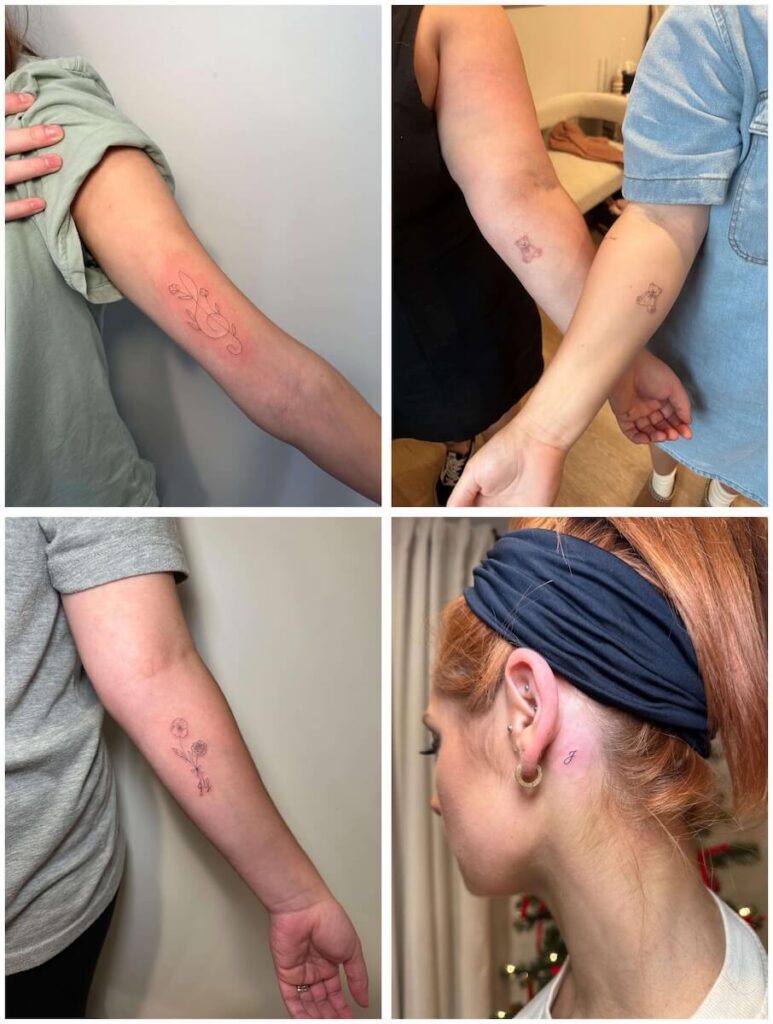
The most critical factor in fine line tattoo longevity is the spacing between lines. When lines are placed too closely, ink spreads over time—a natural process called migration—causing adjacent lines to merge into a muddy blotch. For fine line work, a safe minimum spacing is 2 to 3 millimeters between distinct lines. This allows for slight expansion without compromising the design’s clarity.
Assessing Spacing in a Portfolio
- Look for clear negative space: In healed photos, check that the skin between lines remains visible. If lines appear to touch or overlap after healing, spacing was insufficient.
- Check intricate areas: Pay special attention to areas like the inner wrist, fingers, or behind the ear, where skin is thin and movement is high. These zones demand even more generous spacing.
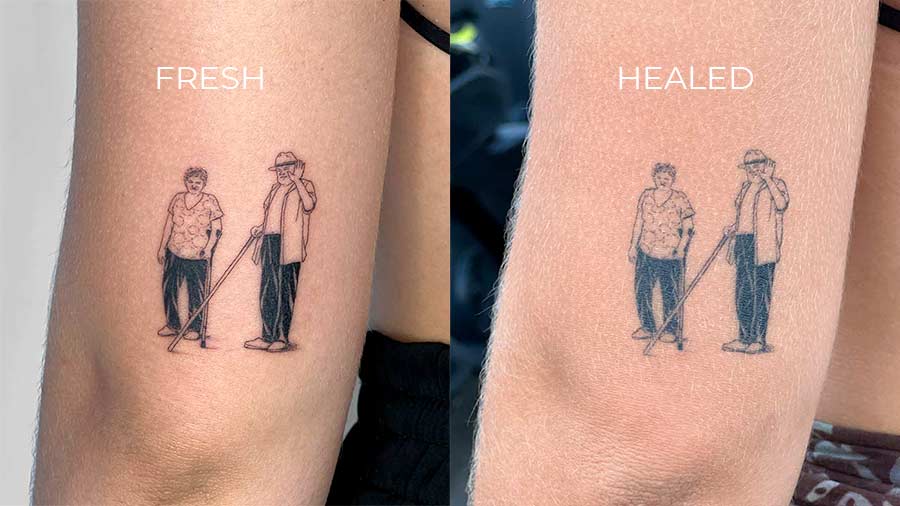
- Compare fresh vs. healed: A reputable portfolio will show both. If only fresh photos are presented, it’s a red flag—the artist may be avoiding evidence of poor healing.
Line Weight Limits: Consistency and Precision
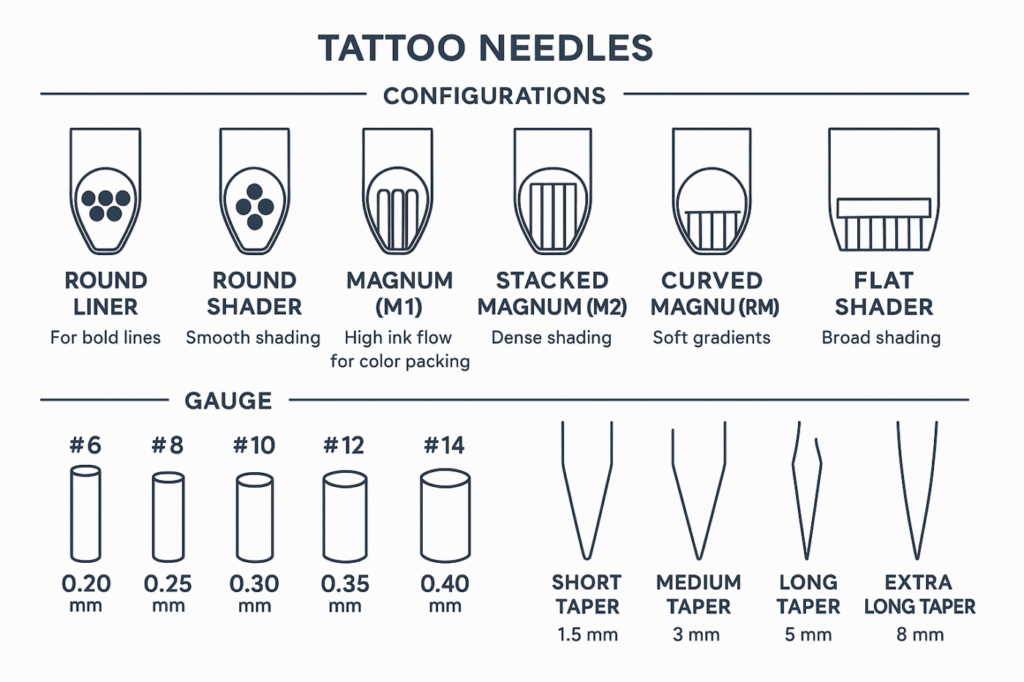
Fine line typically uses needles from 3 to 5 round liners (RL), producing lines thinner than a strand of hair. However, the key is not just thinness but consistency. A skilled artist maintains uniform line weight throughout the tattoo. In healed work, look for lines that haven’t expanded unevenly or broken up.
What to Check in Healed Line Work
- Uniformity: Lines should be solid and continuous, without gaps or ‘ballooning’ at intersections.
- Edge sharpness: Healed fine line should still have relatively crisp edges. If edges appear fuzzy or blurred, the needle depth was inconsistent or the artist went too deep.
- Fade resistance: While some fading is normal, fine line that becomes nearly invisible within a year indicates insufficient ink saturation or poor placement.
Artists working in styles like Micro realism or Geometric tattoo often push the limits of fine line. In these cases, check that the fine details—like the tiny strokes in a micro portrait or the thin lines of a geometric pattern—remain distinguishable after healing.
Healed Readability: The Ultimate Test
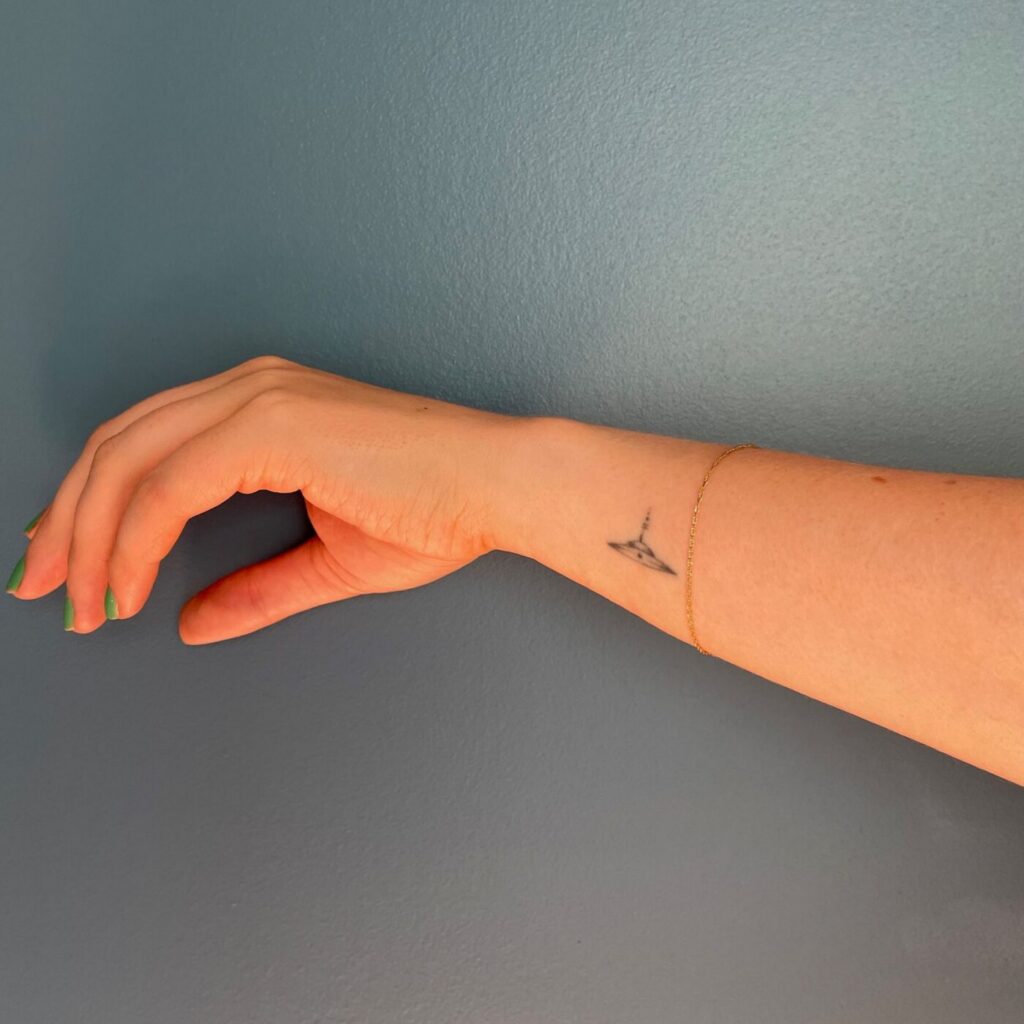
Readability refers to how easily the tattoo’s subject or pattern can be understood at a glance. For fine line, this is often compromised by poor contrast or excessive detail. A healed fine line tattoo should be legible from a reasonable distance, say an arm’s length away.
Evaluating Readability
- Step back: When viewing healed photos, don’t zoom in. Assess the overall silhouette. Can you tell what it is? If you have to squint, it’s not readable.
- Contrast check: Fine line on pale skin can be elegant, but on darker skin tones, the artist must adjust line weight or use lighter shades carefully to ensure visibility. In a portfolio, look for healed examples on various skin tones.
- Detail overload: Too many micro-details in a small area will inevitably blur. A good artist knows when to simplify. Check that the core elements—like the eye in a micro realism piece or the central motif in an Ornamental tattoo—remain dominant.
Portfolio Red Flags and Green Flags
Green Flags
- Healed photos taken at 6 months or later, in natural light, without filters.
- Multiple examples of fine line work on different body parts, including areas prone to fading.
- Close-ups that show clean, consistent lines even after healing.
- Artists openly discuss their approach to spacing and line weight, showing technical knowledge.
Red Flags
- Only fresh photos or photos taken immediately after healing.
- Healed photos that are heavily edited or taken in dim lighting to hide flaws.
- Fine line tattoos that appear blown out (thick, blurry) in healed shots.
- Avoidance of questions about healing or revision policies.
Booking and Safety Questions
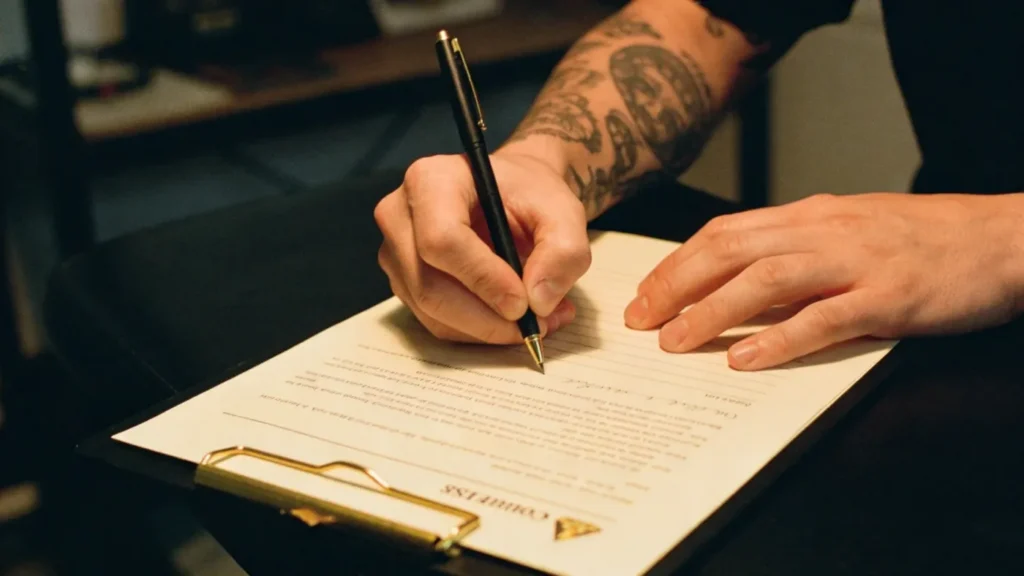
Before booking, ask the artist specific questions to gauge their expertise:
- “Can you show me healed examples of fine line tattoos that are at least one year old?”
- “What is your minimum spacing for fine line details?”
- “How do you adjust your technique for areas like fingers or ribs?”
- “What is your revision policy if the tattoo heals with blurring?”
These questions not only assess their technical skill but also their honesty. A top-tier artist will welcome such inquiries and provide transparent answers.
FAQ
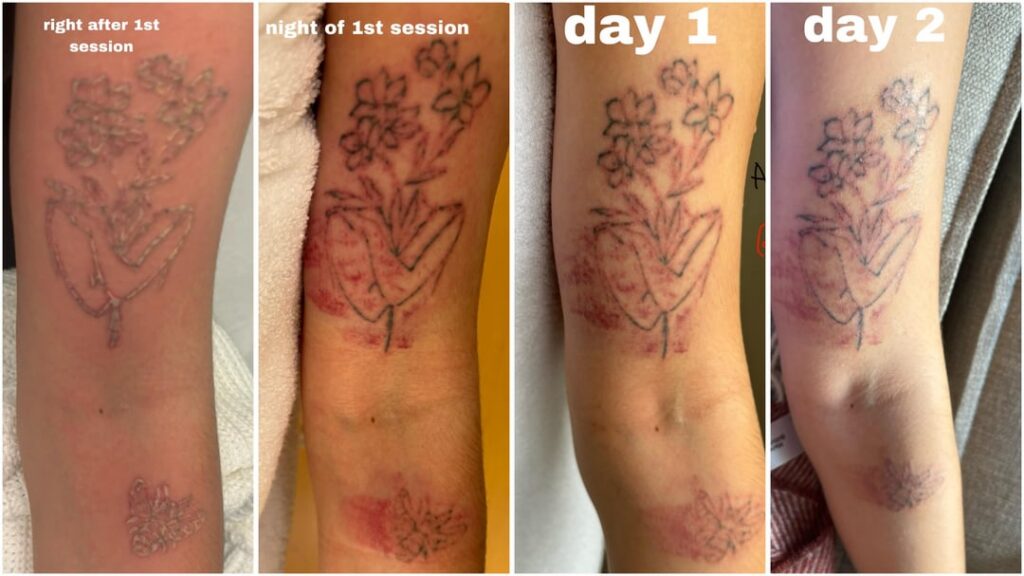
How long does it take for a fine line tattoo to heal?
Initial healing takes about 2-3 weeks, but full settling of the ink can take up to 2 months. During this time, lines may appear slightly thicker as the skin regenerates. Final assessment of line quality should be done after 6 months.
Can fine line tattoos be fixed if they blur?
Yes, but it’s tricky. A skilled artist can add bolder outlines or increase spacing in a touch-up, but this changes the design. Prevention is better: choose an artist who understands spacing and depth from the start. If you’re considering a cover-up, consult a specialist.
Are fine line tattoos more painful?
Pain is subjective, but fine line uses lighter pressure and smaller needles, which can be less painful. However, the time taken is longer for fine detail, so discomfort may accumulate. Always follow aftercare to minimize irritation.
Do fine line tattoos fade faster?
Yes, because less ink is deposited. Healed fine line will fade more noticeably than bold traditional work. To maintain readability, some artists recommend periodic touch-ups every few years. Proper sun protection is crucial.
Conclusion
Choosing a fine line tattoo artist requires a critical eye. Don’t be swayed by pretty fresh photos; demand healed evidence. Assess spacing, line weight, and readability with a specialist’s mindset. By applying the checks in this guide, you’ll select an artist who creates fine line tattoos that remain beautiful for years. For more guidance, explore our rankings of trusted studios and verified artists. If you’re ready to get your own fine line piece, use our price estimator to budget appropriately, and read our consultation tips to prepare. Your skin is permanent—make an informed choice.
Read more
- Magazine for more tattoo knowledge, style guides and aftercare notes.
- Request a consultation if you need help with style, placement or preparation.
- Marketplace for equipment, supplies and learning resources.
Content hub
Tattoo styles pillar
This article belongs to the styles cluster. Open the pillar page to compare Irezumi, Old School, Realistic, Blackwork, Fine line, Geometric and Watercolor.
Related reading
Continue reading
Lettering Tattoo Healed Portfolio Review: Kerning, Baseline & Placement Distortion
A specialist healed-portfolio review guide for Lettering tattoos, focused on kerning, baseline control and placement distortion. Includes concrete…
Lettering Tattoo Placement: A Specialist Guide to Kerning, Baseline Control, and Body-Flow Distortion
A specialist guide to lettering tattoos focusing on kerning, baseline control, and placement distortion. Learn how to plan…

Lettering Tattoo Design Consultation Checklist: Kerning, Baselines, and Placement Distortion
A specialist consultation checklist for lettering tattoos covering kerning, baseline control, and placement distortion. Includes practical tests, booking…