
Dotwork Tattoo Portfolio Review: How to Assess Dot Density, Gradient Control, and Session Planning
Introduction: Why Dotwork Portfolios Demand a Different Eye

Dotwork is not merely a stylistic choice—it is a technical discipline where every dot carries weight. Unlike linework or solid blackwork, dotwork relies on the accumulation of single points to create tone, texture, and dimension. When you review a dotwork portfolio, you are not just looking for pretty pictures; you are auditing the artist’s control over density, gradient, and the logistical reality of multi-session work. This guide provides a concrete checklist to evaluate healed dotwork, helping you separate true masters from those who only post fresh photos.
1. Dot Density: The Foundation of Tonal Range
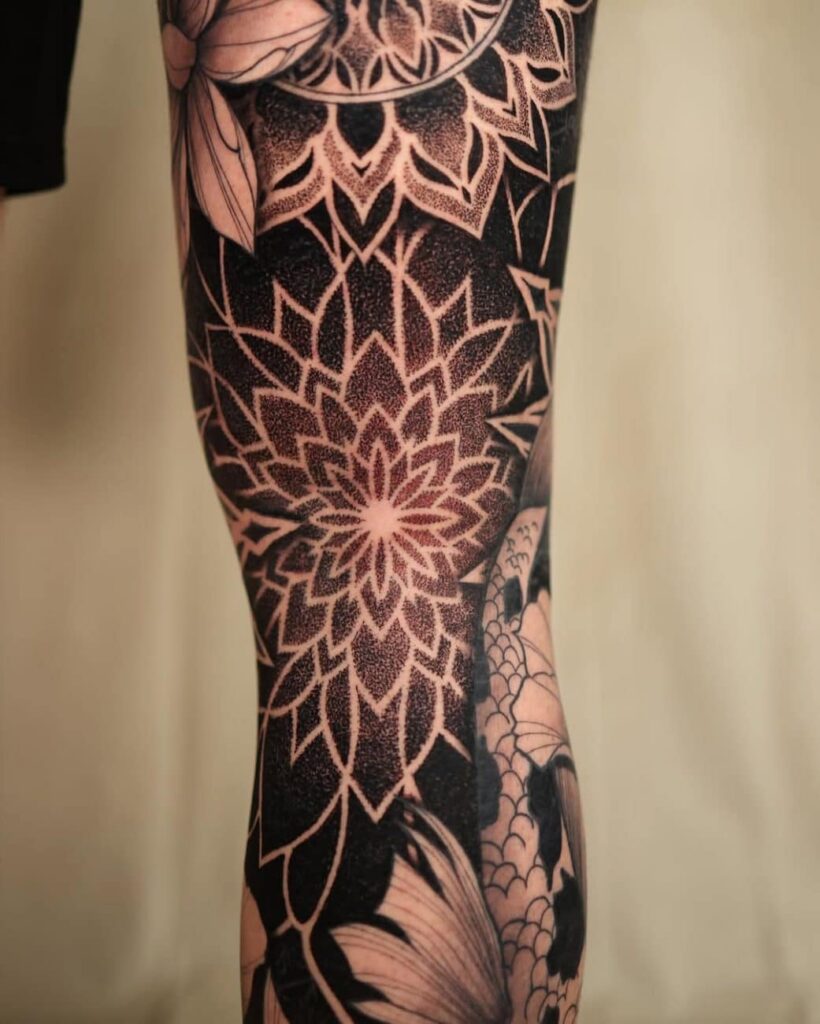
Dot density refers to the number of dots per square centimeter, determining how dark a given area appears. In a healed tattoo, density must be assessed under natural light, as fresh ink and swelling can hide inconsistencies.
What to Check in Healed Work
- Uniformity: Are the dots evenly spaced within a shaded area? Uneven gaps create a patchy, dirty look.
- Consistency across similar tones: If two areas are meant to be the same darkness, do they match? Look for accidental dark spots or light holes.
- Edge sharpness: Do the edges of shaded zones fade smoothly or end abruptly? A skilled artist controls density at borders to avoid harsh lines.
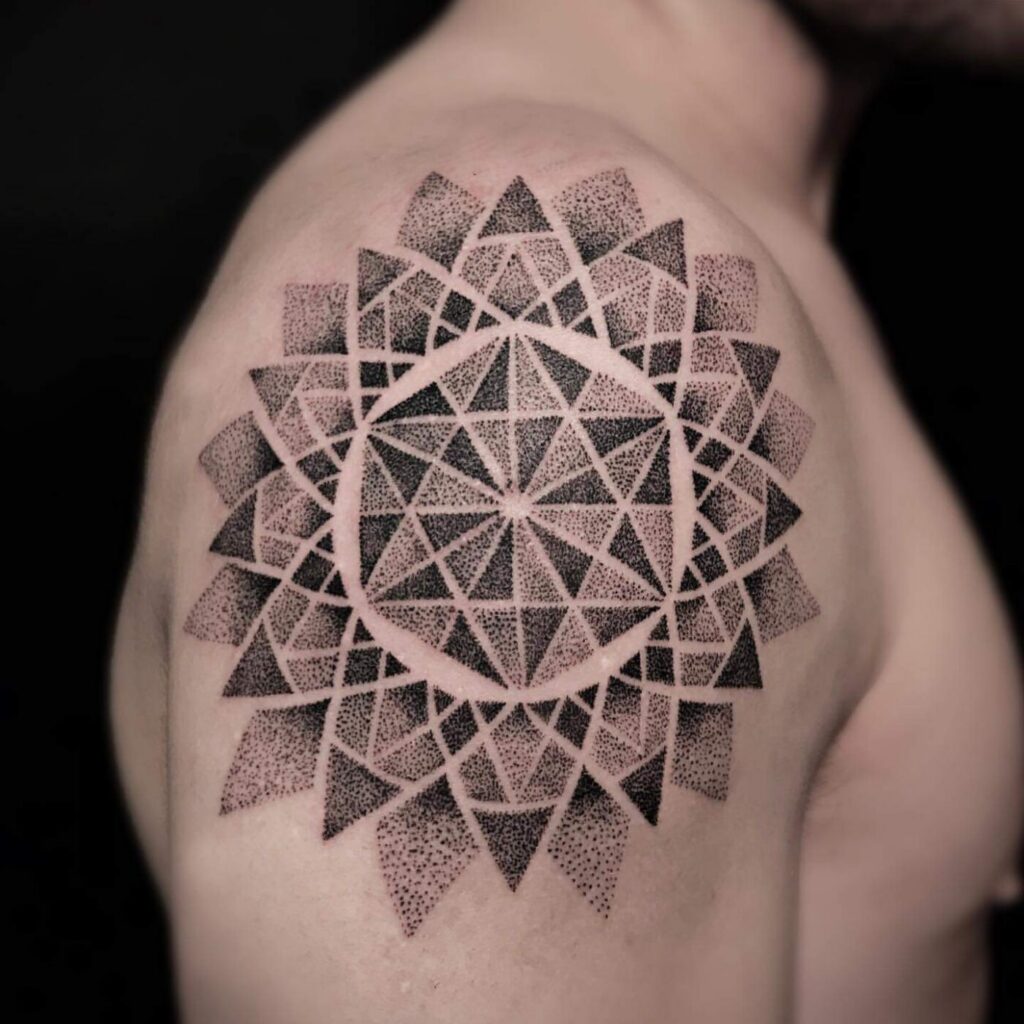
For example, in a Geometric tattoo, a gradient from dense dots to sparse dots should feel like a smooth transition from dark to light, not a series of steps. Ask to see healed photos from 3–6 months post-session, as this is when the skin has fully settled.
2. Gradient Control: The Art of Smooth Transitions
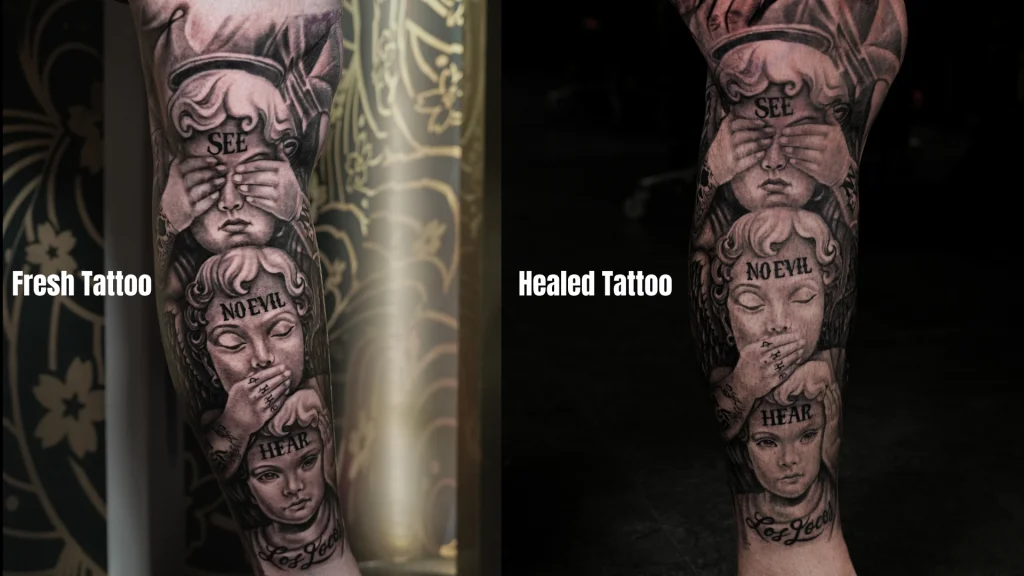
Gradient control is the ability to move from one tonal value to another without visible jumps. In dotwork, this is achieved by gradually changing dot size, spacing, or both. A poor gradient shows distinct bands of darkness, while a masterful gradient looks like a continuous wash of tone.
How to Test Gradient Quality
- Find a gradient area: Look for a section that goes from dark to light, such as a shadow or a sphere.
- Blink test: Close your eyes and open them quickly. If your eye is drawn to a specific line within the gradient, the transition is not smooth.
- Check for muddiness: In Realism or Micro realism, gradients should be clean, not muddy. Muddy gradients occur when dots are placed too close together, causing ink to blur.
Artists often use different needle configurations for dotwork—single needle for fine details, magnum needles for broader shading. Ask which they used and why. This shows technical awareness.
3. Healed vs. Fresh: The Reality Check
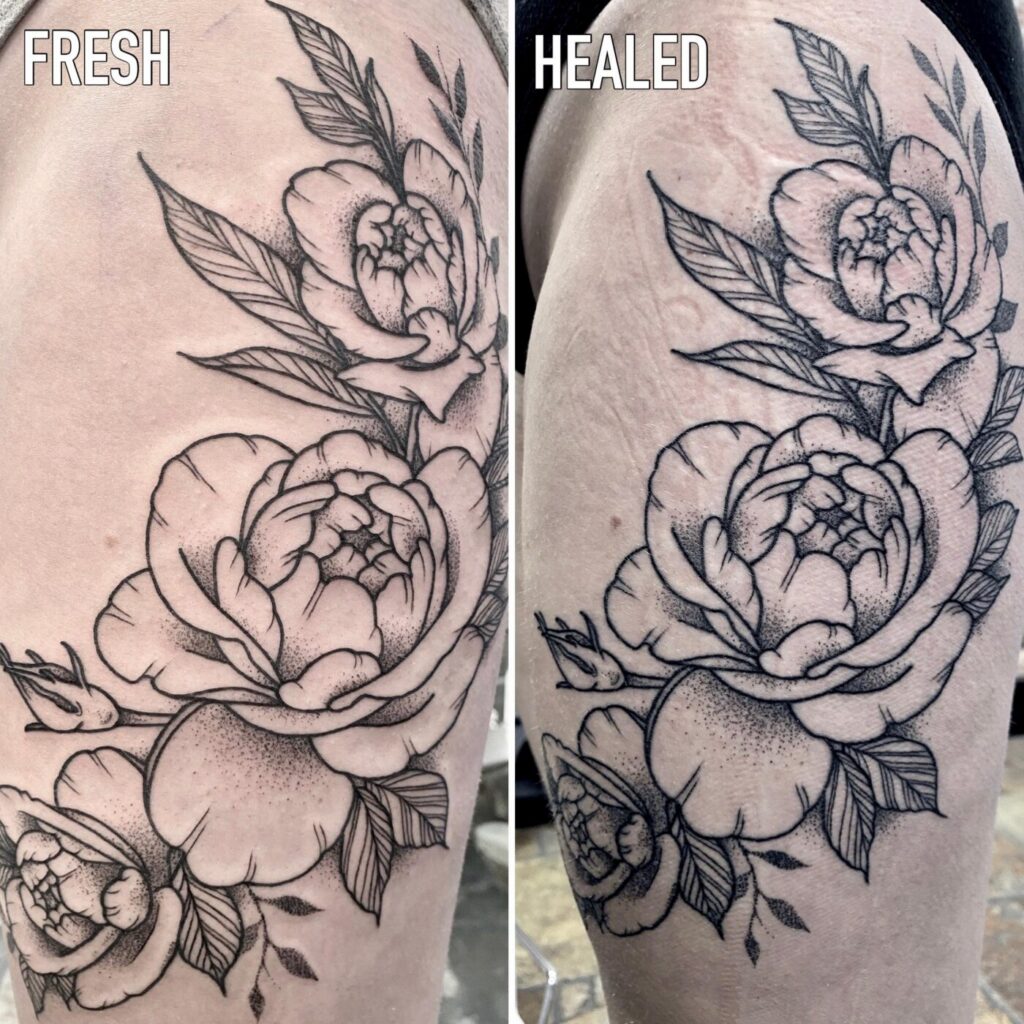
Fresh tattoos look crisp and dark, but dotwork can change significantly as it heals. The skin’s natural regeneration pushes some ink out, and the dots can spread slightly, altering the overall contrast.
Key Healed Indicators
- Dot spread: In a healed tattoo, dots should remain distinct, not merge into a blur. If they merge, the artist used too high a voltage or too deep a needle.
- Fading: Some fading is normal, but if the gradient loses its mid-tones, the artist relied too heavily on very light dots that disappear.
- Scarring: Run your fingers over the healed area. If it feels raised, the artist may have gone too deep, causing ink to spread and lose definition.
Always ask for healed photos taken at least 6 months after the tattoo. If an artist only shows fresh work, be cautious.
4. Session Planning: The Hidden Skill in Dotwork
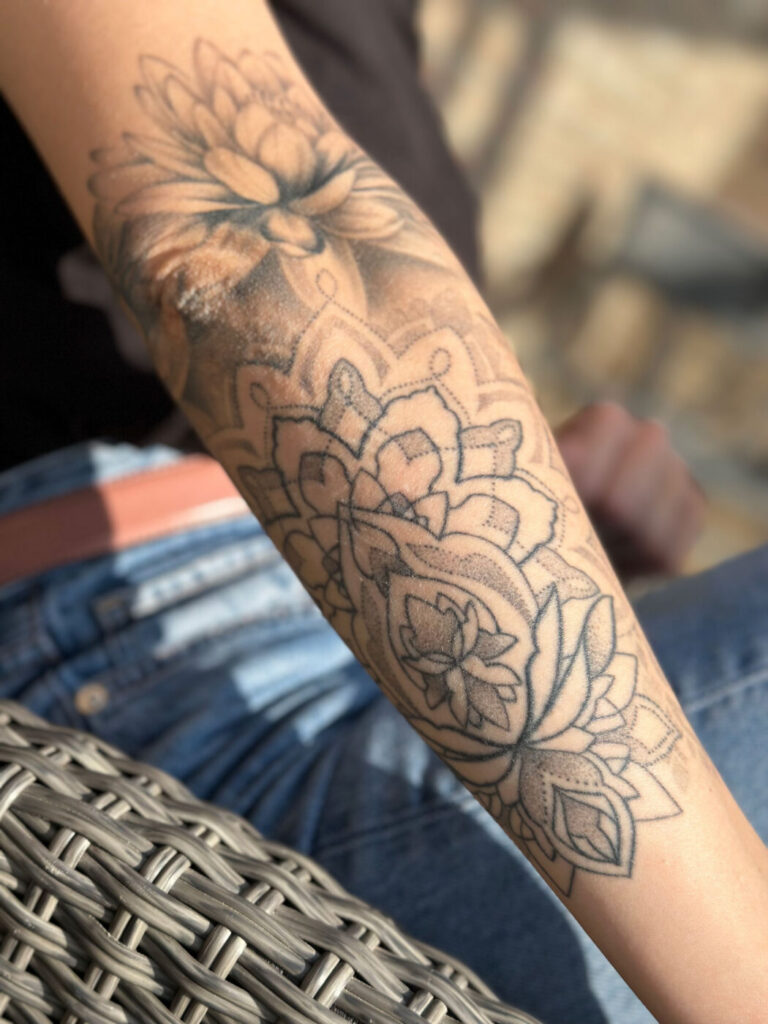
Large dotwork pieces are rarely done in one sitting. Session planning is about how the artist structures the work to ensure consistent healing and color saturation.
What to Ask About
- Layering strategy: Does the artist plan to build density over multiple sessions? For example, a first pass might establish the overall gradient, and subsequent sessions add depth.
- Healing intervals: How long between sessions? Typically 4–6 weeks to allow full healing. Rushed sessions can lead to overworked skin.
- Design adaptation: How does the artist handle changes in skin condition (e.g., sun exposure, weight fluctuation) between sessions?
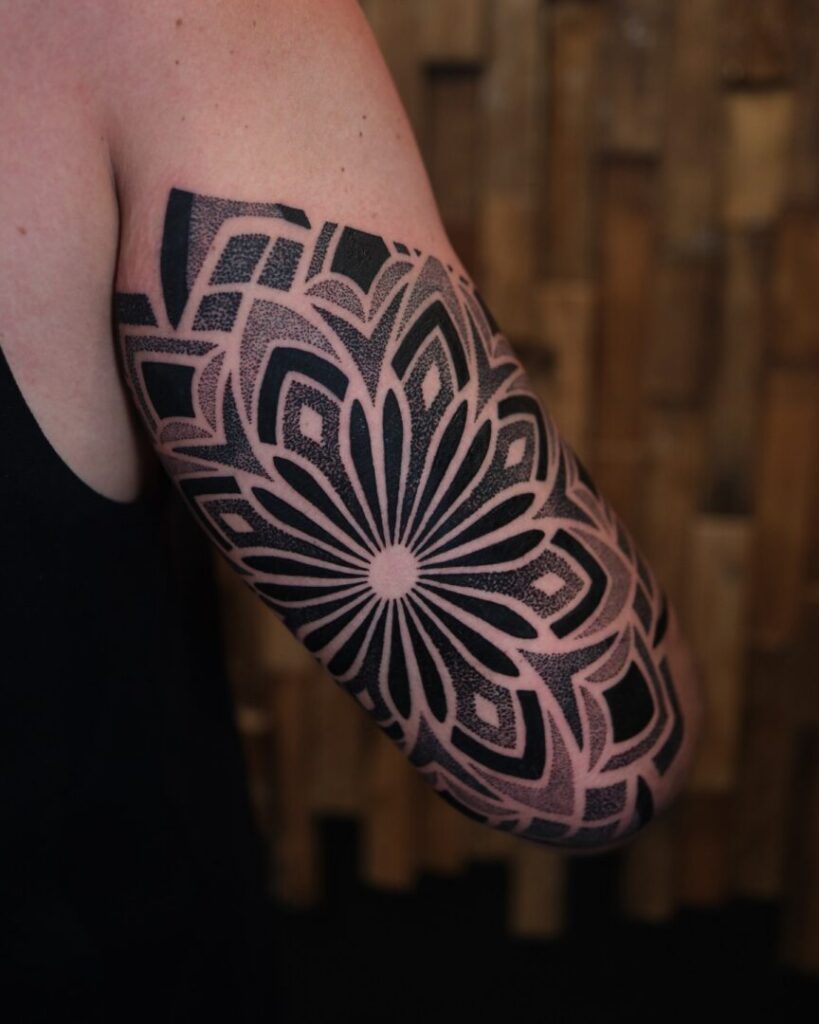
For a Blackwork or Ornamental piece that covers a large area, ask to see a timeline of the sessions. A professional will have a clear plan, not just a vague idea.
5. Portfolio Red Flags and Green Flags
Red Flags
- Only fresh photos, no healed shots.
- Inconsistent dot spacing within the same piece.
- Harsh, abrupt gradients.
- No examples of large-scale dotwork.
- Unwilling to discuss needle sizes or machine settings.
Green Flags
- Healed photos from multiple angles and lighting conditions.
- Close-ups that show dot structure.
- Detailed captions explaining technique.
- Willingness to share session breakdowns.
- Portfolio includes various styles, but dotwork pieces show consistent mastery.
6. The Consultation: Questions to Ask
Before booking, have a consultation. Bring your reference images and ask these specific questions:
- How many sessions do you estimate for my design, and why?
- What needle configurations do you use for dotwork?
- How do you handle gradient transitions in large areas?
- Can you show me healed examples of similar-sized pieces?
- What aftercare do you recommend to preserve dotwork sharpness?
These questions go beyond surface-level and show that you are an informed client.
7. Safety and Hygiene in Dotwork
Dotwork requires repeated passes over the same area, which increases the risk of skin trauma. Ensure the studio follows strict hygiene protocols: single-use needles, sterile ink caps, and autoclaved equipment. Ask about their cross-contamination prevention. Also, discuss pain management—long sessions can be taxing, so a good artist will suggest breaks.
8. Style Considerations: When Dotwork Works Best
Dotwork is versatile, but it shines in certain styles. It pairs beautifully with Geometric tattoo, Abstract tattoo, and Ornamental designs, where precision is key. In Realism, dotwork can create stunning soft shading, but it requires a very skilled hand. Neo-traditional and Japanese traditional often rely on solid blacks, so dotwork is less common there. Watercolor tattoo uses splashes of color, but dotwork can add texture. Lettering can be enhanced with dotwork backgrounds. Always choose a style that suits the artist’s strengths.
Conclusion: The Art of Informed Choice
Reviewing dotwork portfolios is about more than liking the images. It is about understanding the technical decisions behind each dot. By focusing on density, gradient, healed results, and session planning, you can make an informed decision and avoid disappointment. Use this guide as your checklist when browsing portfolios, and do not hesitate to ask tough questions. A master dotwork artist will welcome your scrutiny.
FAQ
Q1: How long does a dotwork tattoo take to heal completely?
Surface healing typically takes 2–3 weeks, but full settling of the ink and skin texture can take up to 6 months. Always wait at least 3 months before evaluating the final result.
Q2: Can dotwork tattoos be touched up easily?
Yes, but only by an experienced artist. Touch-ups require matching the existing dot density and gradient, which is challenging. It is better to get it right the first time.
Q3: Are dotwork tattoos more painful than regular tattoos?
Dotwork involves repeated poking in the same area, which can be more intense. However, pain varies by individual. Taking breaks during sessions can help.
Q4: How do I choose between dotwork and other shading techniques?
Consider the style and the effect you want. Dotwork gives a soft, textured look that ages well if done properly. If you prefer smooth gradients, traditional shading or fine line might be better. Look at healed examples and discuss with your artist.
For more guidance, explore our tattoo artist rankings and verified studios to find professionals who meet these standards. You can also read our tattoo magazine for further insights, or use our price estimator to plan your budget.
Read more
- Magazine for more tattoo knowledge, style guides and aftercare notes.
- Request a consultation if you need help with style, placement or preparation.
- Marketplace for equipment, supplies and learning resources.
Content hub
Tattoo styles pillar
This article belongs to the styles cluster. Open the pillar page to compare Irezumi, Old School, Realistic, Blackwork, Fine line, Geometric and Watercolor.
Related reading
Continue reading
Lettering Tattoo Healed Portfolio Review: Kerning, Baseline & Placement Distortion
A specialist healed-portfolio review guide for Lettering tattoos, focused on kerning, baseline control and placement distortion. Includes concrete…
Lettering Tattoo Placement: A Specialist Guide to Kerning, Baseline Control, and Body-Flow Distortion
A specialist guide to lettering tattoos focusing on kerning, baseline control, and placement distortion. Learn how to plan…

Lettering Tattoo Design Consultation Checklist: Kerning, Baselines, and Placement Distortion
A specialist consultation checklist for lettering tattoos covering kerning, baseline control, and placement distortion. Includes practical tests, booking…