Chicano Tattoo Healed Portfolio Review: Lettering, Portrait Transitions & Black-and-Grey Flow
Why a Healed Chicano Portfolio Matters More Than a Fresh One
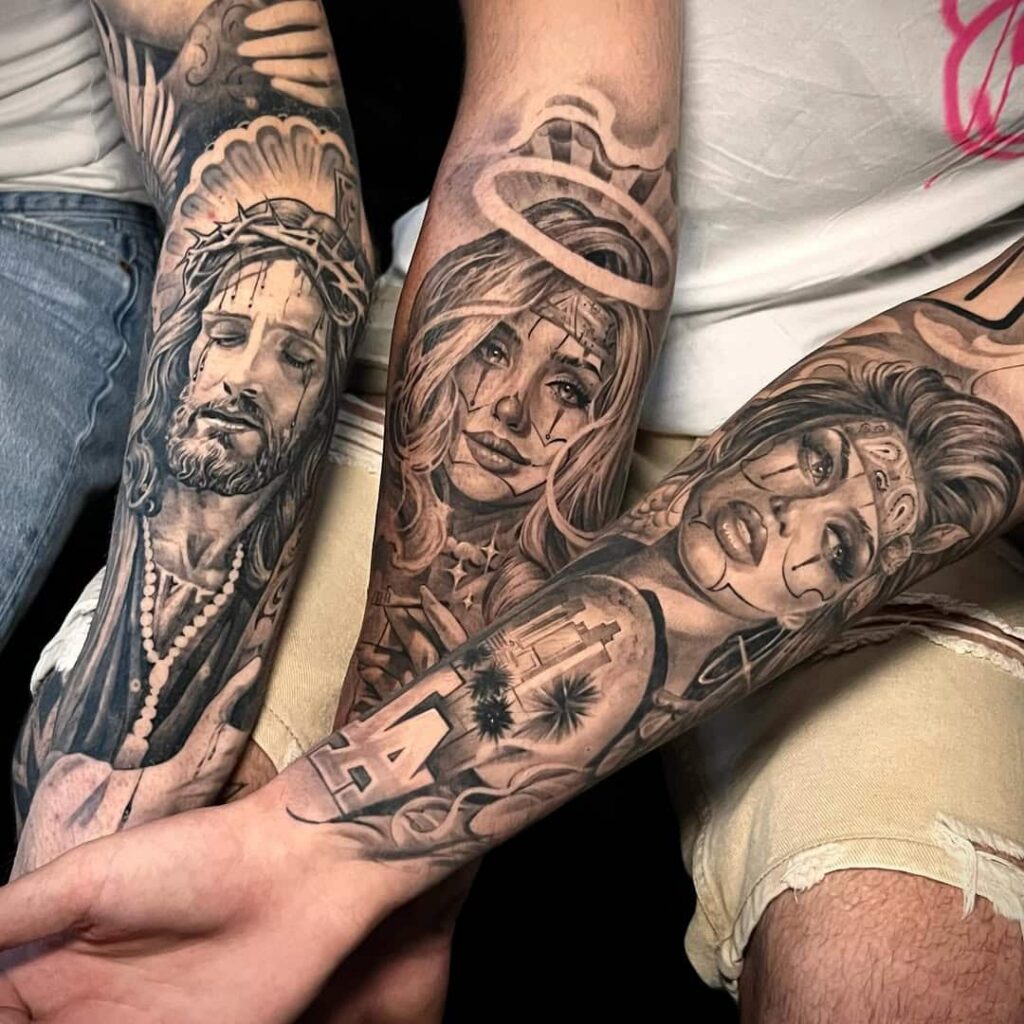
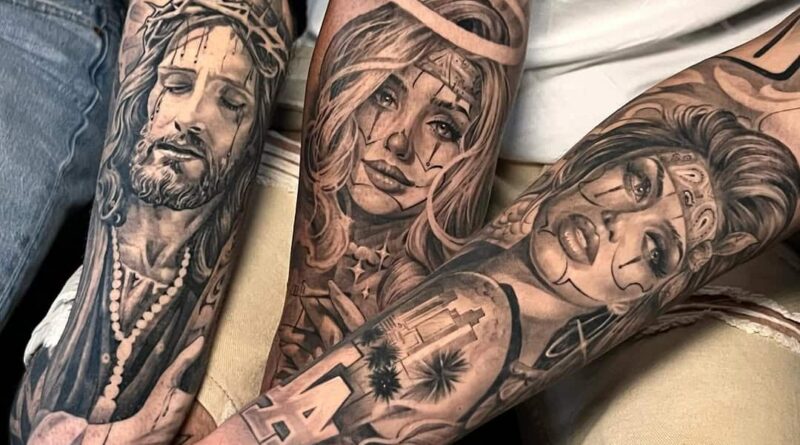
Chicano tattooing lives or dies on how it ages. A fresh photo of a script name or a lowrider portrait can look immaculate under ring light, but the real test is a healed image taken under neutral daylight, six to eighteen months later. This guide is for collectors who already know they want Chicano work and need a specialist method to review a portfolio before booking. It focuses on three pillars: Lettering, portrait transitions, and black-and-grey flow. If you are still comparing studios broadly, start with our ranking framework and then return here for the deep-dive checks.
Chicano style is not a single technique. It borrows from Realism, Fine line, Blackwork, Dotwork, and Lettering, but the signature is a soft, smoky black-and-grey gradient with crisp script and a narrative composition. That combination is unforgiving. A portrait that looks sharp fresh can turn muddy once the skin settles; script that reads perfectly on day one can blur into a grey smear if line weight and spacing were not planned for healing.
Pillar 1: Reading Chicano Lettering in a Healed Portfolio
Check stroke consistency, not just style
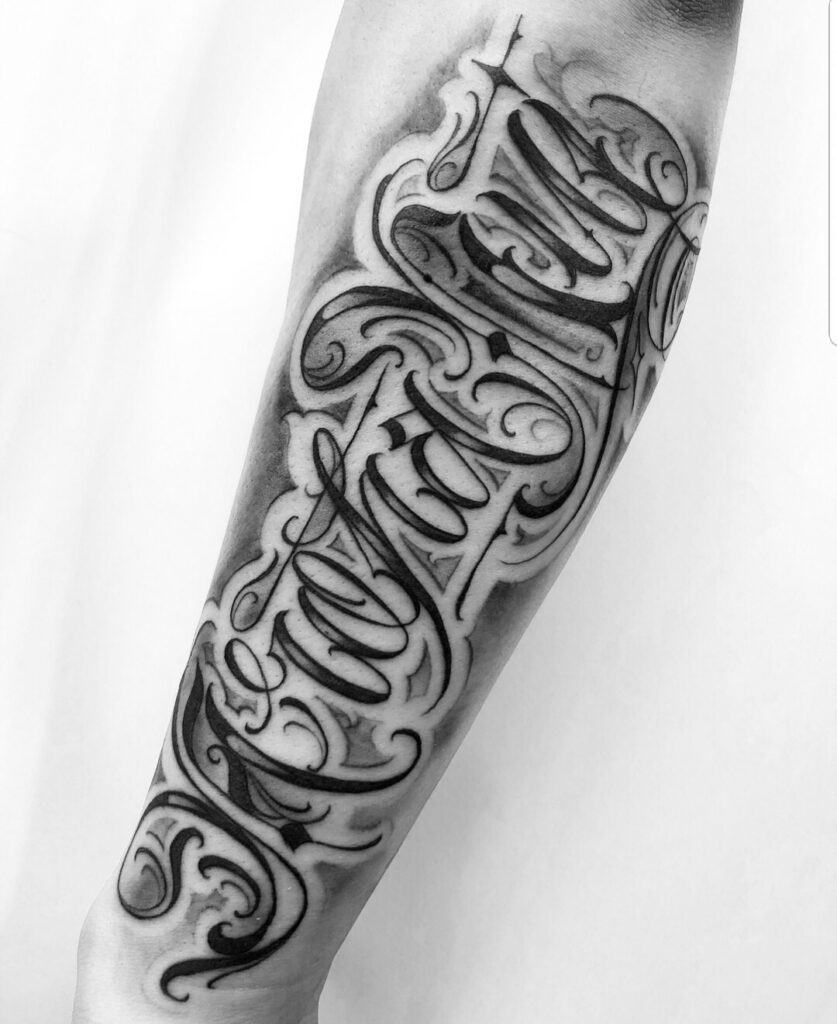
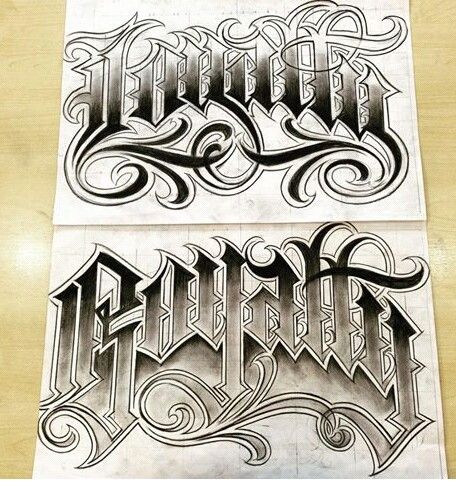
Chicano script is usually a flowing, cursive or Gothic-influenced Lettering style. In a healed photo, look for three things:
- Stroke width stability: The thick-to-thin transition should be intentional. If the thin strokes have faded to broken dots, the artist likely went too fine for the placement.
- Negative space: The gap between letters should still be visible. If the loops have closed up, the lettering was spaced too tightly for that body area.
- Terminal ends: Sharp entry and exit points should remain crisp. Rounded, fuzzy ends suggest over-working or ink migration.
Placement-aware lettering checks
Lettering on the ribs, sternum, or inner arm stretches and compresses. Ask for healed photos of script in those exact zones, not just on the forearm. A portfolio that only shows forearm script tells you nothing about how the artist handles high-movement skin. If you are comparing quotes for a script piece, our pricing estimate guide explains why lettering is often priced by complexity, not by the minute.
Red flags in healed lettering
- Inconsistent spacing between letters in the same word.
- Blowouts at the base of thick strokes.
- Script that reads as a grey bar in a low-contrast photo.
Pillar 2: Portrait Transitions and Black-and-Grey Flow
What a transition actually is
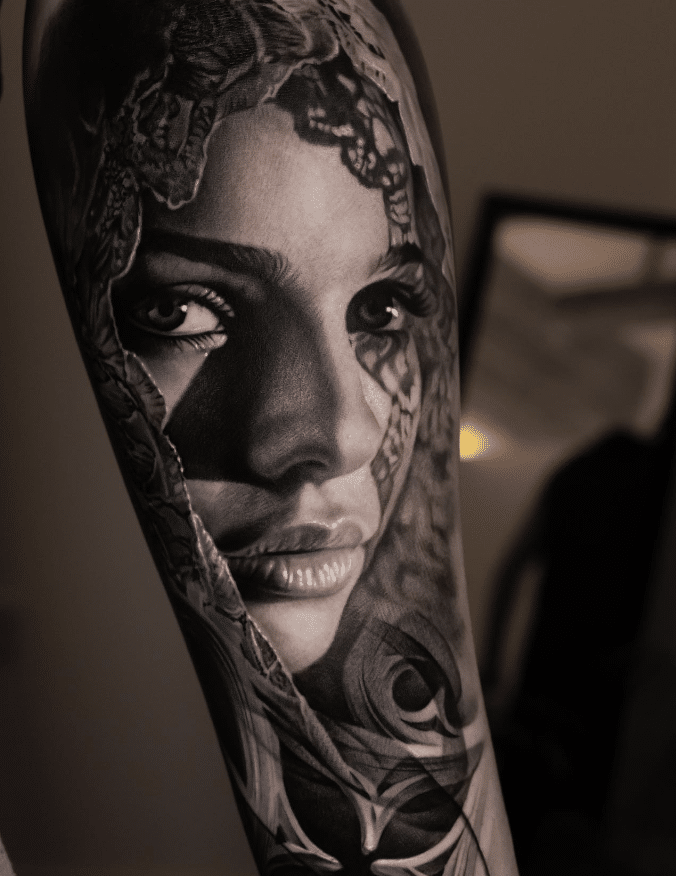
In Chicano portraiture, a transition is the gradient zone where dark hair, shadow, or fabric moves into mid-tone skin or background. In a healed piece, that zone should read as a smooth ramp, not as banding. Banding happens when the artist jumps from dark to light too quickly, and it becomes more obvious after healing because the skin lightens unevenly.
How to inspect a healed portrait
- Value range: Count the distinct greys from the darkest shadow to the lightest highlight. A strong Chicano portrait usually holds four to six readable values.
- Edge control: Hard edges belong on structural features like jawlines and hair strands; soft edges belong on cheekbones and background fade.
- Background treatment: Chicano work often uses a smoky or clouded background. Check that the background has not swallowed the subject’s silhouette.
- Dotwork and texture: Some artists use Dotwork for stubble or fabric texture. In healed photos, dots should remain distinct, not merged into a solid tone.
Flow across the whole composition
Flow is the path your eye takes through the tattoo. In a Chicano sleeve or back piece, the flow should follow the body’s natural lines and the narrative of the image. Ask yourself: does the script lead into the portrait, or does it fight it? A common failure is a heavy Blackwork border that stops the flow dead instead of guiding it. If the portfolio shows sleeves where each element sits in its own box, the artist may be strong on individual motifs but weak on composition.
Pillar 3: The Healed Portfolio Review Checklist
Use this when you are scrolling an artist’s feed or browsing a studio profile. Score each item yes or no.
- Are there healed photos, not just fresh ones?
- Are the healed photos taken in daylight or neutral light?
- Do healed lettering pieces still read at arm’s length?
- Do portrait transitions show smooth value ramps?
- Is there at least one large-scale healed piece showing flow?
- Are the photos dated or captioned with healing time?
- Is the artist consistent across different body placements?
- Do you see any healed work on darker skin tones, if relevant to you?
If a portfolio fails three or more of these, treat it as a warning. You can still book a consultation, but go in with specific questions. Our consultation guide covers how to ask them without sounding confrontational.
How to Compare Artists Without Getting Lost
Chicano specialists often sit in a broader black-and-grey market. To narrow the field, separate artists into three buckets:
- Lettering-first: Strong script, weaker portraiture.
- Portrait-first: Strong realism, script treated as an afterthought.
- Composition-first: Balanced lettering, portrait, and flow.
For a full Chicano piece, you want the third bucket. If you are building a larger collection, our verified studio directory can help you filter by portfolio evidence rather than marketing copy.
Booking and Safety Questions to Ask
These are practical, non-medical questions that clarify process and aftercare expectations.
- Can you show me healed photos of this exact style at six months or older?
- How do you plan the value range for my skin tone and placement?
- What line weight do you use for script on this body area, and why?
- How do you structure sessions for a large black-and-grey piece?
- What is your aftercare instruction, and what should I avoid during healing?
- How do you handle touch-ups if a transition heals unevenly?
Never accept medical advice from a portfolio review. If you have a skin condition or healing concern, speak to a qualified medical professional. A tattoo artist can guide aftercare habits, but they are not your doctor.
Realistic Caveats
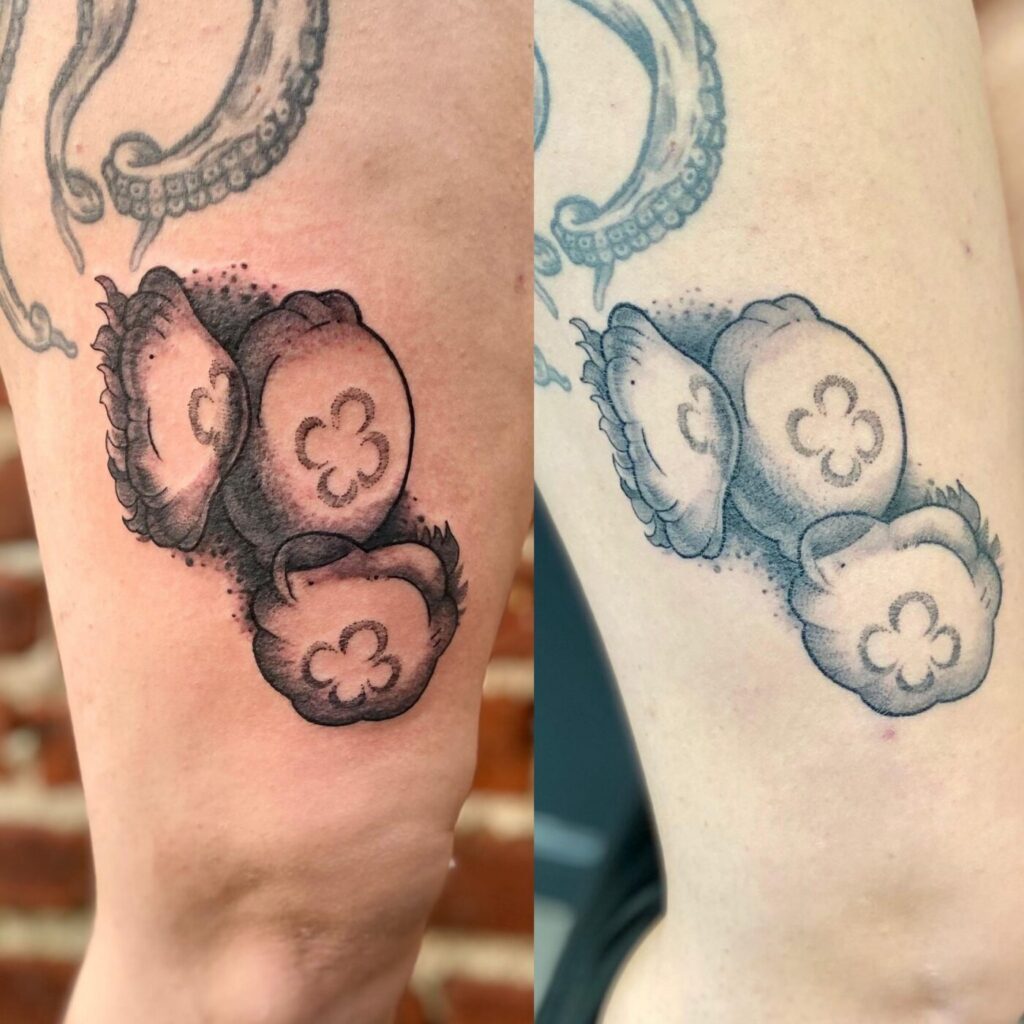
Healed photos are not perfect evidence. Lighting, camera settings, and skin tone all change how a tattoo reads. A photo that looks flat on screen may look better in person. Conversely, a heavily filtered photo can hide banding. When possible, ask to see a healed piece in person, or request a short video in natural light. Also remember that aging continues: a piece that looks good at one year may soften further at five. Chicano black-and-grey work is a long game, and the best portfolios show that the artist understands it.
FAQ
How old should a healed photo be to count as evidence?
Six months is the minimum for a meaningful read. One year or older is better, especially for large black-and-grey pieces where transitions continue to settle.
Can I judge lettering from a fresh photo?
Only partially. Fresh photos show design and line quality, but healing reveals spacing, stroke stability, and whether the script will blur. Always ask for healed lettering examples.
What if the artist only has fresh work?
That is a yellow flag, not an automatic no. Ask directly for healed photos, and if none exist, consider whether you want to be an early test case for that style.
Does Chicano style work on all skin tones?
Black-and-grey can work on many skin tones, but contrast and value planning change. Ask to see healed work on skin similar to yours, and discuss how the artist will adjust the value range.
Content hub
Tattoo styles pillar
This article belongs to the styles cluster. Open the pillar page to compare Irezumi, Old School, Realistic, Blackwork, Fine line, Geometric and Watercolor.
Related reading
Continue reading
Chicano Tattoo Placement: Lettering, Portraits & Black-and-Grey Flow
A specialist guide to Chicano tattoo placement: how lettering, portrait transitions, and black-and-grey flow behave on different body…

Chicano Tattoo Design Consultation Checklist: Lettering, Portrait Transitions, and Black-and-Grey Flow
A specialist consultation checklist for Chicano tattoos: lettering hierarchy, portrait transition zones, black-and-grey flow, and the booking questions…
Illustrative Tattoo Healed Portfolio Review Guide: Shape Language, Focal Points, Readable Composition
A specialist guide to reviewing healed illustrative tattoo portfolios: shape language, focal points, readable composition, and the checks…