Chicano Tattoo Design Consultation Checklist: Lettering, Portrait Transitions, and Black-and-Grey Flow
Why a Chicano Tattoo Consultation Is Different
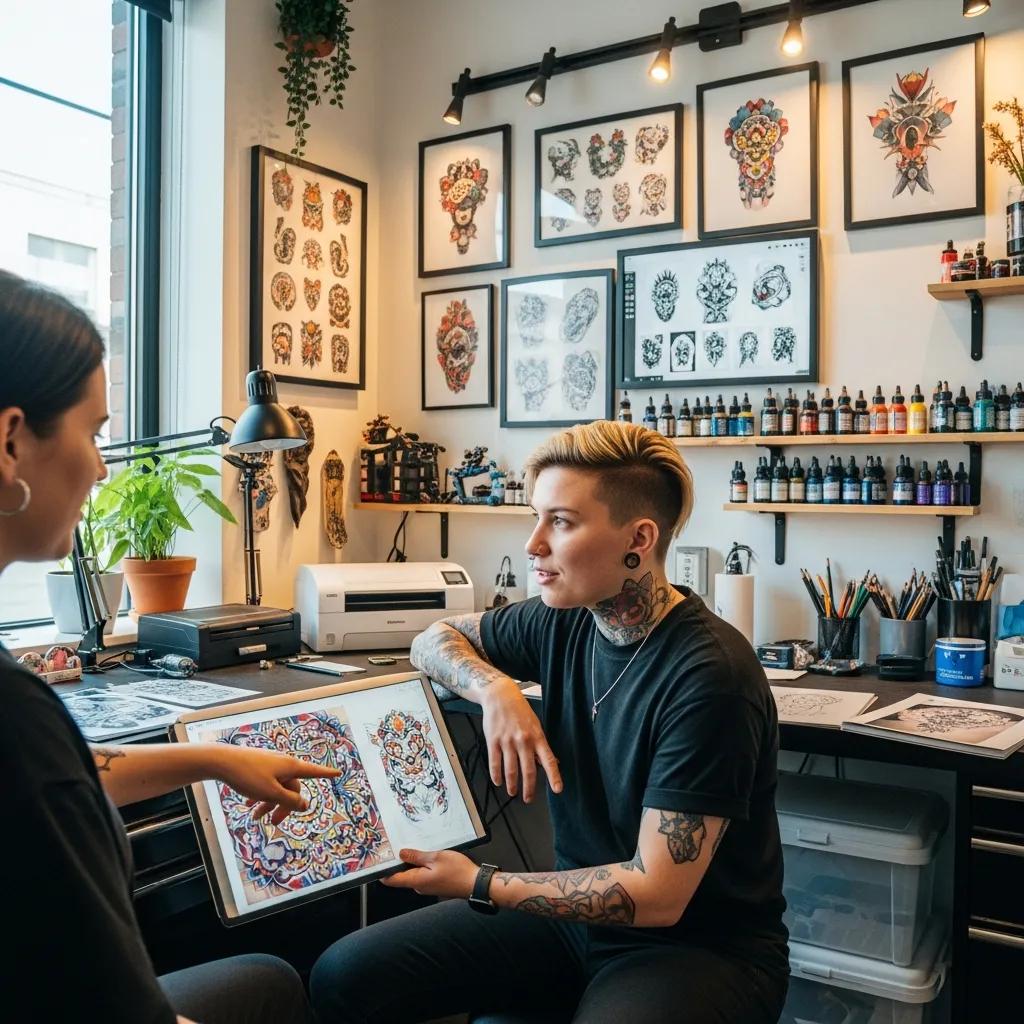
Chicano tattoo is not a single style you pick off a wall. It is a visual language built on black-and-grey realism, script lettering, and narrative composition. The consultation is where you decide whether the piece will read as a cohesive story or a collection of disconnected motifs. This checklist is for clients who already know they want Chicano work and need to pressure-test the design before needles touch skin. For a broader look at how styles are ranked by technical demand, see our style ranking breakdown.
1. Lettering: Script, Block, and Spacing Checks
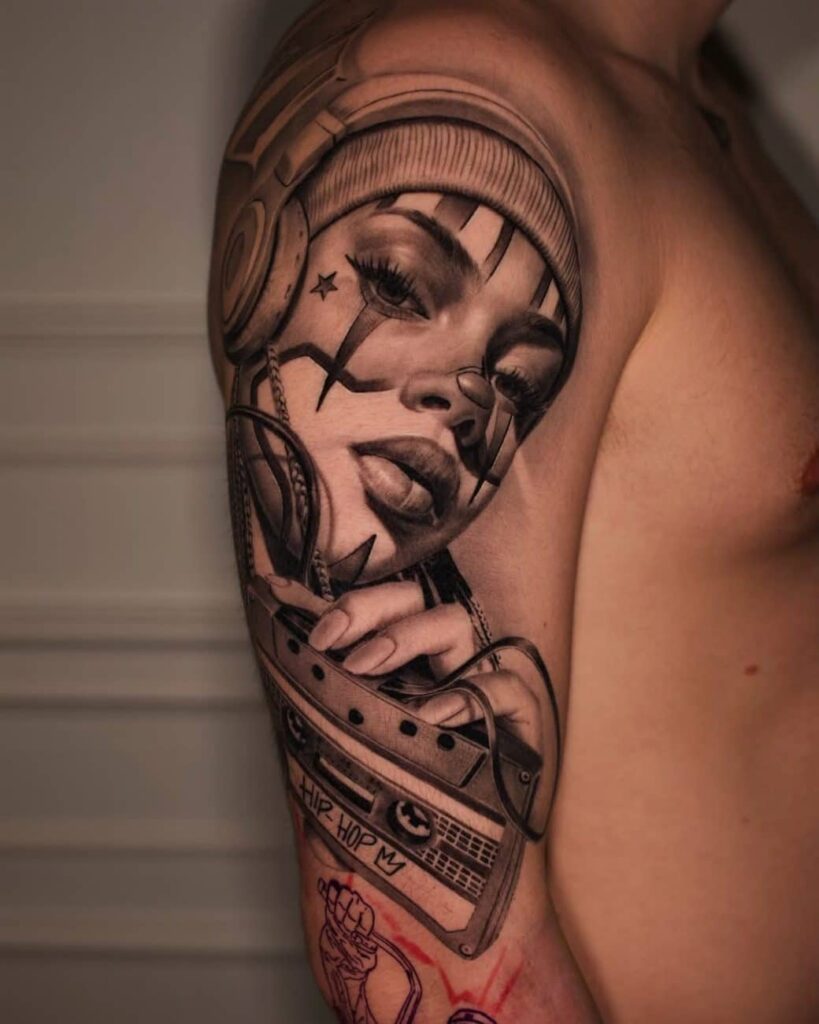
Script and fine-line lettering
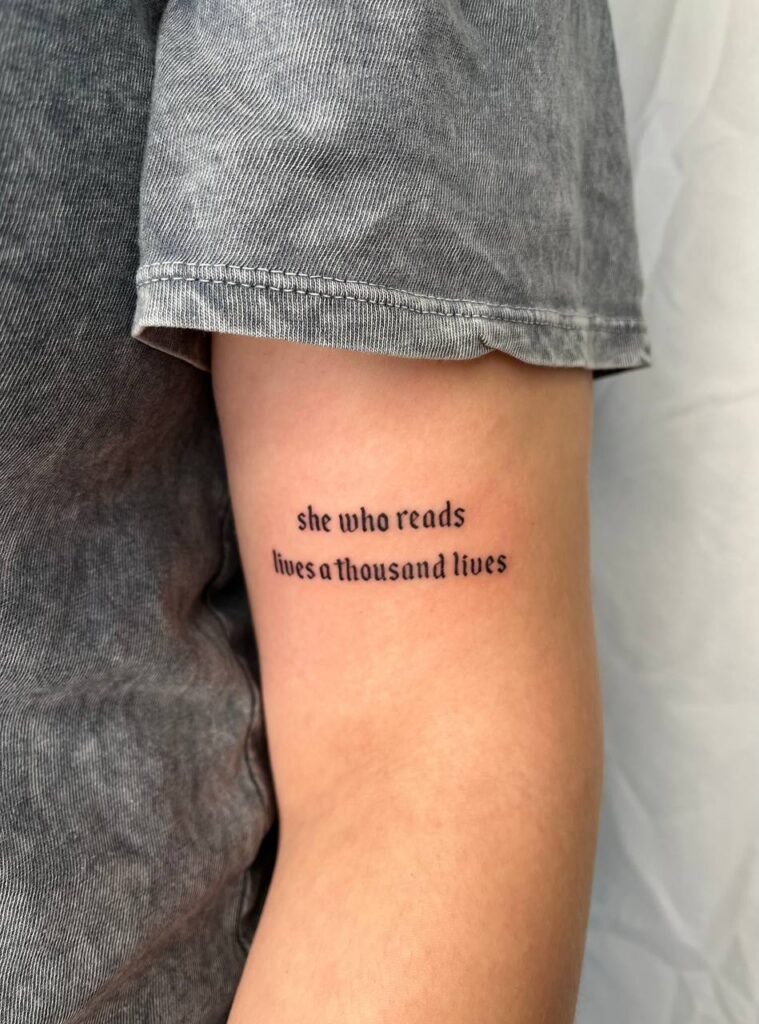
Chicano script often mimics vintage calligraphy or hand-painted signage. Fine line lettering can work, but it ages differently than bold script. Ask your artist:
- Will the script be drawn with a single needle or a small round liner?
- How will the thin connectors hold up over 5–10 years?
- Is the lettering sized to stay legible at a distance?
Fine line and micro realism lettering can blur if the letters are too small or too close. A good consultation includes a healing simulation: the artist should show you the design at 80% scale to approximate how it will look after the ink settles.
Block and graphic lettering
Block lettering in Chicano work often uses blackwork fills and sharp negative space. Check that the counters (the enclosed spaces in letters like A, O, B) remain open. If the artist packs the letters too tightly, the tattoo becomes a black smear. For a graphic approach, ask whether the lettering will be outlined first or built with a single-pass fill.
Spacing and hierarchy
Lettering should not compete with the portrait. Decide the hierarchy before the stencil:
- Is the name or phrase the primary read, or is the face?
- Will the lettering sit above, below, or wrap around the portrait?
- What is the minimum gap between the lettering and the portrait edge?
A common mistake is placing script too close to a jawline or cheekbone. The tattoo may look balanced on paper but crowded on a curved surface.
2. Portrait Transitions: Realism Meets Black-and-Grey
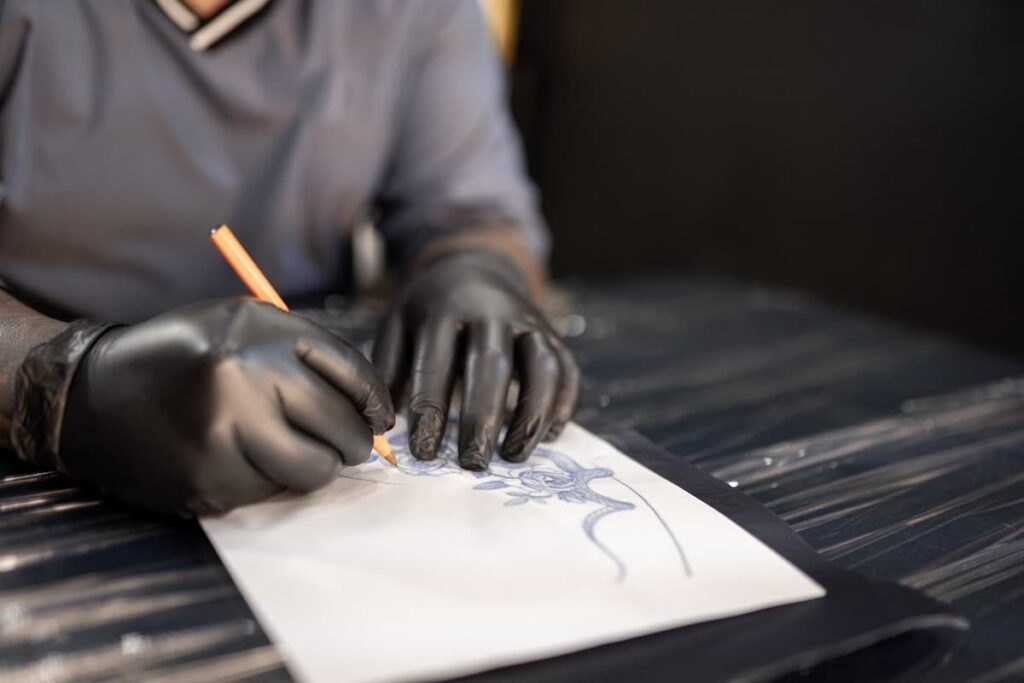
Reference quality and lighting
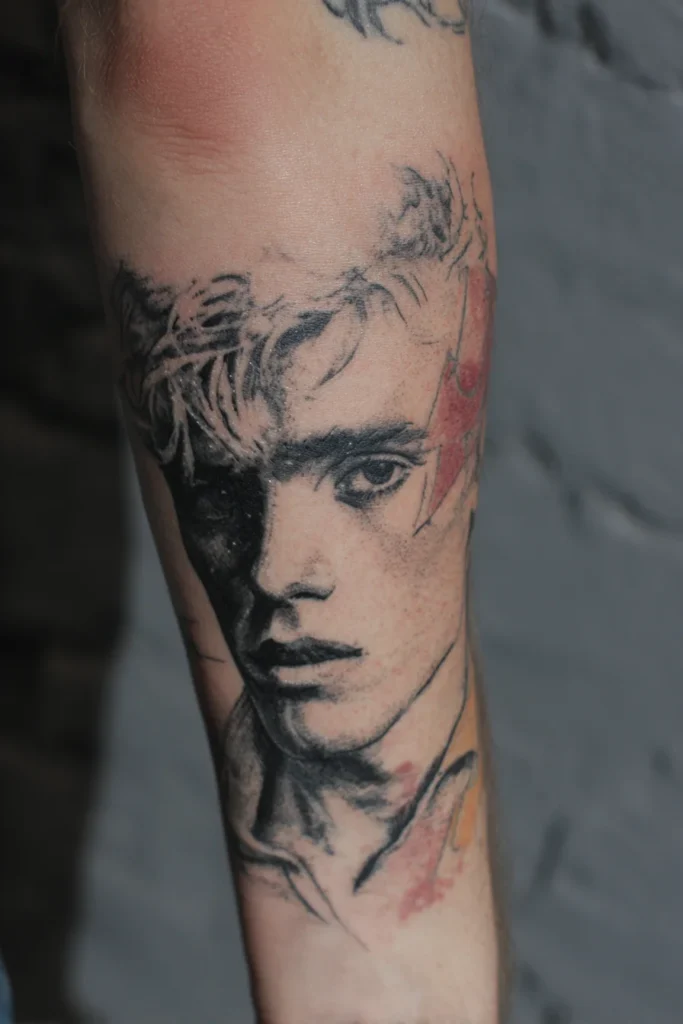
Chicano portrait work depends on a single strong light source. Bring 3–5 reference photos with clear shadows. Avoid filters, heavy contrast, or low-resolution images. If the reference is a family photo, ask the artist to redraw the lighting rather than copy it literally. This is where realism and micro realism diverge: micro realism needs smaller needle groupings and more precise dotwork, while classic black-and-grey realism uses broader washes and whip shading.
Transition zones
The transition from portrait to background is the hardest part of a Chicano composition. Check these zones:
- Hairline to background: Will the hair fade into smoke, script, or negative space?
- Shoulder to border: Is there a hard edge or a soft gradient?
- Cheek to shadow: Does the shadow read as a contour or a smudge?
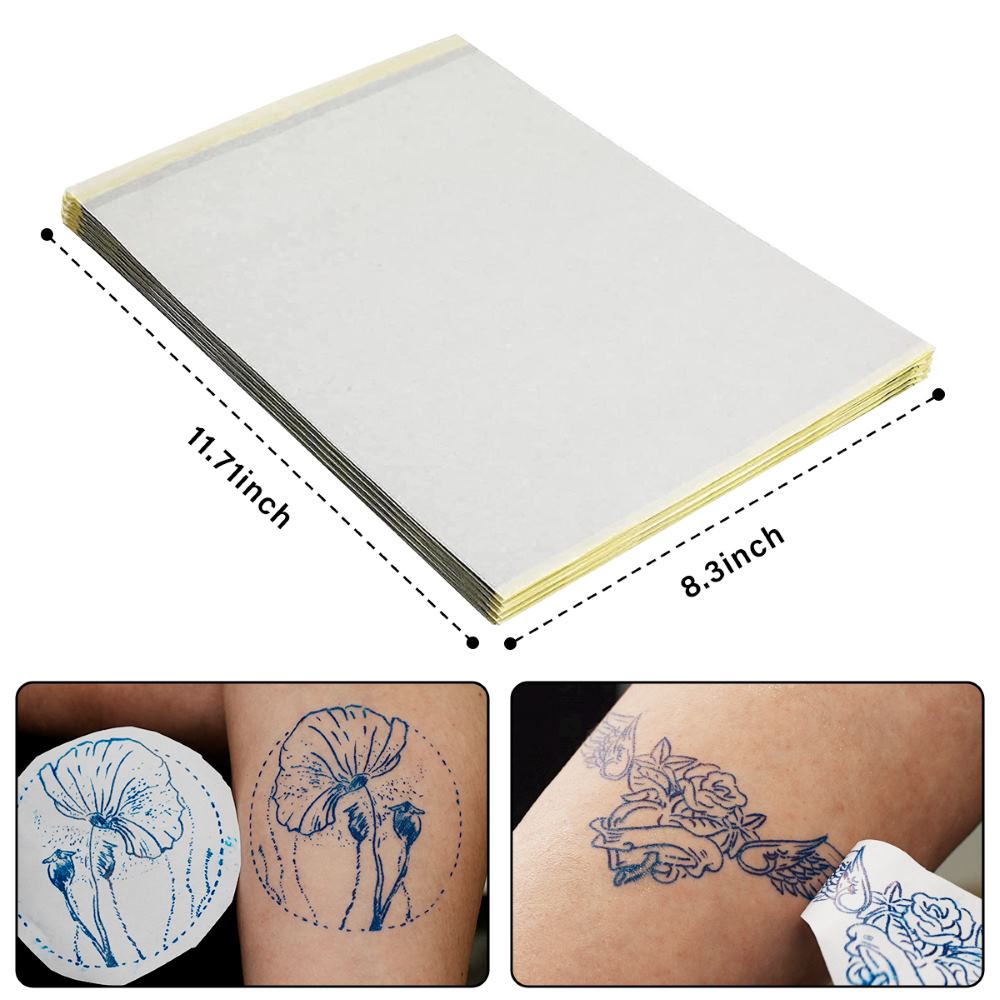
Ask the artist to mark the transition zones on the stencil with a dotted line. If the transition is too abrupt, the portrait will look pasted on. If it is too soft, the face loses structure.
Black-and-grey flow
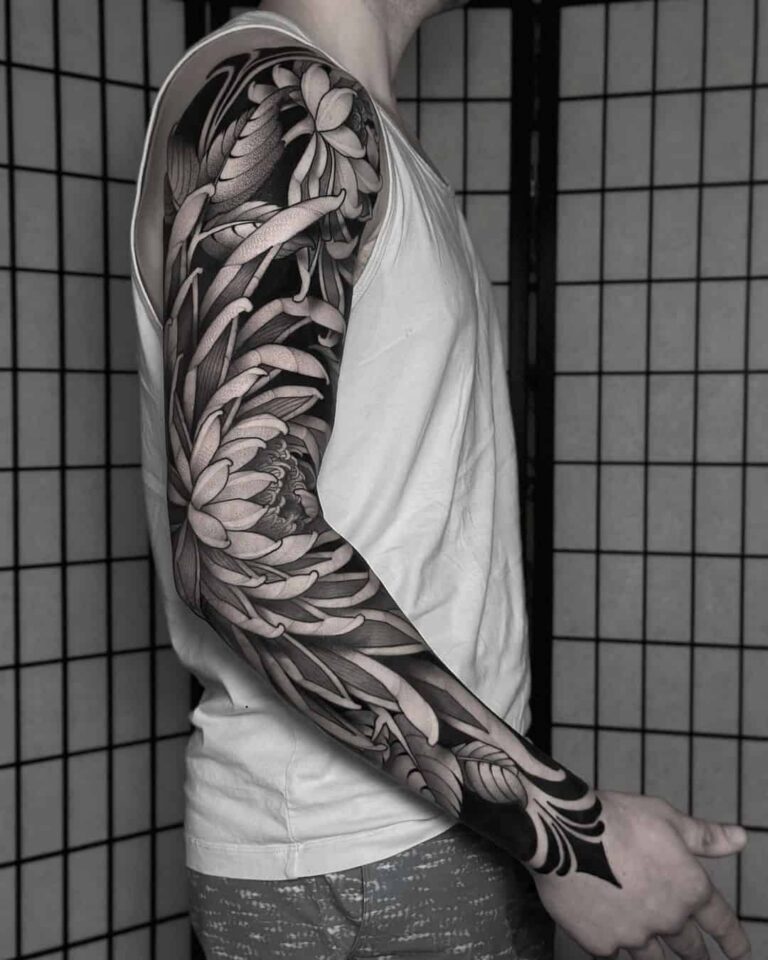
Flow is the direction the eye travels through the tattoo. In Chicano work, flow often moves from the lettering down through the portrait and into a lower motif like a rose, cross, or script banner. Check:
- Does the black-and-grey wash follow the body’s natural contours?
- Are the darkest values concentrated in one area, or scattered?
- Does the negative space guide the eye or break the composition?
A useful test is to squint at the design. If the portrait and lettering merge into one dark mass, the contrast is too low. If the lettering disappears, the values are too close.
3. Design Consultation Checklist
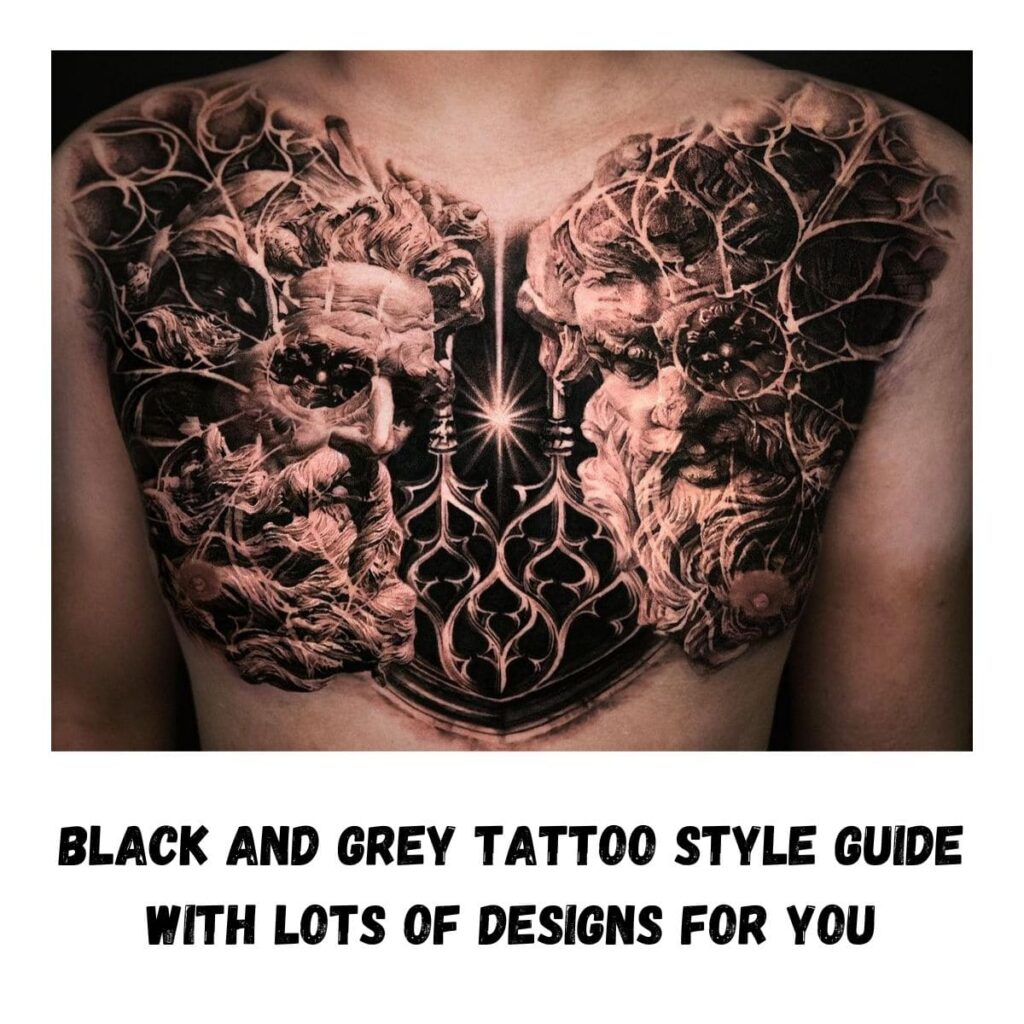
Before the appointment
- Collect 3–5 reference images for lettering, portrait, and overall composition.
- Write down the exact text, spelling, and punctuation.
- Decide the placement and approximate size in centimeters.
- Check whether the artist’s portfolio includes healed black-and-grey work, not just fresh photos.
- If you are comparing studios, use our verified studio directory to filter by specialty.
During the consultation
- Ask for a stencil preview on the body, not just on paper.
- Confirm the lettering hierarchy and minimum spacing.
- Review the transition zones between portrait and background.
- Discuss needle groupings for fine line, dotwork, and blackwork fills.
- Ask how the design will age and whether a touch-up is likely.
After the consultation
- Request a digital mockup with a scale reference.
- Confirm the session length and whether the piece will be split into multiple sittings.
- Ask about aftercare instructions in writing.
- If you need help comparing quotes, see our tattoo price estimation guide.
4. Booking and Safety Questions
These questions are not about medical advice; they are about professional standards. Ask:
- Are needles and tubes single-use and disposed of in front of me?
- Is the workstation cleaned with hospital-grade disinfectant between clients?
- Does the artist wear fresh gloves and change them during the session?
- What is the policy for touch-ups, and how long after healing?
- Can I see healed photos of similar Chicano work?
If you are booking through a studio, ask whether the artist specializes in black-and-grey or treats it as a side style. A specialist will have a portfolio of healed portraits, script, and flow. For editorial context on style trends, visit our magazine section.
5. Common Pitfalls in Chicano Design
- Overcrowding: Too many motifs in a small area. Chicano work needs breathing room.
- Inconsistent contrast: Mixing high-contrast portrait shading with flat black lettering.
- Lettering that fights the portrait: Both compete for attention.
- Ignoring body flow: A design that looks great on paper but distorts on a curved surface.
- Using the wrong needle grouping: Fine line lettering with a large mag can cause blowouts.
A good consultation catches these issues before the stencil is applied. If you are still choosing an artist, our studio profiles and consultation service can help you compare specialties.
FAQ
How do I know if my lettering will stay legible?
Ask the artist to show the design at 80% scale and simulate healing. If the letters blur or the counters close, increase the size or simplify the script.
Can Chicano portraits be done in micro realism?
Yes, but micro realism requires smaller needle groupings and more precise dotwork. It works best on smaller areas with high detail, but it may need more frequent touch-ups than classic black-and-grey realism.
What should I bring to a Chicano tattoo consultation?
Bring clear reference photos, exact text, placement ideas, and a list of questions about healing and aftercare. Avoid filtered or low-resolution images.
How many sessions will a Chicano sleeve take?
It depends on size, detail, and whether the piece includes lettering, portrait, and background. A half-sleeve may take 2–4 sessions; a full sleeve can take 5–8 or more. Ask for a session plan in writing.
Content hub
Tattoo styles pillar
This article belongs to the styles cluster. Open the pillar page to compare Irezumi, Old School, Realistic, Blackwork, Fine line, Geometric and Watercolor.
Related reading
Continue reading
Illustrative Tattoo Healed Portfolio Review Guide: Shape Language, Focal Points, Readable Composition
A specialist guide to reviewing healed illustrative tattoo portfolios: shape language, focal points, readable composition, and the checks…
Illustrative Tattoo Placement: Shape Language, Focal Points, and Readable Composition
A specialist guide to illustrative tattoo placement: how shape language, focal hierarchy, negative space, and body-flow determine whether…
Illustrative Tattoo Design Consultation Checklist: Shape Language, Focal Points and Readable Composition
A specialist consultation checklist for illustrative tattoos: test silhouette readability, define shape language, build focal hierarchy, budget line…