Blackwork Tattoo: Solid Fill, Negative Space & Healed Contrast – The Expert Guide
Introduction: The Art of Blackwork
Blackwork tattoo is one of the most versatile and enduring styles in tattooing. It relies on the strategic use of black ink, solid fills, negative space, and healed contrast to create striking designs. Whether you are considering a full sleeve or a small piece, understanding these elements is crucial for a successful tattoo. This guide provides concrete checks, specialist vocabulary explained plainly, and step-by-step planning for saturation, negative space, pain management, session planning, and healed contrast.
Understanding Blackwork: Saturation and Solid Fill
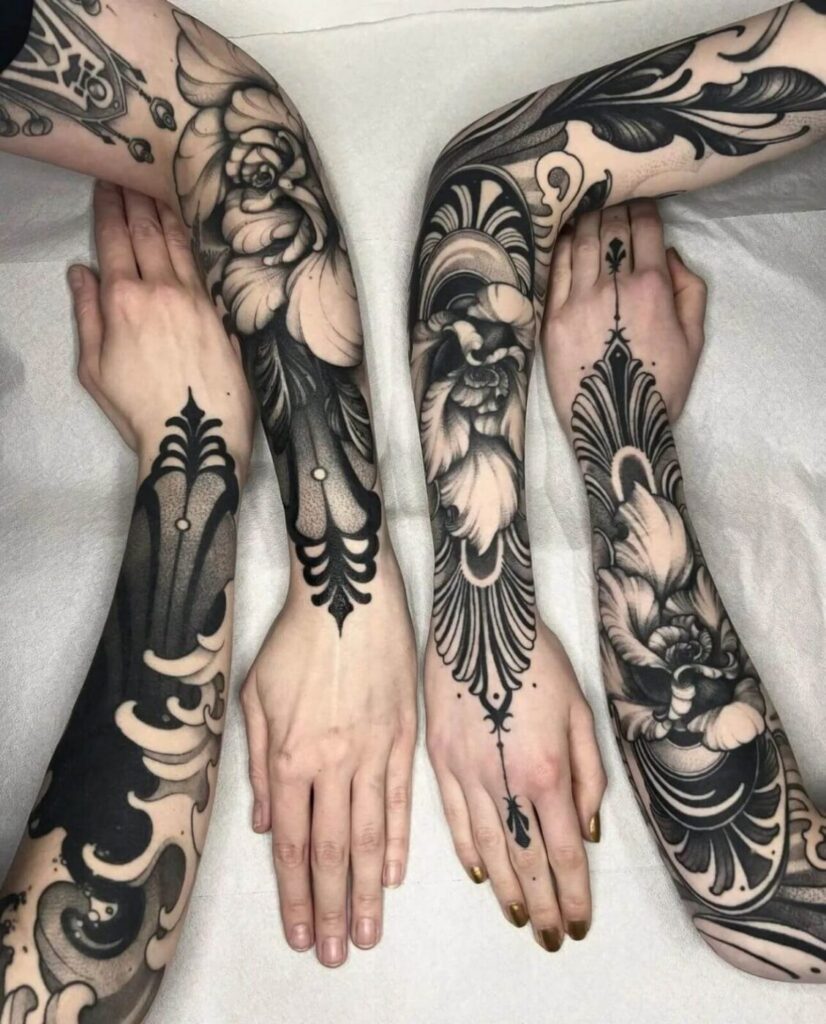
Saturation refers to how densely the black ink is packed into the skin. A solid fill should be even and opaque, with no visible skin gaps. Checklist for saturation:
- Ask your artist about their technique: packing vs. shading.
- Expect multiple passes for deep, even black.
- Look at healed photos of their blackwork – not just fresh ones.
Solid fill is the foundation of many blackwork designs. It creates a bold silhouette and provides contrast for negative space.
Specialist Vocabulary: Packing vs. Shading
Packing is the process of filling an area with solid black using a tight needle grouping. Shading uses a looser grouping to create gradients. For solid black, packing is preferred.
Negative Space: The Uninked Canvas
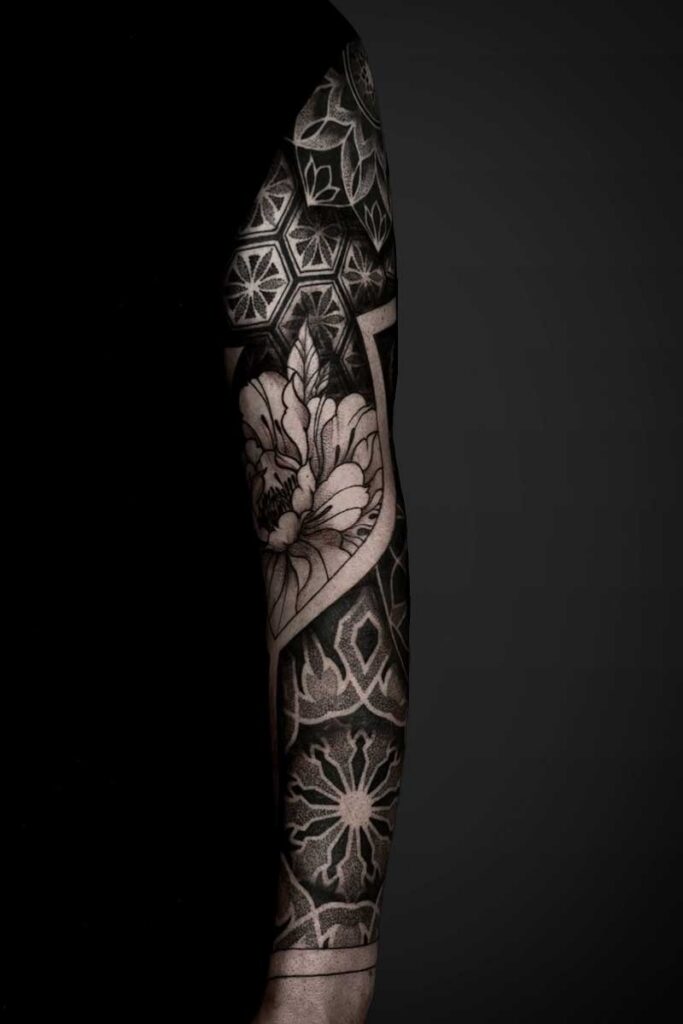
Negative space is the skin left uninked, which forms part of the design. It can create illusions, highlights, and intricate patterns. Key considerations:
- Negative space must be planned carefully – it cannot be changed once tattooed.
- It works best when the surrounding black is solid and saturated.
- Skin tone affects how negative space reads; lighter skin shows more contrast.
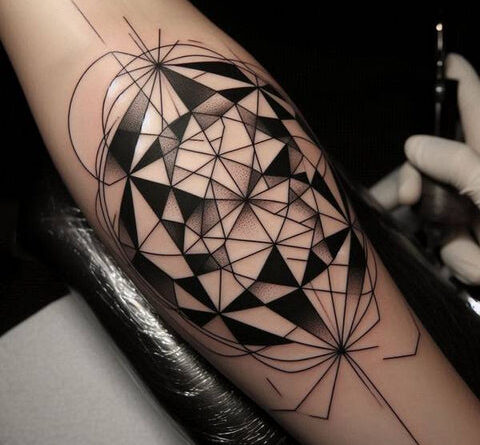
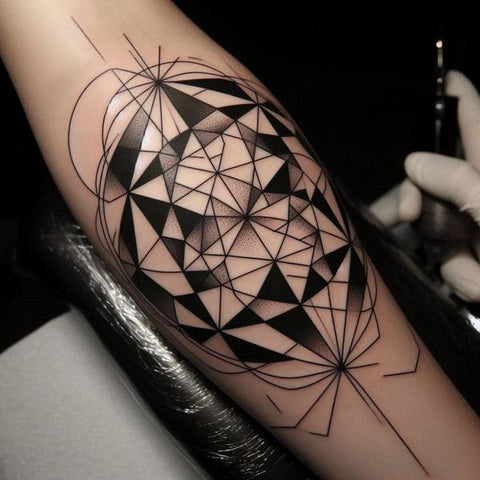
Examples include geometric patterns, abstract shapes, and fine line details within black areas.
Pain Management and Session Planning
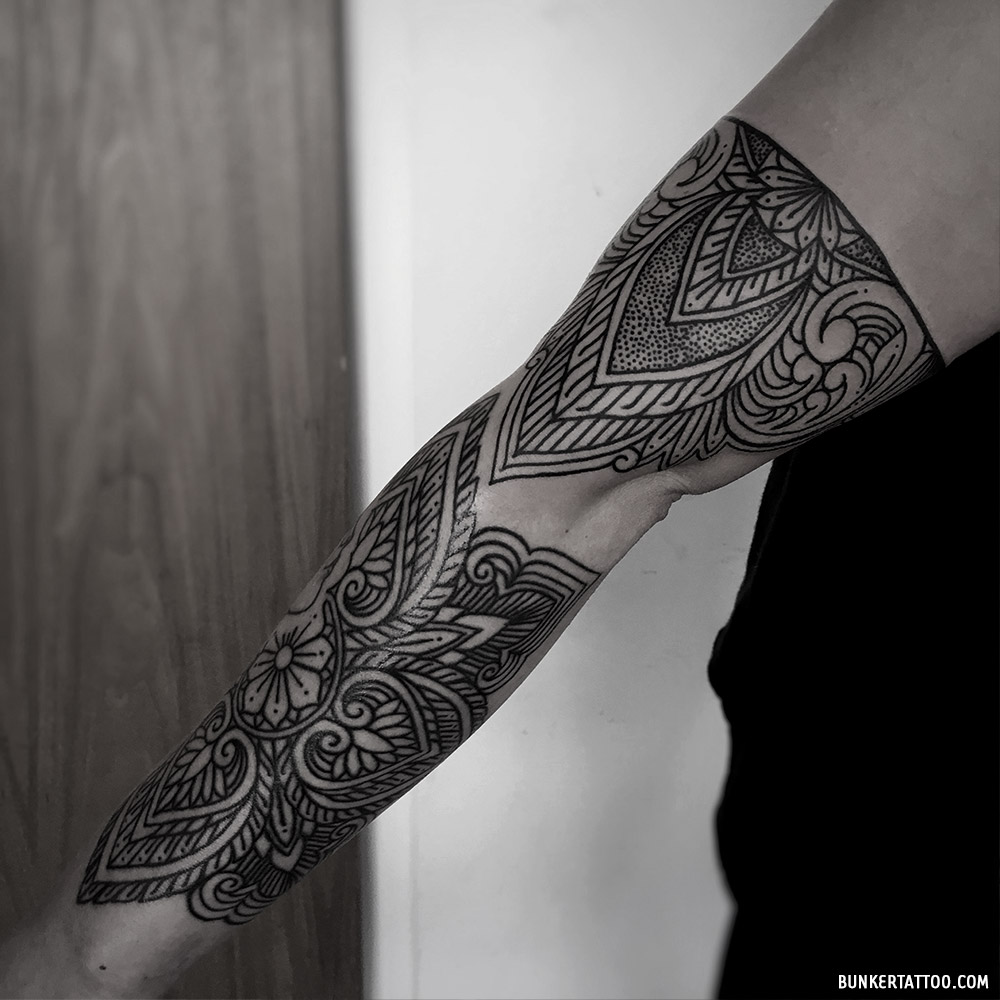
Blackwork often requires longer sessions due to the density of ink. Pain factors:
- Solid fills hurt more than linework because the needle covers more area repeatedly.
- Areas with thin skin (ribs, collarbone) are more painful.
- Session length: typical blackwork sessions range from 2-4 hours. Large pieces may need multiple sessions separated by 4-6 weeks for healing.
Session planning checklist:
- Discuss the total estimated time and number of sessions before starting.
- Schedule shorter sessions for high-pain areas.
- Allow 4-6 weeks between sessions for proper healing.
Healed Contrast: What to Expect
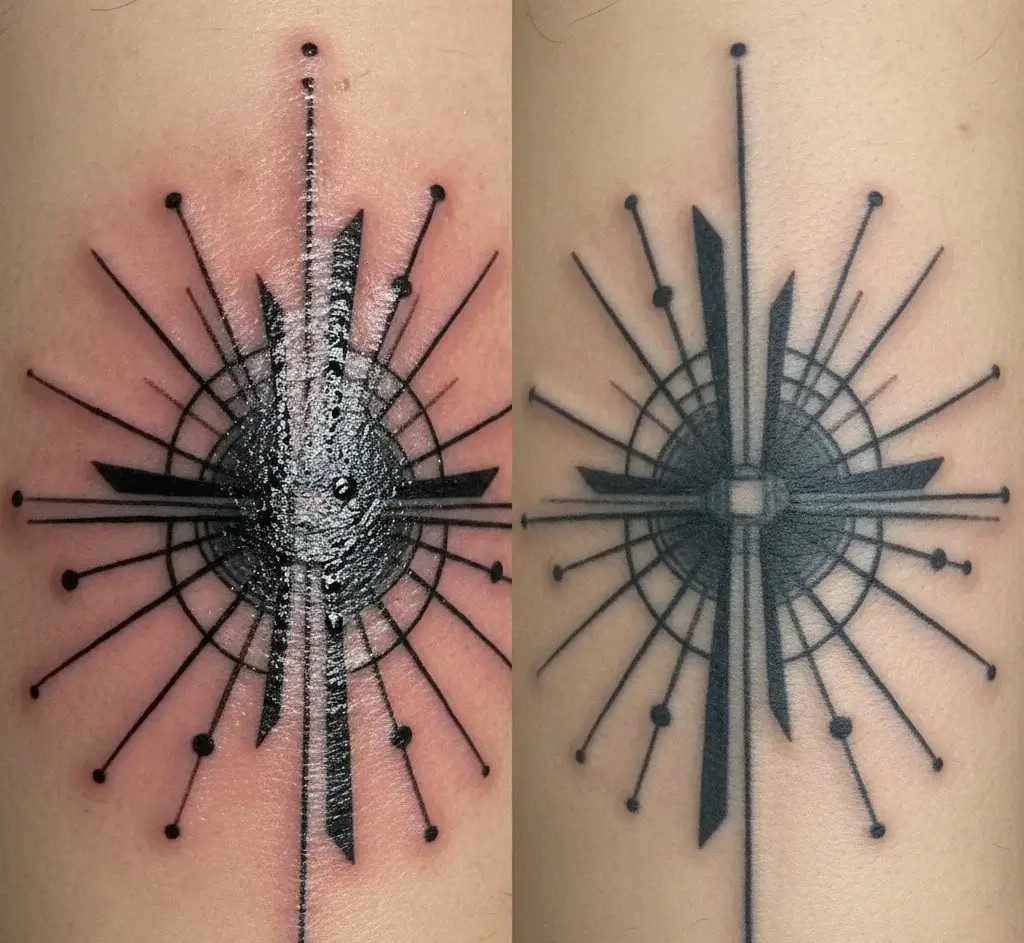
Healed contrast refers to how black ink settles and fades over time. Even the best blackwork will lighten slightly. Realistic expectations:
- Fresh black is jet black; healed black is a deep grey-black.
- Contrast between black and skin will soften as the tattoo heals.
- Sun exposure accelerates fading – always use sunscreen.
Caveat: Poor aftercare can ruin contrast. Follow your artist’s instructions strictly.
Blackwork Styles: Geometric, Abstract, Dotwork, and More
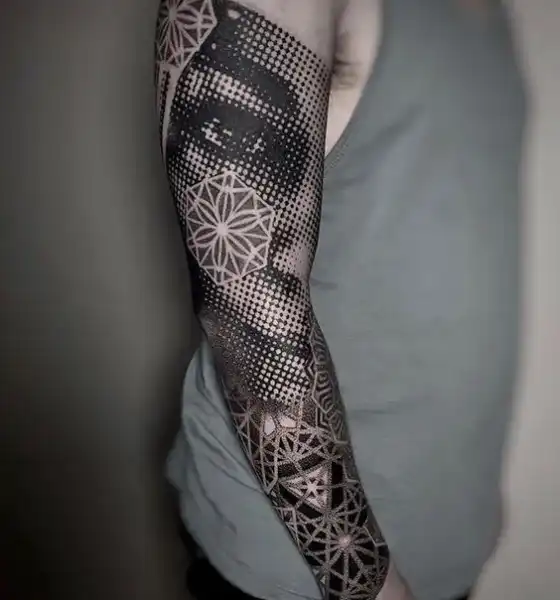
Blackwork encompasses many substyles. Here is a quick guide:
- Geometric tattoo: Uses precise shapes and symmetry. Negative space is common.
- Abstract tattoo: Freeform designs that rely on contrast and flow.
- Dotwork: Uses dots to create gradients and shading – a subset of blackwork.
- Ornamental: Decorative patterns, often symmetrical.
Each style requires different planning for saturation and negative space.
Step-by-Step Planning for Your Blackwork Tattoo
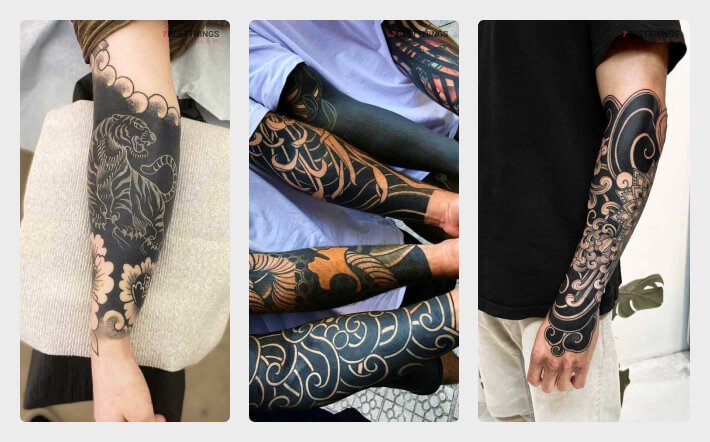
- Research artists – Look for specialists in blackwork. Check their healed portfolios.
- Consultation – Discuss design, size, placement, and aftercare. Ask about their packing technique.
- Design approval – Ensure the negative space is exactly as you want it.
- Session scheduling – Plan for multiple sessions if needed.
- Aftercare – Follow a strict routine: wash, moisturize, avoid sun.
Common Mistakes and How to Avoid Them
- Rushing the process – Good blackwork takes time. Avoid artists who promise quick results.
- Ignoring skin tone – Darker skin may require different approaches for contrast.
- Skipping aftercare – Healed contrast depends on proper healing.
FAQ
1. How long does a blackwork tattoo take to heal?
Initial healing takes 2-3 weeks; full settling of black ink can take up to 3 months.
2. Can blackwork be covered up later?
Yes, but very dark blackwork may require multiple sessions or laser removal first.
3. Is blackwork more painful than other styles?
Because of solid fills, it can be more painful, especially on sensitive areas.
4. How do I maintain healed contrast?
Keep the tattoo moisturized, avoid sun exposure, and use sunscreen daily.
Conclusion
Blackwork tattoo offers timeless beauty through solid fill, negative space, and contrast. By planning carefully, choosing the right artist, and understanding the healing process, you can achieve a stunning result. For more inspiration, explore our magazine and consultation resources.
Read more
- Magazine for more tattoo knowledge, style guides and aftercare notes.
- Request a consultation if you need help with style, placement or preparation.
- Marketplace for equipment, supplies and learning resources.
Content hub
Styles and inspiration hub
Explore more style guides, symbol meanings, composition ideas and placement notes.
View related hubRelated reading
Continue reading
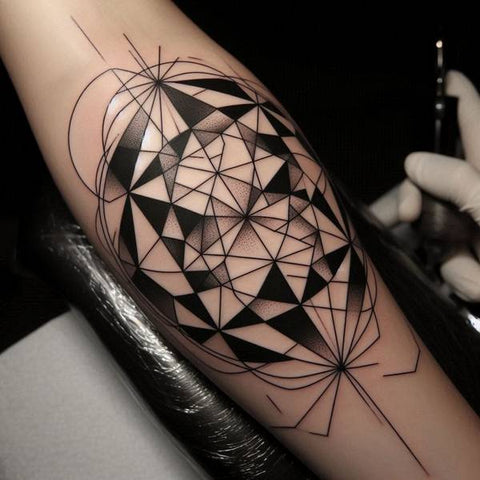
Blackwork Tattoo Planning: Solid Fill, Negative Space & Healed Contrast – The Expert Guide
Master blackwork tattoo planning: solid fill saturation, negative space design, healed contrast, session strategy, and expert aftercare. Concrete…
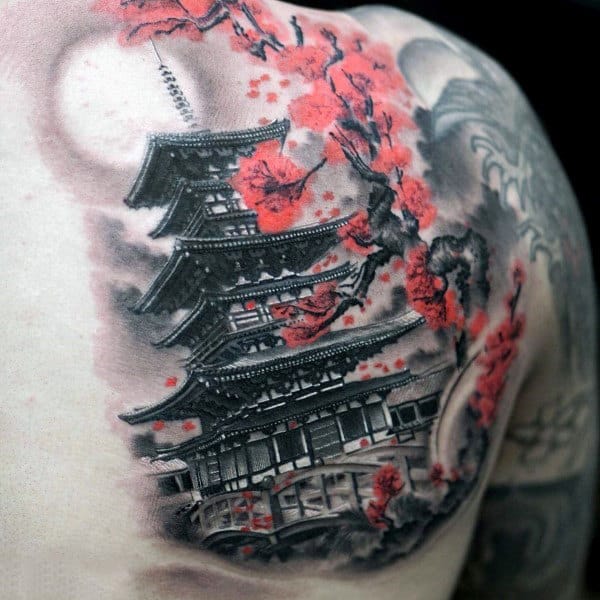
Japanese Traditional Tattoo: Motifs, Background Flow, and Scale – A Deep Guide
Deep guide on Japanese traditional tattoo: motifs, background flow, scale, body flow, and consultation questions for a harmonious…
The Ultimate Guide to Fine Line Tattoo Ideas & Design Principles
Discover the art of fine line tattoos: design principles, popular ideas, aftercare tips, and how to choose the…