Japanese Traditional Tattoo: Motifs, Background Flow, and Scale – A Deep Guide
Introduction: The Art of Irezumi
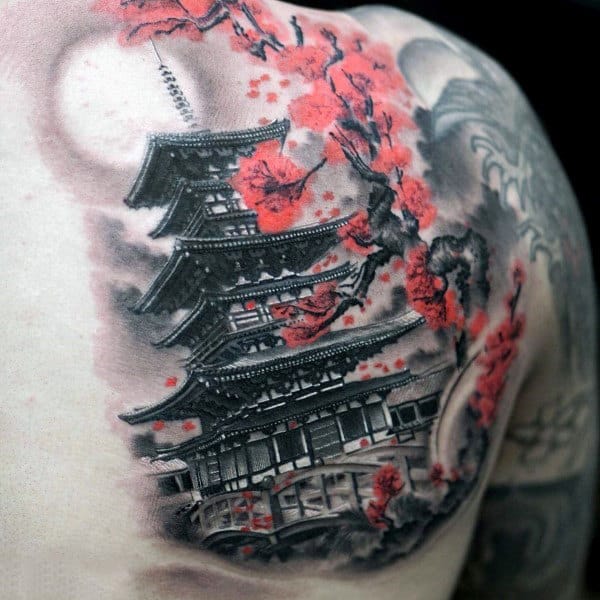
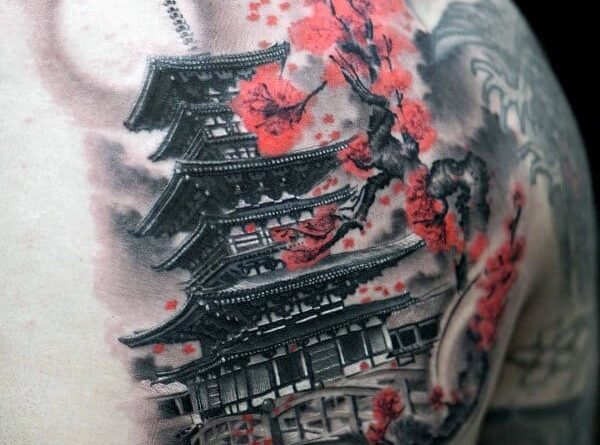
Japanese traditional tattooing, known as Irezumi or Horimono, is one of the most disciplined and symbolic tattoo styles in the world. Unlike Western styles that often prioritize standalone imagery, Japanese traditional tattoos are designed as cohesive body suits that flow with the body’s natural contours. This guide will take you deep into the motifs, background techniques, scale considerations, and body flow principles that define this timeless style. Whether you are considering your first Japanese traditional piece or adding to an existing collection, understanding these elements is crucial for a harmonious and authentic result.
Core Motifs: Mythology, Nature, and Symbolism
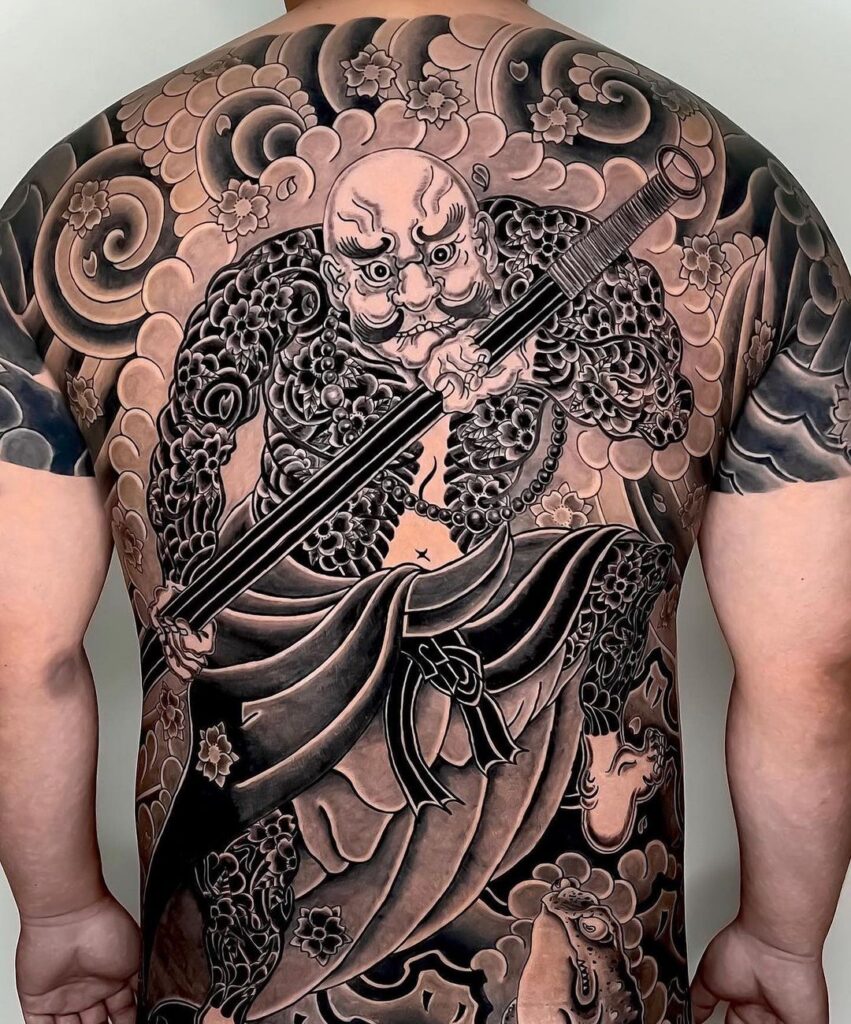
Japanese traditional motifs are rooted in folklore, nature, and spiritual beliefs. Each motif carries specific meanings and visual rules.
Dragons (Ryū)
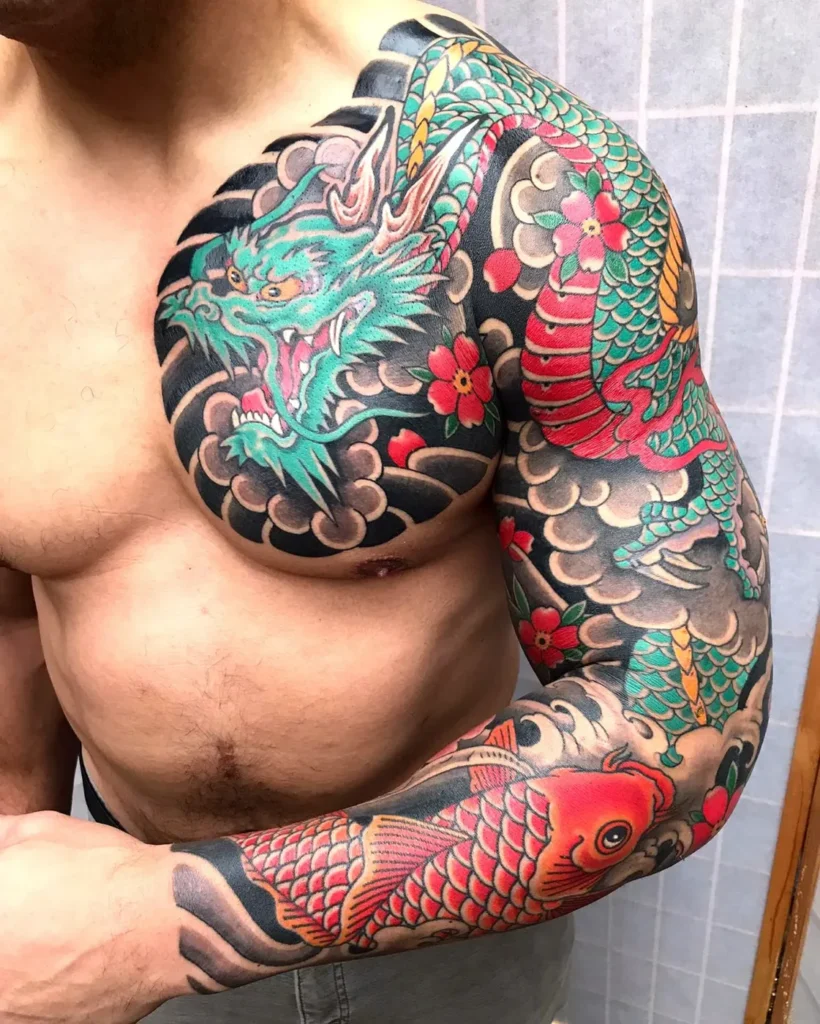
Dragons in Japanese tattooing are benevolent water deities, often depicted with three claws (traditional) or five claws (Chinese influence). They symbolize wisdom, strength, and protection. A dragon should always have a visible head, scales, and flowing mane. Common placements include the back, chest, or entire arm.
Koi Fish (Nishikigoi)
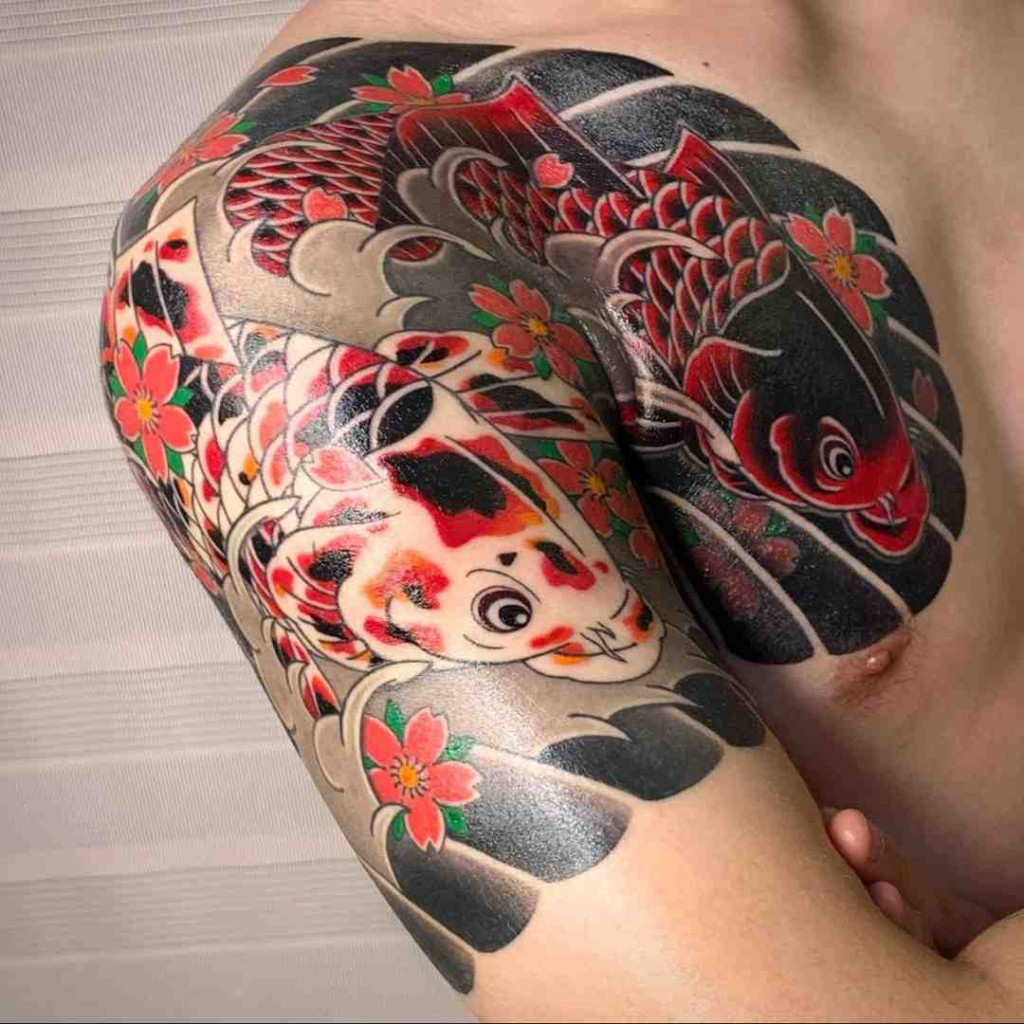
Koi represent perseverance and ambition, inspired by the legend of a koi swimming upstream to become a dragon. They are typically shown swimming upward, often against water currents. The colors (red, black, gold) add layers of meaning. For example, a red koi symbolizes love and bravery.
Phoenix (Hō-ō)
The phoenix is a symbol of rebirth, fire, and imperial power. It is often paired with a dragon (yin-yang balance) or depicted in flight with long tail feathers. The phoenix must be rendered with intricate feather details and a proud posture.
Tigers (Tora)
Tigers represent courage and protection against evil spirits. They are usually shown in dynamic poses, with bold stripes and a fierce expression. Tigers are often paired with bamboo or wind to create contrast.
Flowers and Wind Bars
Flowers like cherry blossoms (sakura) symbolize the transience of life, while chrysanthemums (kiku) represent longevity and rejuvenation. Wind bars (kara) and background waves (seigaiha) are essential to fill negative space and create motion. These backgrounds are not just filler; they unify the composition.
Background Flow: The Unifying Element
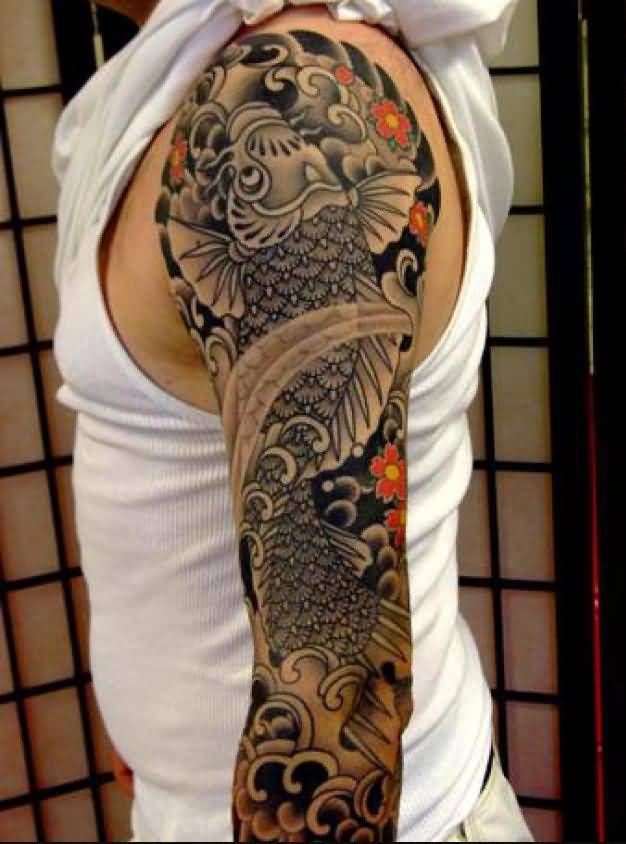
In Japanese traditional tattooing, the background is as important as the main motifs. The most common background patterns are wind bars, water waves, clouds, and geometric shapes like the seigaiha (wave pattern).
Wind Bars (Kara)
Wind bars are sweeping, curved lines that suggest wind or water currents. They direct the eye across the body, connecting separate motifs. A skilled artist will adjust the thickness and curve of wind bars to follow the muscle contours.
Water Waves (Seigaiha)
The seigaiha pattern consists of overlapping concentric circles forming a wave-like pattern. It symbolizes calmness and resilience. This background is often used around koi or dragon motifs to reinforce the water theme.
Clouds (Kumo)
Clouds add a mystical, ethereal quality. They are typically stylized with curling ends and are used to frame deities or mythical creatures. Clouds should not obscure the main subject but rather enhance its presence.
Checklist for Background Flow:
- Does the background direct the viewer’s eye around the body?
- Are the wind bars or waves consistent in direction and thickness?
- Is the background integrated with the motif (e.g., waves around a koi)?
- Does the background fill gaps without overwhelming the main image?
Scale and Body Flow: Designing a Body Suit
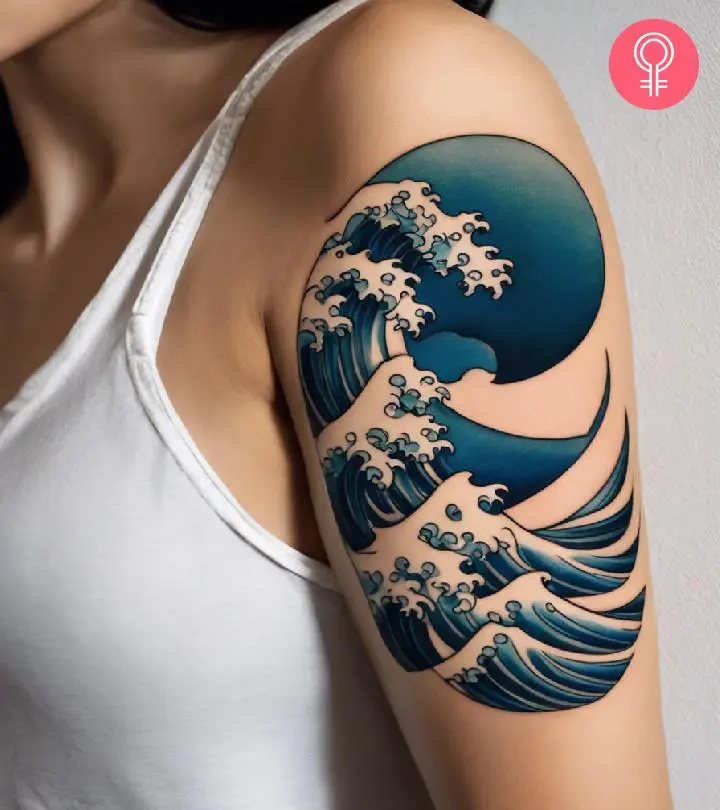
Japanese traditional tattoos are rarely isolated; they are designed as part of a larger composition that respects the body’s natural lines. The term body suit refers to a full-body tattoo that covers the torso, arms, and legs, leaving a central strip of untouched skin (the mizu or “water” path).
Scale Considerations
- Motif size: Main motifs should be large enough to be seen from a distance. A dragon on the back should span from shoulder to shoulder. Small, detailed motifs are rare; the style favors bold, readable imagery.
- Proportion to body: A motif should fit the body part. For example, a koi on the arm should curve with the bicep, and its tail should follow the forearm’s taper.
- Negative space: The background is not just filler; it is part of the design. The ratio of motif to background is typically 60:40 or 70:30, depending on the complexity.
Body Flow Principles
The composition should follow the body’s muscle groups and joints. For instance, a dragon’s body might wrap around the ribcage, with its tail curling onto the hip. The spine is often the centerline for back pieces. The artist should consider how the tattoo will move with the body—when the arm bends, the design should still look cohesive.
Consultation Questions to Ask Your Artist:
- How will this motif flow with my existing tattoos (if any)?
- What background pattern will best complement the motif and my body shape?
- How many sessions will be needed to complete the body suit or major piece?
- Can you show me a mockup of the design on my body (using a stencil or digital preview)?
- What is the expected healing process for large areas of solid black and color?
Practical Comparison: Japanese Traditional vs. Neo-Traditional
| Aspect | Japanese Traditional | Neo-Traditional |
|---|---|---|
| Motifs | Mythological and natural (dragons, koi, phoenix, tigers, flowers) | Wider range, including portraits, animals, fantasy |
| Linework | Bold, consistent, thick outlines | Varied line weights, often finer |
| Color Palette | Limited: black, red, yellow, green, blue (traditional pigments) | Full spectrum, often softer shading |
| Background | Essential: wind bars, waves, clouds | Optional or minimal |
| Body Flow | Integral: designed as body suit | Often standalone pieces |
If you prefer a more flexible approach with modern colors, Neo-Traditional might be a better fit. But if you want a timeless, cohesive look that respects tradition, Japanese traditional is unmatched.
FAQ: Japanese Traditional Tattoo
1. Is Japanese traditional tattooing painful?
Yes, especially in areas with thin skin (ribs, inner arm) or over bone. The technique uses multiple needles (tebori or machine) that can cause more trauma. However, pain tolerance varies, and breaks are taken.
2. How long does a full body suit take?
A full body suit can take 2–5 years of regular sessions (every 2–4 weeks). It requires commitment and patience.
3. Can I get a Japanese traditional tattoo if I am not Japanese?
Absolutely. The style is appreciated worldwide. However, it is important to respect the cultural origins and avoid offensive motifs (e.g., using sacred symbols inappropriately). Discuss with your artist.
4. How do I choose the right artist?
Look for an artist who specializes in Japanese traditional and has a portfolio of completed body suits. Check their linework consistency and background flow. Read reviews and ask about their apprenticeship background. You can explore our verified studio directory for reputable artists.
For more inspiration, check our magazine and consultation pages.
Read more
- Magazine for more tattoo knowledge, style guides and aftercare notes.
- Request a consultation if you need help with style, placement or preparation.
- Marketplace for equipment, supplies and learning resources.
Content hub
Tattoo styles pillar
This article belongs to the styles cluster. Open the pillar page to compare Irezumi, Old School, Realistic, Blackwork, Fine line, Geometric and Watercolor.
Related reading
Continue reading
Lettering Tattoo Healed Portfolio Review: Kerning, Baseline & Placement Distortion
A specialist healed-portfolio review guide for Lettering tattoos, focused on kerning, baseline control and placement distortion. Includes concrete…
Lettering Tattoo Placement: A Specialist Guide to Kerning, Baseline Control, and Body-Flow Distortion
A specialist guide to lettering tattoos focusing on kerning, baseline control, and placement distortion. Learn how to plan…

Lettering Tattoo Design Consultation Checklist: Kerning, Baselines, and Placement Distortion
A specialist consultation checklist for lettering tattoos covering kerning, baseline control, and placement distortion. Includes practical tests, booking…