
Minimal Tattoo Ideas & Design Principles: A Complete Guide
Introduction: The Art of Less
Minimal tattoos are not just small—they are intentional. Every line, dot, and negative space must earn its place. This guide covers the essential principles: visual balance, size, body flow, reference selection, aging, and common mistakes. Whether you are getting your first or your tenth, these insights will help you design a tattoo that lasts beautifully.
Visual Balance: Symmetry vs. Asymmetry

Balance is the foundation of any good tattoo. Symmetrical designs (like a centered geometric pattern) feel calm and formal. Asymmetrical designs (like a single line curving with your collarbone) feel dynamic and organic. Check: Place your design on a photo of your body part. Does it feel heavy on one side? Use the rule of thirds—imagine a grid over the area. The focal point should sit at an intersection.
Size Matters: Big Enough to Age Well
Minimal does not mean tiny. A thumb-sized flower may blur into a blob in a few years. Rule of thumb: For fine lines, the design should be at least 2–3 inches (5–7 cm) in its largest dimension. Details like leaves or letters need even more space. Caveat: High-friction areas (fingers, palms, soles) cause faster fading. There, go bolder or accept touch-ups.
Body Flow: Let Anatomy Guide You

A tattoo should follow the body’s contours, not fight them. For example, a horizontal line on a rounded shoulder will look distorted; a curved line following the muscle looks natural. Step-by-step: 1) Identify the natural curves of the area. 2) Sketch the design along those curves. 3) Use a mirror to see how it moves with you. Mistake to avoid: Placing a design in the middle of a flat area without considering how it wraps.
Reference Selection: Curate, Don’t Copy
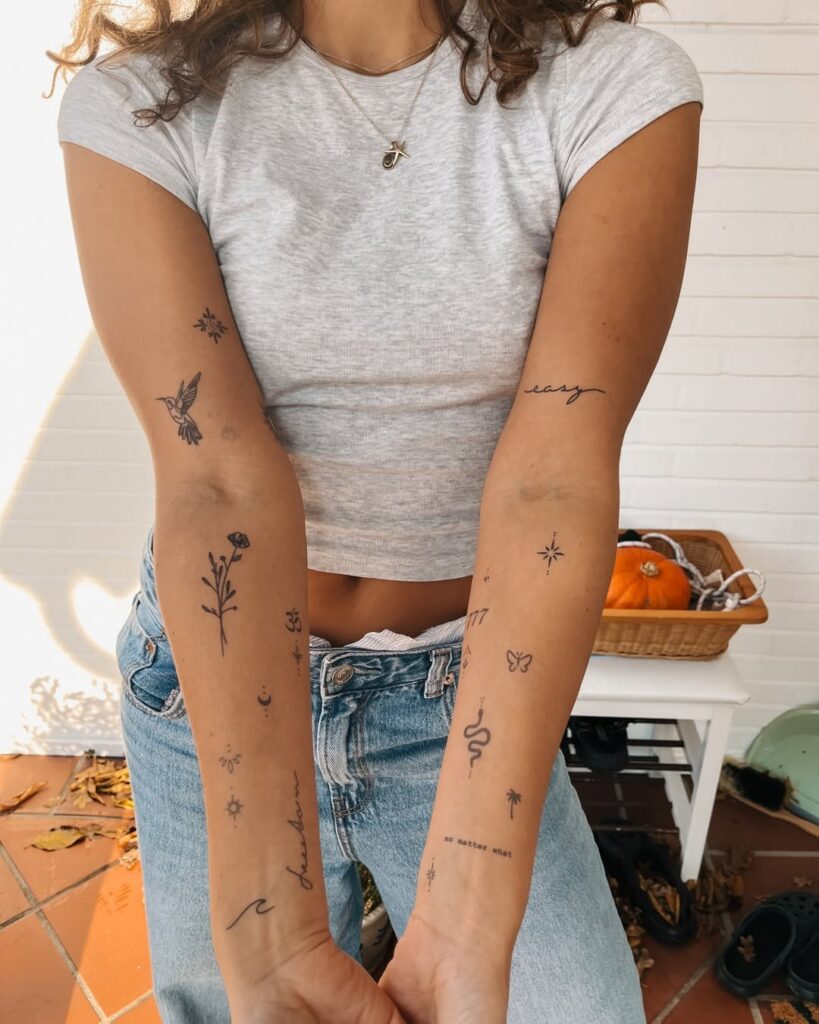
Bringing a Pinterest photo to an artist is fine, but the best tattoos are collaborations. Checklist for good references: 1) Look for healed photos (not just fresh). 2) Check the artist’s portfolio for similar line weight. 3) Avoid overly detailed images that will not scale down. Pro tip: Print your reference at the actual size you want. If the details vanish, simplify.
Aging: What to Expect Over Time
All tattoos fade, but minimal ones show age more obviously. Timeline: Fine lines may spread 1–2 mm in the first decade. By year 10, a dot may become a small circle. What you can do: Choose black ink (it stays crisper than colors). Avoid sun exposure—use SPF 50+ religiously. Warning sign: If your tattoo looks blurry after 3 months, it may have been applied too deep. Consult your artist.
Mistakes to Avoid
- Too small details: If the gap between lines is less than 1 mm, it will close up.
- Poor placement: Designs that bend awkwardly when you move (e.g., a straight line across a knuckle).
- Ignoring skin texture: Scarred or uneven skin needs simpler designs.
- Skipping the consultation: A good artist will advise on size and placement before inking.
FAQ
How do I know if a minimal tattoo will age well?
Ask your artist for healed photos of similar work. Also, choose designs with thicker lines (at least 1 mm) and ample negative space.
Can I get a minimal tattoo on my wrist?
Yes, but expect faster fading due to sun and movement. Use sunscreen and consider a slightly larger design.
What style of minimal tattoo lasts longest?
Blackwork, single-needle fine line with bold outlines, or dotwork. Avoid watercolor or pastel shades.
How much does a minimal tattoo cost?
Prices vary widely. Many studios have a minimum fee (often $50–$150). Larger minimal pieces can cost $200–$500+. Always check the artist’s portfolio first.
Explore more design ideas on our magazine or find a trusted artist via artist search. For personalized advice, book a consultation.
Read more
- Magazine for more tattoo knowledge, style guides and aftercare notes.
- Request a consultation if you need help with style, placement or preparation.
- Marketplace for equipment, supplies and learning resources.
Content hub
Tattoo styles pillar
This article belongs to the styles cluster. Open the pillar page to compare Irezumi, Old School, Realistic, Blackwork, Fine line, Geometric and Watercolor.
Related reading
Continue reading
Lettering Tattoo Healed Portfolio Review: Kerning, Baseline & Placement Distortion
A specialist healed-portfolio review guide for Lettering tattoos, focused on kerning, baseline control and placement distortion. Includes concrete…
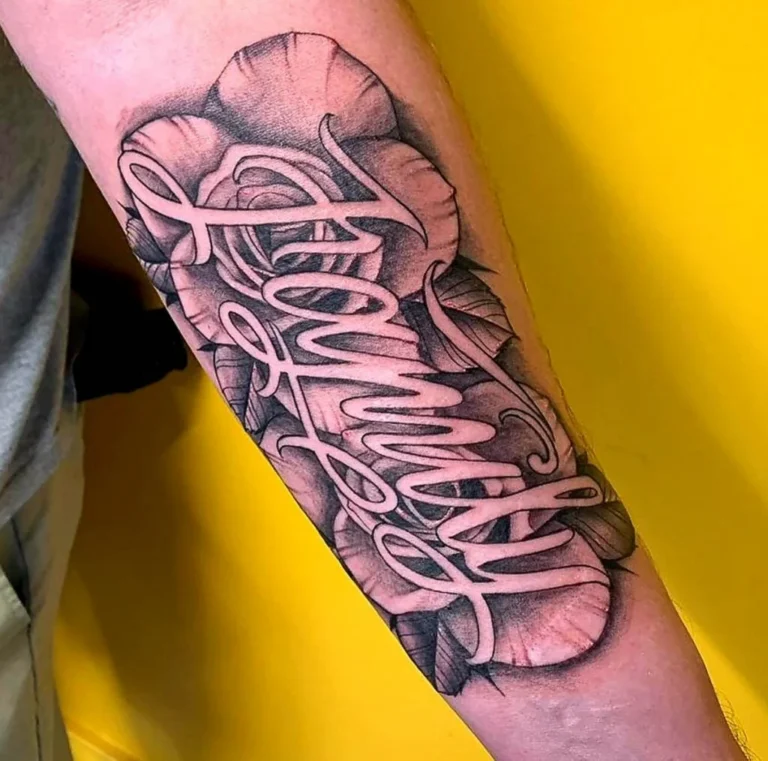
Lettering Tattoo Placement: A Specialist Guide to Kerning, Baseline Control, and Body-Flow Distortion
A specialist guide to lettering tattoos focusing on kerning, baseline control, and placement distortion. Learn how to plan…

Lettering Tattoo Design Consultation Checklist: Kerning, Baselines, and Placement Distortion
A specialist consultation checklist for lettering tattoos covering kerning, baseline control, and placement distortion. Includes practical tests, booking…