
Blackwork Tattoo Ideas and Meaning Guide: Symbolism, Design, and Practical Advice
What Is Blackwork Tattooing?
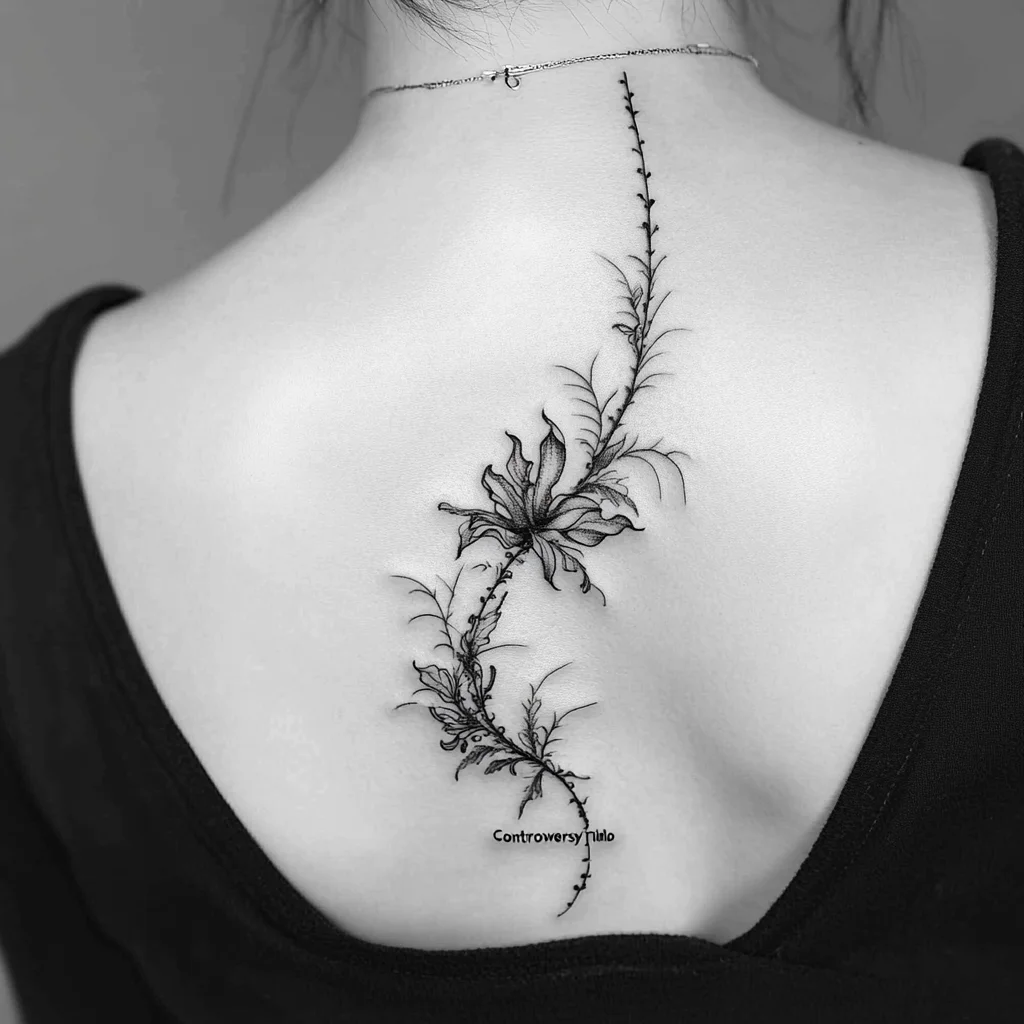
Blackwork tattooing uses solid black ink, often in bold lines, geometric patterns, or shading, to create high-contrast designs. Unlike color tattoos, blackwork relies entirely on value and negative space for impact. This style includes everything from minimalist symbols to intricate dotwork and ornamental patterns.
Common Motifs and Their Symbolism
Geometric and Sacred Geometry
Circles, triangles, mandalas, and flower-of-life patterns represent balance, eternity, and the interconnectedness of life. These designs work well on forearms, sternums, and backs.
Animal Silhouettes
Wolves symbolize loyalty; ravens signify mystery; bears represent strength. Silhouettes keep the image bold and readable over time.
Botanical and Floral
Thorns, vines, and leaves in blackwork emphasize shape rather than color. They can wrap around limbs or fill gaps in a sleeve.
Abstract and Tribal-Inspired
Modern tribal revival uses flowing lines and negative space, respecting cultural origins while adapting to contemporary aesthetics.
Negative Space: The Hidden Design Element
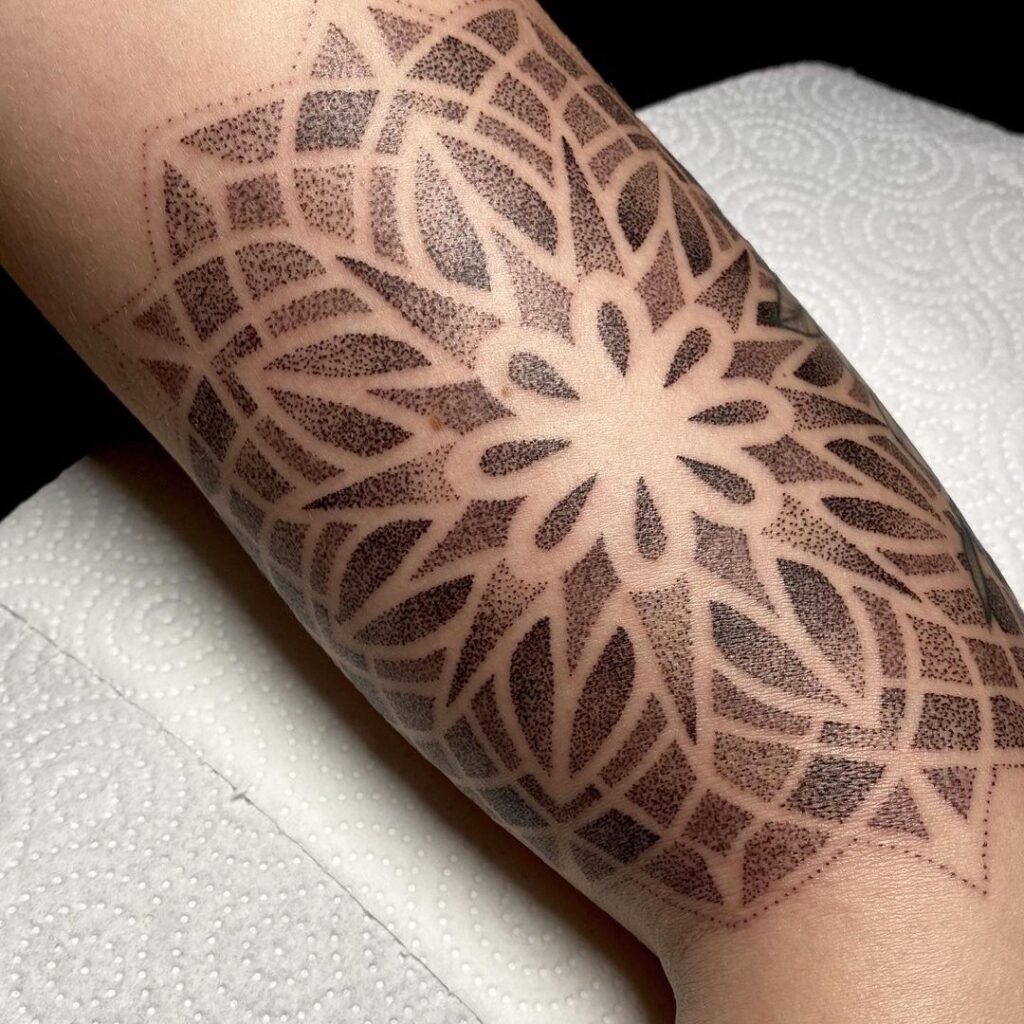
Negative space is the skin left uninked, forming part of the image. For example, a raven’s eye might be bare skin, or vines might weave through open gaps. This technique keeps the tattoo from becoming a solid black blob and improves readability as the ink ages.
Checklist for negative space designs:
- Ask your artist to show you a healed photo of similar negative-space work.
- Ensure the negative shapes are large enough to remain visible after years of skin changes.
- Avoid tiny cutouts that may blur or fill in over time.
Contrast and Scale: Making Blackwork Last
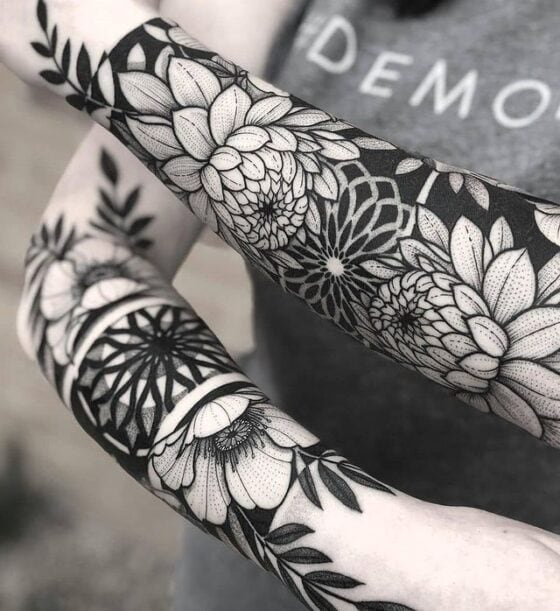
High contrast between black and skin is essential. A design that looks dramatic fresh may soften as ink spreads slightly. Scale matters: small blackwork tattoos can become muddy if the details are too fine. For example, a 2-inch mandala may lose its petals in five years, while a 5-inch version stays crisp.
Quick contrast check: If you squint at the stencil, can you still see the main shapes? If not, ask for thicker lines or larger gaps.
Healed Readability: What to Expect
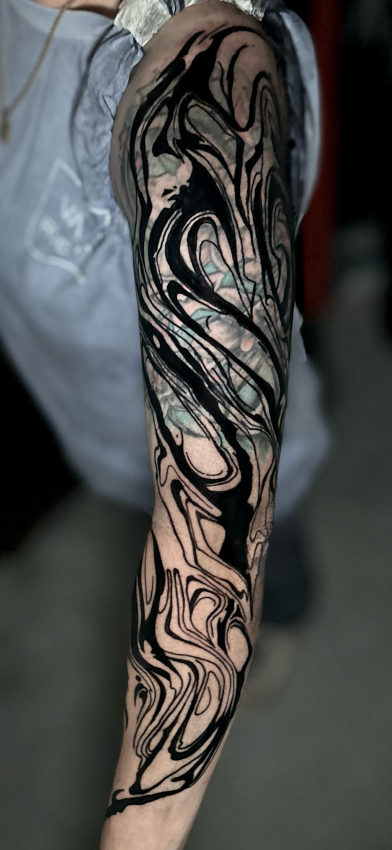
Blackwork generally ages well because black ink holds its density. However, solid black areas may develop a slight greenish tint over decades. Thin lines (less than 3RL) may fade or spread. The best approach is to design with the future in mind: avoid tiny details, keep open skin areas generous, and use consistent line weights.
Consultation Notes: Questions to Ask Your Artist
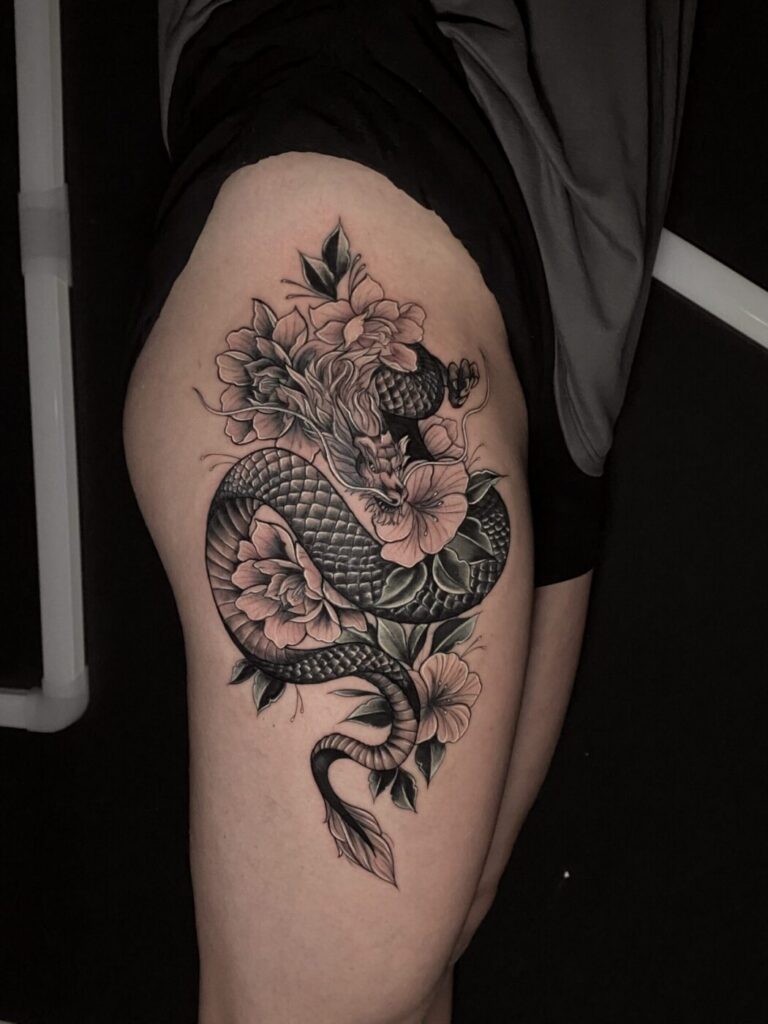
- How does this design use negative space?
- What line weight do you recommend for long-term clarity?
- Can I see healed photos of similar blackwork pieces?
- How will the design fit my body’s movement?
FAQ – Blackwork Tattoos
Does blackwork hurt more than color tattoos?
Pain depends on location and your pain tolerance, not the ink color. Blackwork may require more passes over the same area if the artist is packing solid black, which can increase discomfort.
Can blackwork be covered up later?
Yes, but solid black areas are harder to cover. Laser removal or multiple sessions may be needed before a new design. Plan your blackwork as a long-term commitment.
How do I choose between dotwork and solid black?
Dotwork creates texture and gradient; solid black gives bold contrast. Consider the size and placement. Dotwork on a small area may look busy, while solid black on a large area can feel heavy.
Is blackwork suitable for all skin tones?
Yes, black ink shows well on all skin tones. However, very dark skin may require a skilled artist to ensure contrast. Ask to see their portfolio with diverse skin tones.
For more inspiration, browse our magazine or use the consultation tool to find a trusted artist.
Read more
- Magazine for more tattoo knowledge, style guides and aftercare notes.
- Request a consultation if you need help with style, placement or preparation.
- Marketplace for equipment, supplies and learning resources.
Content hub
Tattoo styles pillar
This article belongs to the styles cluster. Open the pillar page to compare Irezumi, Old School, Realistic, Blackwork, Fine line, Geometric and Watercolor.
Related reading
Continue reading
Lettering Tattoo Healed Portfolio Review: Kerning, Baseline & Placement Distortion
A specialist healed-portfolio review guide for Lettering tattoos, focused on kerning, baseline control and placement distortion. Includes concrete…
Lettering Tattoo Placement: A Specialist Guide to Kerning, Baseline Control, and Body-Flow Distortion
A specialist guide to lettering tattoos focusing on kerning, baseline control, and placement distortion. Learn how to plan…
Lettering Tattoo Design Consultation Checklist: Kerning, Baselines, and Placement Distortion
A specialist consultation checklist for lettering tattoos covering kerning, baseline control, and placement distortion. Includes practical tests, booking…