The Complete Tattoo Aftercare Timeline: First 24 Hours, Peeling, and Healed Stage – A Deep Guide with Practical Steps and Warning Signs
Introduction
Getting a tattoo is an investment in art that stays with you for life. But the quality of that art depends heavily on how you care for it during the healing process. This guide walks you through the entire tattoo aftercare timeline, from the moment you leave the studio to the fully healed stage. You’ll learn exactly what to do, what to avoid, and how to spot warning signs that require professional attention. Whether you’re a first-timer or a seasoned collector, following these steps will help ensure your tattoo heals beautifully and remains vibrant for years.
First 24 Hours: The Critical Window
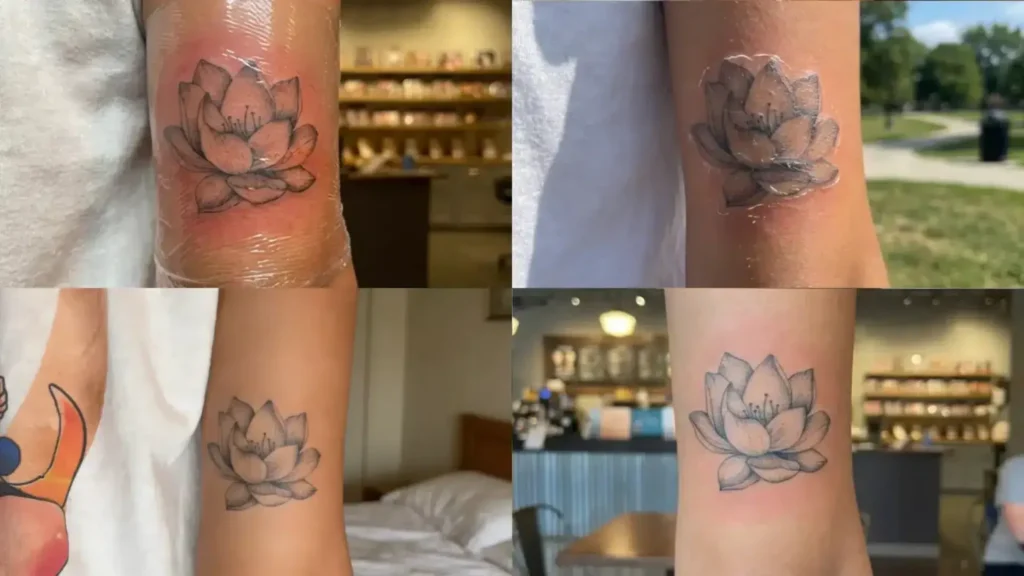
Leaving the Studio
Your artist will apply a sterile bandage or a medical-grade adhesive film (like Saniderm or Tegaderm). Keep this on for the recommended time—usually 3 to 24 hours depending on the wrapping type. Do not remove it early to “let the tattoo breathe”; the wrap protects against bacteria and friction. If you have any questions about the wrap, ask your artist before leaving.
Removing the Bandage
Wash your hands thoroughly before touching the wrap. If using adhesive film, peel it off slowly under warm running water to reduce discomfort. For traditional bandages, unwrap gently. Do not pull on the tattoo itself. If the wrap sticks, wet it with warm water to loosen the adhesive.
First Wash
Use lukewarm water and a mild, fragrance-free antibacterial soap. Gently clean the tattoo with your fingertips—never a washcloth or sponge. Pat dry with a clean paper towel (not a cloth towel, which harbors bacteria). Let the skin air-dry for a few minutes before applying any product.
Applying Moisturizer
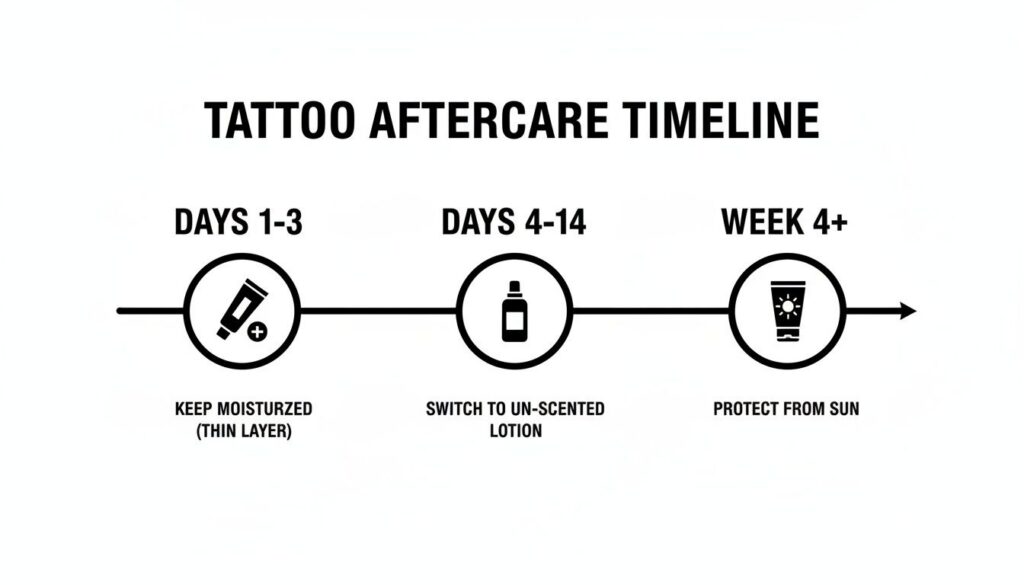
Apply a very thin layer of unscented tattoo aftercare balm or ointment. Popular choices include Aquaphor, Hustle Butter, or specialized tattoo lotions. Less is more: too much product clogs pores and suffocates the skin. A pea-sized amount is usually enough for a palm-sized tattoo.
Days 2–7: The Peeling Stage
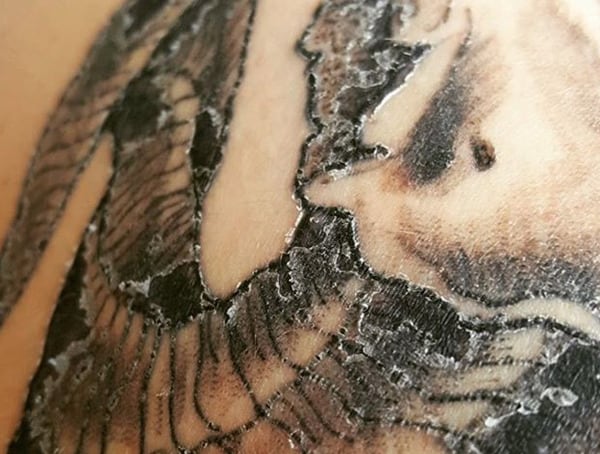
What to Expect
Around day two or three, the tattooed area will start to peel. This is a natural part of healing—dead skin cells flake away to reveal fresh skin underneath. The peeling may look patchy or uneven, and some color may appear to fade temporarily. This is normal. Do not panic; the color will return as the skin matures.
Do’s and Don’ts
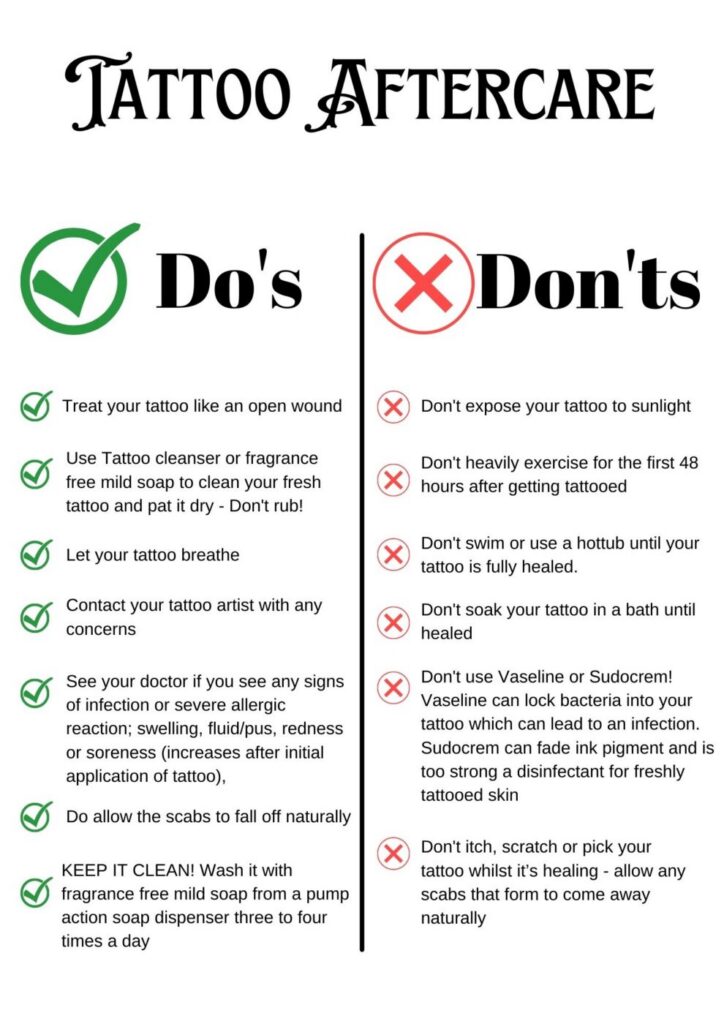
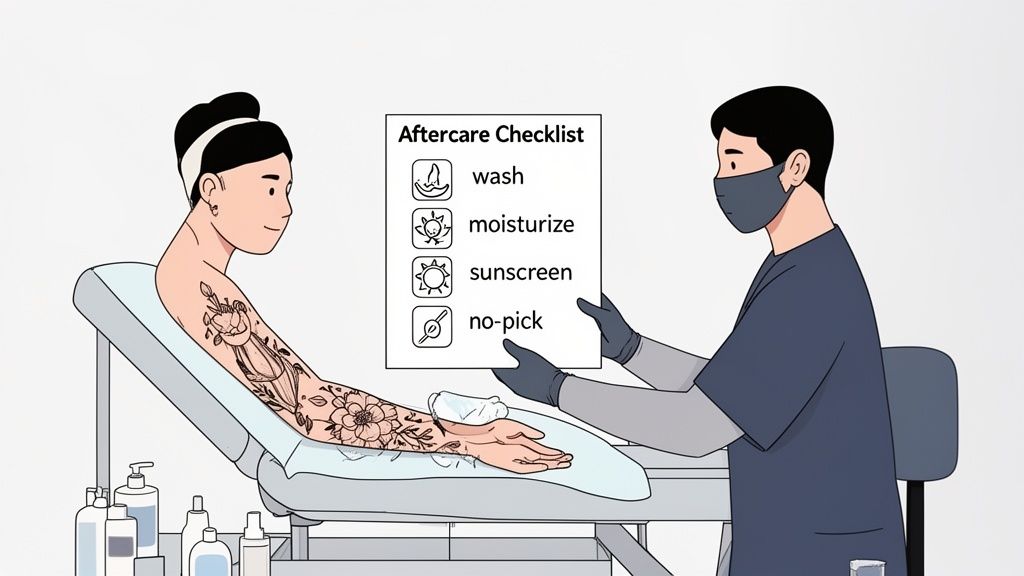
- Do wash the tattoo twice daily with mild soap.
- Do apply a thin layer of moisturizer after each wash.
- Don’t pick, scratch, or peel the skin manually. Let it fall off naturally.
- Don’t soak the tattoo in water—no pools, hot tubs, bathtubs, or saunas.
- Don’t expose the tattoo to direct sunlight.
Warning Signs in the Peeling Stage
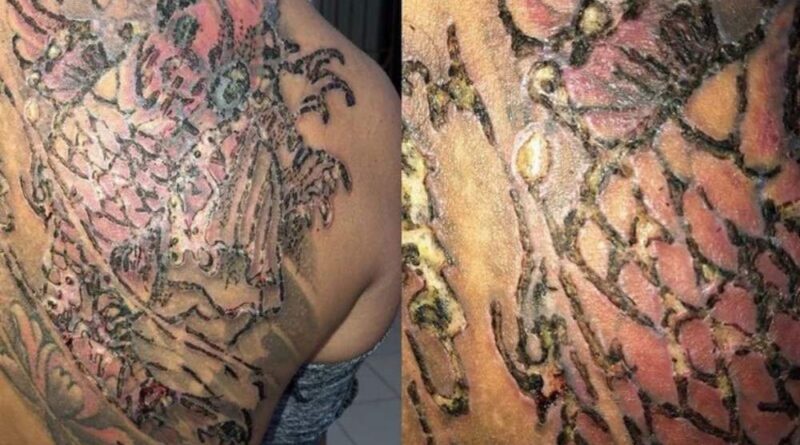
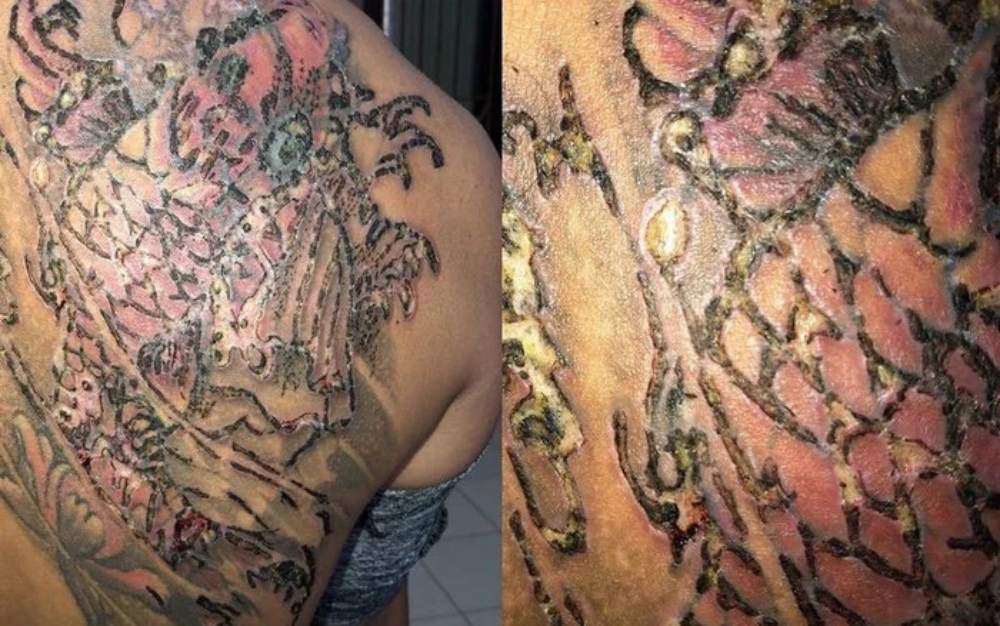
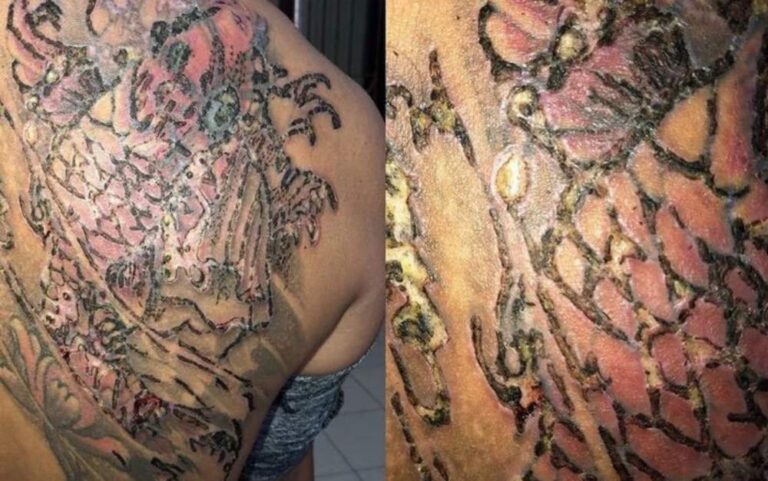
While some peeling is normal, watch for these red flags:
- Excessive redness or swelling that spreads beyond the tattoo.
- Warmth or heat radiating from the area.
- Pus or yellow/green discharge.
- Fever or chills.
If you experience any of these, consult a healthcare professional immediately—you may have an infection. Early treatment is crucial.
Weeks 2–4: The Itchy and Flaky Stage
Managing Itchiness
As new skin forms, itching can become intense. Resist the urge to scratch. Instead, apply a fragrance-free moisturizer or a cold compress (wrapped in a clean cloth) to soothe the area. Keep your fingernails short to minimize damage if you scratch unconsciously while sleeping. You can also gently tap or slap the area to relieve itching without harming the skin.
Appearance Changes
The tattoo may look cloudy or dull during this stage. This is due to a thin layer of new skin covering the ink. Do not be alarmed—once the skin fully matures, the colors will return to their intended vibrancy. This process can take up to a month.
Sun Protection
Even after the peeling stops, the tattoo is still healing. Apply a broad-spectrum SPF 30+ sunscreen whenever the area is exposed to sunlight. UV rays can fade and blur the design permanently. For best results, use a physical sunscreen containing zinc oxide or titanium dioxide, which are less likely to irritate healing skin.
Weeks 4–6: The Healed Stage
Signs of Full Healing
The skin feels smooth and matches the texture of surrounding skin. There is no peeling, flaking, or tenderness. The tattoo appears vibrant and settled. However, deeper layers of skin may still be recovering, so continue to be gentle.
Long-Term Care
Even after healing, tattoos require maintenance. Keep the skin moisturized to prevent cracking and fading. Continue using sunscreen religiously. Over time, tattoos naturally fade due to sun exposure and aging, but good care slows this process. Consider using a tattoo-specific moisturizer with SPF for daily protection.
Common Mistakes and How to Avoid Them
- Over-moisturizing: Applying too much lotion can cause clogged pores and breakouts. Stick to a pea-size amount.
- Using scented products: Fragrances and alcohol-based products irritate healing skin. Always choose unscented, hypoallergenic options.
- Tight clothing: Wear loose, breathable fabrics over the tattoo to avoid friction and trapped moisture.
- Ignoring allergies: If you develop a rash or intense itching beyond normal, you may be allergic to the ink or aftercare product. Consult your artist and a dermatologist.
- Sleeping on the tattoo: Avoid putting pressure on the tattoo while sleeping. If necessary, sleep on the opposite side or use a clean, soft towel as a barrier.
FAQ
Can I shower normally after getting a tattoo?
Yes, but avoid direct high-pressure water on the tattoo. Limit shower time to 5–10 minutes and pat the area dry afterward. Do not soak in a bath or go swimming until fully healed (4–6 weeks).
How long does it take for a tattoo to heal completely?
Surface healing usually takes 2–4 weeks, but deeper layers may take 2–3 months. Full color settling and skin recovery can take up to 6 months. Be patient and continue aftercare practices.
What should I do if my tattoo oozes clear fluid?
A small amount of clear plasma is normal in the first 24–48 hours. Gently wash it away during your regular cleaning routine. If the fluid is yellow, green, or smells bad, see a doctor.
Can I exercise after getting a tattoo?
Avoid strenuous activity that causes sweating or stretching of the tattooed area for at least 48–72 hours. Sweat can irritate the wound and increase infection risk. After that, listen to your body and keep the area clean. Shower immediately after exercise.
Conclusion
Proper aftercare is not optional—it’s essential for preserving your tattoo’s beauty and preventing complications. Follow this timeline, stay vigilant for warning signs, and when in doubt, consult your artist or a medical professional. Your tattoo is a lifelong piece of art; treat it with the care it deserves.
For more guidance, check out our consultation page or browse our magazine for expert tips.
Read more
- Magazine for more tattoo knowledge, style guides and aftercare notes.
- Request a consultation if you need help with style, placement or preparation.
- Marketplace for equipment, supplies and learning resources.
Content hub
Tattoo aftercare pillar
This article belongs to the aftercare cluster. Open the pillar page for the healing timeline, cleaning routine, moisturizing basics and warning signs.
Related reading
Continue reading

Tattoo Swelling by Body Placement: What’s Normal and When to Seek Help
Swelling after a tattoo is normal, but it varies by body placement. Learn what to expect, normal vs.…
Tattoo Touch-Up Guide: When Color Settles, When to Wait, and When to Ask
Learn when to wait, when to ask, and what to expect from a tattoo touch-up. A practical guide…

The Complete Tattoo Consultation Checklist: What You Must Know Before Booking a Custom Design
A complete guide to your first tattoo consultation: from idea brief and references to skin check, placement, pain,…